

A New Perspective on Home
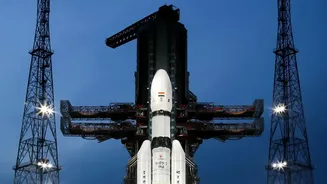
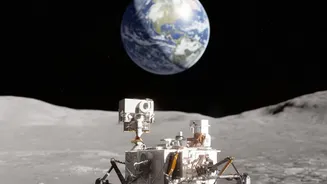
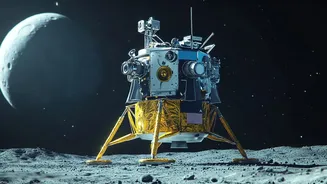
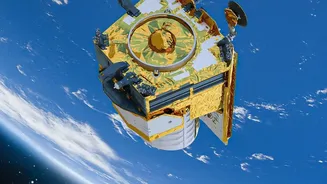
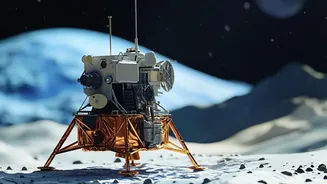
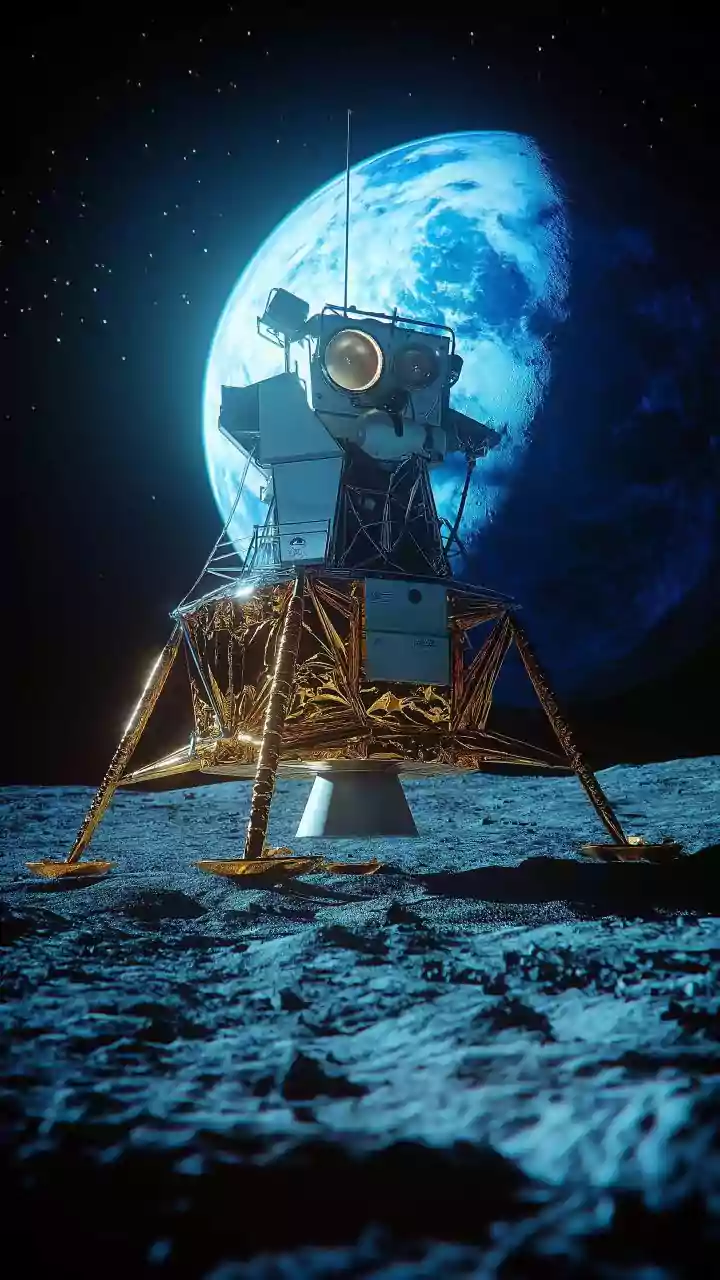
When the Chandrayaan-3 mission successfully landed on the Moon, the world celebrated the Vikram lander and Pragyan rover. But another crucial experiment was happening far above the lunar surface. Aboard the Propulsion Module, which remained in orbit around
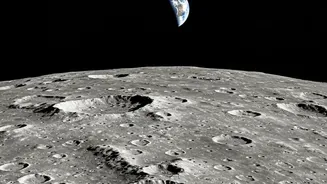
the Moon, an instrument called SHAPE was busy observing not the Moon, but our own planet. SHAPE, which stands for Spectro-polarimetry of HAbitable Planet Earth, was designed for a unique purpose: to study Earth as if it were a distant exoplanet. By capturing the specific characteristics of light reflected from our world, ISRO scientists are creating a vital baseline. This data acts as a template, a 'how-to' guide for future telescopes on what to look for when searching for potentially life-bearing worlds orbiting other stars.
The Science of Seeing Life's Fingerprints
So, how does SHAPE work? The instrument is a spectro-polarimeter. In simple terms, it analyses the properties of light. 'Spectro' refers to splitting light into its constituent colours or wavelengths, much like a prism. This allows scientists to see which wavelengths are absorbed by Earth’s atmosphere, revealing the presence of gases like water vapour and carbon dioxide—key ingredients for life as we know it. 'Polarimetry' adds another layer of information. It measures the orientation of light waves after they have reflected off a surface. The way light polarizes can tell scientists about clouds, oceans, continents, and even vegetation. By combining these two measurements from its vantage point in lunar orbit, SHAPE gathers detailed 'disc-integrated' data, meaning it sees Earth as a single point of light, just as we see distant exoplanets. Developed at the U. R. Rao Satellite Centre in Bengaluru, this compact and lightweight instrument was the only scientific payload on the Chandrayaan-3 Propulsion Module.
What Earth Looks Like to a Distant Observer
From its lunar orbit, SHAPE observed Earth over a range of phase angles, similar to how we see the Moon go through its phases. This provided a dynamic picture of how our planet’s light signature changes as different features—like vast oceans, cloud-covered continents, and polar ice caps—rotate into view. The instrument operates in the near-infrared wavelength range (1.0 to 1.7 micrometres), which is particularly useful for detecting biosignatures. The data collected helps create a comprehensive library of Earth's spectro-polarimetric fingerprints. For example, the specific way light polarizes when reflecting off oceans is very different from how it reflects off forests or deserts. By studying these variations, scientists can learn to distinguish key surface features on exoplanets, helping them determine if a planet has liquid water, a critical component for habitability.
A Blueprint for Finding Another Earth
The SHAPE experiment is fundamentally forward-looking. Its findings aren't about learning something new about Earth itself, but about using our planet as the ultimate cheat sheet in the search for extraterrestrial life. Future powerful telescopes, both on the ground and in space, will be tasked with analysing the faint light from planets light-years away. Without a reliable reference, distinguishing a rocky, lifeless world from one with a dynamic atmosphere and oceans would be incredibly difficult. The data from SHAPE provides that crucial reference point. It validates the technique of using disc-integrated spectro-polarimetry to characterise an Earth-like world. It proves that even with instrumental challenges like spacecraft drift, the essential signatures of atmospheric gases and surface features can be reliably extracted. This pioneering work by ISRO not only showcases India's growing capabilities in space science but also provides an invaluable contribution to the global astronomical community's quest to answer one of humanity's oldest questions: are we alone?