






More Than Just Watching the Tides
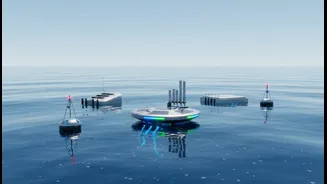
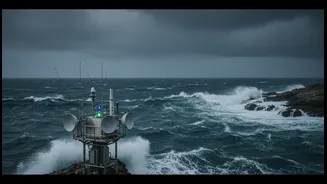
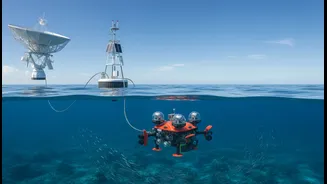
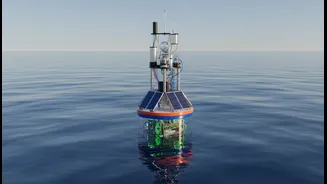
For centuries, 'ocean observation' meant little more than measuring tides and tracking ships. Today, it’s a high-tech discipline critical to our survival. Modern ocean observation involves a sophisticated network of satellites, robotic profiling floats,
underwater gliders, and moored buoys. These instruments work in concert to gather a continuous stream of data on the ocean's physical, chemical, and biological state. They measure everything from sea surface temperature and salinity to wave height and current speed, providing a comprehensive health check-up of our seas in real-time. This constant monitoring moves us from a reactive to a predictive stance, allowing us to see changes as they develop, not just after they have arrived on our shores.
The Data That Drives Decisions
The data collected is not just for scientific curiosity; it is actionable intelligence. Warmer ocean temperatures, for instance, are the fuel for more intense tropical cyclones. By tracking these thermal anomalies, forecasters can significantly improve predictions of a storm's intensity, giving communities more time to prepare or evacuate. Similarly, precise satellite altimeter readings help monitor not only long-term sea-level rise but also short-term storm surges, which are often the most destructive aspect of a coastal storm. This information is fed into complex computer models that can simulate how a storm will impact a specific stretch of coastline, forecasting which areas are most at risk of flooding. For a country like India, with major cities like Mumbai, Chennai, and Kolkata at high risk of inundation, this predictive power is indispensable.
India’s Eyes on the Ocean
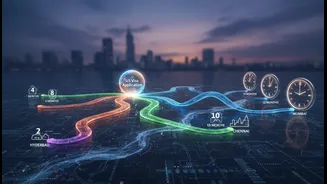
India has become a key player in this field, recognising its vulnerability and the need for self-reliance. The Indian National Centre for Ocean Information Services (INCOIS), based in Hyderabad, is the nodal agency for providing ocean data and advisories. Established in 1999, INCOIS deploys and maintains a vast array of observation systems throughout the Indian Ocean. It provides round-the-clock warnings for tsunamis and storm surges, daily ocean state forecasts for mariners, and even advisories for fisherfolk to help locate fish stocks, saving fuel and time. Furthermore, ambitious national projects like the Deep Ocean Mission are set to enhance these capabilities, aiming to develop technologies for deep-sea exploration and strengthen observations for climate and hazard preparedness.
From Prediction to Protection
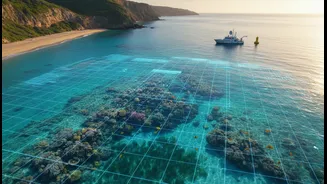
The ultimate goal of ocean observation is to build resilience. The data enables a shift from reactive disaster response to proactive coastal planning. For example, long-term sea-level rise projections, which have accelerated to 3.3 mm per year in the northern Indian Ocean, inform where to build (and where not to build) critical infrastructure. It helps engineers design more effective sea walls and plan for nature-based solutions. Vulnerability maps, created using this data, can identify hotspots along the coast, allowing authorities to prioritise adaptation efforts and create targeted policies to protect communities and ecosystems. Systems like the Integrated Flood Warning Systems (i-Flows) developed for Mumbai and Chennai are direct applications of this data, providing early warnings to manage urban flooding.
The Challenges Ahead
Despite significant progress, challenges remain. The ocean is vast, and even with modern technology, an estimated 80% of it remains unobserved. Maintaining these sophisticated observation networks is expensive and requires international cooperation, as ocean systems do not respect national boundaries. Programs like the Global Ocean Observing System are vital in this regard, fostering collaboration and data sharing. For India, integrating the wealth of data from various agencies into a single, cohesive framework to drive the Blue Economy is a key priority. This involves not just collecting data, but ensuring it is accessible and useful for policymakers, industries, and local communities to make informed decisions for a sustainable future.