








The Silent Epidemic of Hidden Hunger
On the surface, a person may seem well-fed, but their body could be starving for essential micronutrients like iron, iodine, and Vitamin A. This is ‘hidden hunger,’ a widespread condition in India that doesn't always show obvious signs until serious health
problems arise. Over 70% of Indians consume less than the recommended daily amount of micronutrients. The consequences are severe, contributing to high rates of anaemia, especially among women and children, weakened immune systems, and impaired cognitive development. According to the National Family Health Survey (NFHS-5), 67% of children and 57% of women suffer from anaemia. Food fortification offers a cost-effective and scalable solution. By adding these vital nutrients to staple foods that people consume daily—such as salt, oil, milk, wheat flour, and rice—it's possible to improve the nutritional intake of millions without requiring drastic changes to their diets or habits. This strategy is considered one of the most practical tools to combat micronutrient deficiencies on a large scale.
Decoding the Label and Empowering Consumers
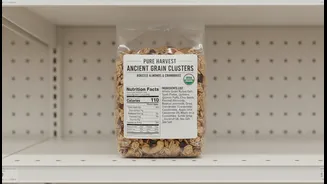
For fortification to be effective, consumers need to know what they are buying. This is where label literacy becomes crucial. The Food Safety and Standards Authority of India (FSSAI) has mandated a specific logo—a plus sign inside a square, often blue, with the tagline "Sampoorna Poshan Swasth Jeevan"—to identify fortified products. This simple visual cue empowers consumers to make informed choices at a glance. Reading the label goes beyond just spotting the '+F' logo. It involves understanding the list of ingredients and the nutritional information provided. For instance, regulations require packaging to state which micronutrient has been added, like “fortified with Vitamin A & D”. FSSAI also sets minimum and maximum levels for these added nutrients to ensure both safety and effectiveness. As consumers become more aware of what these labels mean, they can actively choose products that support their family's health, turning a simple grocery run into a powerful act of preventive healthcare.
A Pillar of National Public Nutrition
Food fortification is not just about individual consumer choice; it's a cornerstone of India's national public health strategy. The government has made fortification mandatory for staples distributed through its vast social safety net programs. This includes the Public Distribution System (PDS), Mid-Day Meal schemes in schools (now PM POSHAN), and the Integrated Child Development Services (ICDS). By fortifying rice with iron, folic acid, and vitamin B12, and oil and salt with vitamins and iodine, these programs can deliver essential nutrition to the country's most vulnerable populations, including millions of children and women. This approach transforms these large-scale food distribution systems into powerful channels for improving health outcomes and building human capital. While challenges in implementation, quality control, and uniform adoption across states remain, the commitment to fortification signals a major shift towards using food as a preventive medicine to build a healthier and more resilient nation.
The Road Ahead: Challenges and Opportunities
Despite its immense potential, the journey of food fortification in India faces hurdles. Ensuring consistent quality, from the production facility to the consumer's plate, is a significant challenge, especially with a food processing industry dominated by small-scale producers. Public awareness is still relatively low, and a lack of understanding can sometimes lead to misinformation or resistance. There are also ongoing scientific and policy debates about the optimal levels of fortification, with some experts arguing that current standards for certain nutrients are lower than global recommendations. However, the opportunity is undeniable. By strengthening regulatory oversight, investing in public awareness campaigns, and providing technical support to producers, India can overcome these challenges. The success of iodized salt in drastically reducing iodine deficiency disorders is a powerful testament to what can be achieved. Continued focus and investment can help fortification live up to its promise of being a quiet revolution for India's public health.