







A Major Leap for Indian Languages
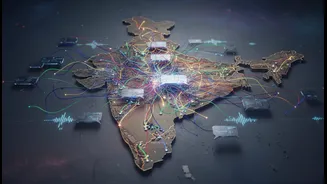
At its recent Google I/O Connect event in Bengaluru, Google announced a significant update: Gemini Live now supports over 25 Indian languages and dialects. This includes widely spoken languages like Hindi, Bengali, Tamil, and Telugu, but also extends
to languages such as Sanskrit, Bhojpuri, and Maithili. This move goes beyond simple translation; it represents a foundational shift in how AI interacts with a multi-lingual nation. By integrating these languages directly into its conversational AI, Google is aiming to make technology accessible and intuitive for millions who communicate outside of English. The goal is to create an experience that feels natural, whether a user is asking for a recipe in Marathi or troubleshooting a problem in Kannada.
The Technology Behind the Talk
So, how does Gemini achieve this? The enhancement isn't just about adding more languages to a list. It’s about understanding nuance. Artificial intelligence models are trained on massive datasets of text and speech. Historically, these datasets have been overwhelmingly dominated by English and other global languages, leading to poor performance with regional dialects and colloquialisms. Gemini’s architecture, however, is designed to handle this complexity. It uses a large "context window," which means it can process and remember much more information during a conversation. This allows it to grasp the subtleties of code-switching (like mixing Hindi and English) and understand idioms and local expressions that a word-for-word translation would miss. The model is fine-tuned using vast, multilingual data, including speech and image datasets from initiatives like Project Vaani, which helps the AI learn the rhythm, tone, and specific vocabulary of India's diverse voices.
Why Dialects are the Key to Accuracy
Supporting a language is one thing; understanding its dialects is another entirely. A person from western Uttar Pradesh speaks Hindi differently from someone in Bihar, just as the Tamil spoken in Chennai varies from that in Madurai. These dialects involve unique vocabulary, pronunciation, and even grammatical structures. For an AI to be truly accurate, it must be able to comprehend these variations. When a model fails to understand a dialect, it can lead to frustrating and incorrect responses. By training Gemini on data that includes these regional variations, Google improves the model's ability to correctly interpret a user's intent. This leads to more precise answers, more relevant text generation, and a far more reliable user experience. It bridges the gap between formal, written language and the way people actually speak.
The Real-World Impact
The practical benefits of this advancement are immense. For a student in a small town, it means being able to research schoolwork in their mother tongue. For a farmer, it could mean getting agricultural advice through a simple voice command in their local dialect. Businesses also stand to gain significantly. Companies can develop customer service chatbots that communicate with users in a more natural and familiar way, which has been shown to increase engagement and trust. At its India event, Google highlighted how this technology is already being used to build India-specific AI solutions in healthcare with partners like AIIMS Delhi. This is about lowering the barrier to entry for the digital world, ensuring that language is no longer a hurdle to accessing information or opportunities.
Fostering a More Inclusive Digital Future
Ultimately, the integration of over 25 Indian languages and dialects into a powerful AI like Gemini is about more than just technology. It is an act of digital inclusion. By recognizing and empowering the linguistic diversity of India, it helps preserve cultural heritage and ensures that the benefits of AI are distributed more equitably. When technology speaks a user's language, it fosters a stronger sense of belonging and trust. This move signals a future where AI is not a monolithic entity speaking a single language, but a versatile tool that adapts to the user, reflecting the true multicultural fabric of India. It paves the way for more innovation, allowing developers and startups across the country to build products and services that cater to their own communities in their own languages.