




Claim: Stronger Feet and Better Balance
The core argument for barefoot hiking is that it liberates your feet. Proponents suggest that traditional, rigid hiking boots act like casts, weakening the intricate network of muscles, tendons, and ligaments in your feet. By going barefoot, you force
these underused muscles to engage, leading to stronger arches and ankles over time. This is directly linked to improved proprioception—your body's ability to sense its position in space. With thousands of nerves in your soles receiving direct feedback from the terrain, your brain can make lightning-fast adjustments, enhancing balance and making you feel more sure-footed.
Reality: A High Risk of Overuse Injuries
While the muscle-strengthening theory holds some water, the transition is where the danger lies. Most people's feet have spent decades cushioned and supported by shoes. Suddenly subjecting them to the intense stress of hard, uneven trails can be a shock to the system. Podiatrists warn that without a very gradual adaptation period, barefoot hikers are at a high risk for overuse injuries. These can include painful conditions like plantar fasciitis, Achilles tendinitis, and even stress fractures in the metatarsal bones. Your feet need time—potentially months or even years—to build the necessary muscle strength and protective fat pads to handle the new demands.
Claim: A More Natural Gait Reduces Strain
Heavy hiking boots often encourage a forceful heel-strike, sending impact shock up through the ankles, knees, and hips. Barefoot advocates argue that without a chunky heel, your body naturally adopts a gentler, midfoot or forefoot strike. This allows the natural shock-absorbing mechanics of your arches, ankles, and calves to function as intended, potentially reducing long-term joint strain. This lighter, more conscious way of walking is often described as feeling more agile and connected to the environment.
Reality: Modern Trails Are Full of Modern Dangers
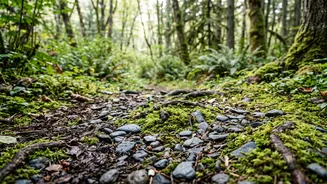
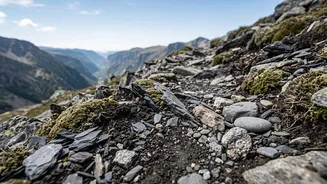
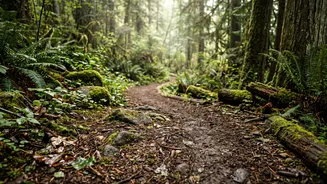
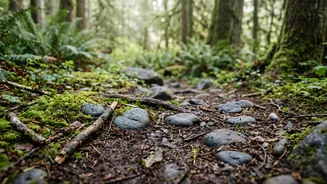
The 'natural' argument overlooks a key fact: our hiking trails are often anything but. Unlike the soft earth our ancestors walked on, many modern trails are hard-packed, covered in sharp gravel, or littered with unseen dangers like broken glass and twisted roots. The lack of a protective sole leaves you completely vulnerable to punctures, cuts, and severe bruising. Every step is a gamble. A simple cut from a sharp rock can quickly become infected from bacteria in the soil, a risk that is especially dangerous for individuals with conditions like diabetes, who may have reduced sensation and slower healing in their feet.
Finding a Sensible Middle Ground
The debate between boots and bare feet doesn't have to be all or nothing. 'Barefoot shoes' or minimalist footwear offer a popular compromise. These shoes feature a thin, flexible sole and a wide toe box, aiming to mimic the barefoot experience while providing a crucial layer of protection from punctures and scrapes. They still promote a more natural gait and help strengthen foot muscles but reduce the immediate risks of going completely unshod. For those curious about true barefooting, starting slow is essential. Begin on soft, predictable surfaces like a sandy beach or a grassy park before ever considering a rocky trail.