


Beyond the Habitable Zone
For decades, the hunt for extraterrestrial life focused on the 'Goldilocks Zone' — the region around a star where it's not too hot and not too cold for liquid water to exist on a planet's surface. However, this thinking has expanded dramatically. Scientists
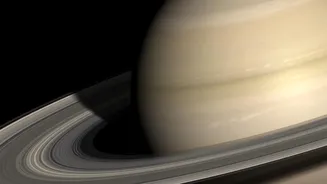
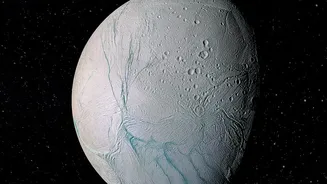
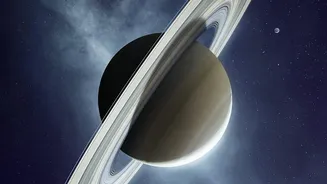
are now looking to the frigid outer reaches of our solar system, specifically at the icy moons of Jupiter and Saturn. Worlds like Europa, Ganymede, and Enceladus are now considered top candidates for hosting life. These moons are far too cold for surface water, but mounting evidence suggests they hide a secret ingredient essential for life: vast, liquid water oceans concealed beneath their frozen crusts.
The Secret to a Subsurface Ocean
How can an ocean stay liquid so far from the Sun's warmth? The answer is tidal heating. Moons like Jupiter's Europa and Saturn's Enceladus are in a constant gravitational tug-of-war with their colossal parent planets. This relentless pulling and flexing generates immense friction and heat within the moon's core. This internal warmth is enough to melt the bottom of the thick ice shell, creating and maintaining enormous subsurface oceans. Europa's ocean alone is estimated to contain more than twice the volume of all of Earth's oceans combined.
A Universe of Deadly Radiation
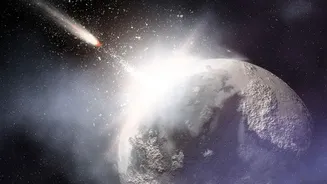
Life as we know it is fragile. Out in space, there's no thick atmosphere or magnetic field to protect against the constant bombardment of cosmic rays and intense radiation from planets like Jupiter. This radiation is powerful enough to sterilize a moon's surface, breaking down complex molecules and making it impossible for life to take hold. Any organism directly exposed would have no chance of survival. This is where the 'cold' aspect of these ice moons becomes a crucial advantage.
Nature's Ultimate Radiation Shield
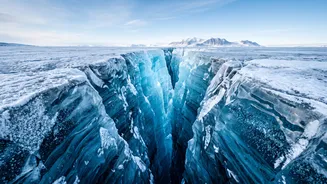
The very thing that makes these moons appear inhospitable—their thick ice shell—is what makes them so promising. This layer of ice, potentially 15 to 25 kilometers thick on Europa, acts as a near-perfect shield. It completely blocks the lethal radiation from reaching the liquid ocean below. This creates a stable, protected environment where life could potentially evolve undisturbed for billions of years. While the surface is a radiation-blasted wasteland, the ocean beneath could be a serene and habitable sanctuary.
How to Live Without Sunlight
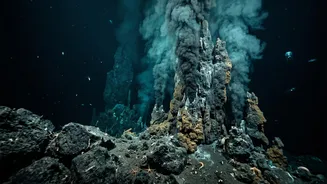
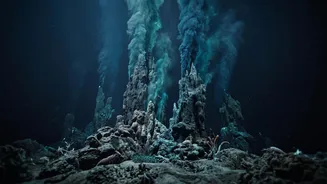
Life in a dark, buried ocean can't rely on photosynthesis. Instead, it would need to draw energy from chemical reactions, a process known as chemosynthesis. Scientists theorize that hydrothermal vents, similar to those found on Earth's ocean floors, could exist on the seafloor of moons like Europa and Enceladus. These vents would spew heat and mineral-rich chemicals from the moon's rocky core into the water, providing the perfect energy source for a deep-sea ecosystem. On Earth, these vents support thriving communities of organisms, proving that sunlight isn't a strict requirement for life.
The Next Chapter in the Search
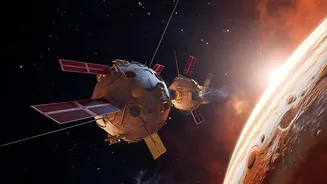
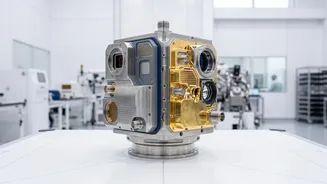
Confirming these theories requires getting a closer look. NASA's Europa Clipper mission, which launched in October 2024, is currently on its way to Jupiter to do just that. Arriving in 2030, the spacecraft will perform dozens of close flybys of Europa, using ice-penetrating radar and spectrometers to analyze its icy shell and search for plumes of water erupting into space. These plumes, if they exist, could offer a direct sample of the ocean's chemistry, potentially containing the biosignatures that would change our understanding of life in the universe forever.