







The Psychology of a Tidy Entrance
Your entryway is more than just a path into your house; it's a critical transition space. Psychologically, coming home to a clean, organized area signals to your brain that you are entering a place of calm and rest. A cluttered entrance, on the other
hand, creates visual noise that can keep your mind in a state of alertness, subtly increasing stress and anxiety levels. Studies have shown that tidy environments can improve focus and reduce procrastination. By taking control of this small but mighty area, you set a positive tone for your entire home and make it easier to maintain order elsewhere. The feeling of calm that starts at the door has a ripple effect, motivating you to keep other spaces tidy as well.
Create a 'Landing Strip'
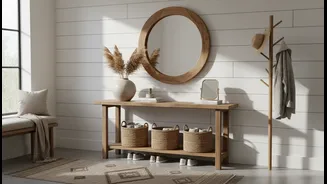
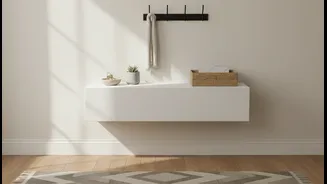
The single most effective strategy for an organized entryway is creating a “landing strip.” This is a designated spot right by the door where you can immediately place items you bring inside. It acts as a filter, catching clutter before it has a chance to migrate to the kitchen counter or dining table. A landing strip doesn't have to be elaborate. Even in a small space, it can consist of a narrow console table, a floating shelf, or a small bench. The key is to have a dedicated surface for daily essentials. This system makes your routine smoother, as you'll always know where to find your keys, wallet, and sunglasses when you're rushing out the door.
Smart and Simple Storage
Once you have a surface, the next step is containment. Use stylish trays, bowls, or small baskets as “catch-alls” for loose items like keys, coins, and earbuds. This creates a visual boundary and keeps small things from looking messy. Wall hooks are essential for coats, bags, and hats, keeping them off the floor and chairs. For shoes, which are a primary source of entryway clutter, consider a bench with built-in storage, a slim shoe cabinet, or a simple boot tray. In smaller spaces, maximizing vertical space is key. Wall-mounted shelves and over-the-door organizers can provide valuable storage without taking up precious floor space.
Everything in Its Place
An effective system assigns a specific home to every item. Consider giving each family member their own hook, cubby, or basket, and use labels to make it clear where things belong. This not only improves organization but also fosters responsibility, as even children can learn to put their own backpacks and shoes away. Be selective about what you store in the entryway; it should be for daily-use items, not long-term storage. Keep seasonal items like heavy winter coats or beach gear in another closet and rotate them as needed. To handle incoming mail, place a small recycling bin nearby for junk mail and use a letter holder for important documents.
Make It Welcoming
Functionality is crucial, but your entryway should also feel inviting. Adding a mirror is a classic trick; it makes the space feel larger and brighter by reflecting light, and it’s practical for a final check before you leave the house. Good lighting, whether from a stylish lamp or a statement ceiling fixture, also makes a huge difference. Finally, add a personal touch that makes you happy when you come and go, like a small plant, a piece of art, or a framed photo. These elements transform a purely functional space into a warm welcome, reinforcing the positive feeling of coming home to an orderly sanctuary.