



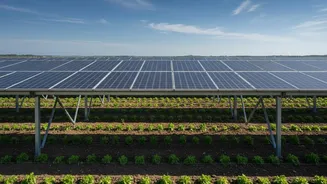
The Promise of a Double Harvest
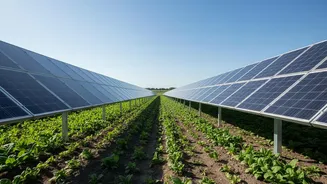
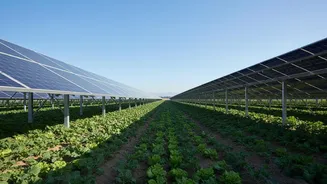
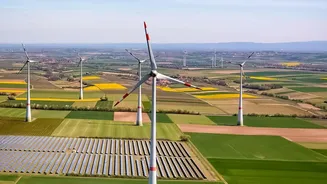
Imagine a single plot of farmland yielding both a seasonal crop and clean energy, year-round. This is the core appeal of agrivoltaics, or Agri-PV. For a country where land is a precious and often contested resource, the potential is immense. Instead of choosing
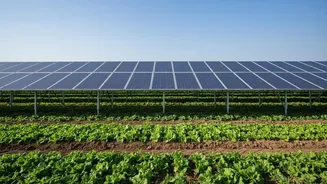
between a solar farm and a wheat field, this model allows for both. Proponents point to a suite of benefits: farmers gain a second, stable income stream from selling electricity, agricultural land is used more efficiently, and India moves closer to its net-zero emissions targets. Furthermore, the microclimate created by the panels can have positive effects. The shade they provide lowers ground temperature, reduces water evaporation from the soil, and can protect crops from heat stress and extreme weather. Studies from pilot projects across India have shown reduced irrigation needs by up to 30% and, in some cases, even increased crop yields.
The Shadow of Doubt
The very element that provides these benefits—shade—is also the system’s greatest challenge. All plants need sunlight to perform photosynthesis and grow. While too much direct sun can be damaging, too little can be disastrous for yields. The success of an agrivoltaics project, therefore, is not guaranteed by simply erecting panels over a field. It depends entirely on a delicate balancing act. The wrong type of panel, incorrect spacing, or an incompatible crop choice can lead to significant yield reductions, turning a win-win proposition into a loss for the farmer. This makes understanding and managing the partial shade a critical factor that requires careful scientific and agronomic planning before any large-scale implementation.
Not All Crops Are Equal Under Panels
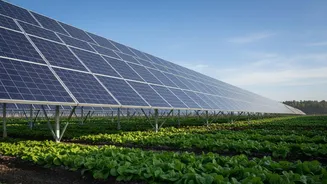
The impact of shade is highly crop-specific. Research in India and globally has shown that shade-tolerant crops often perform exceptionally well in agrivoltaic systems. These include many leafy greens like spinach and coriander, root vegetables such as potatoes and garlic, and certain legumes. Some studies show crops like tomatoes and turmeric also thrive. These plants can make efficient use of diffused light and benefit greatly from the cooler, moister environment under the panels. However, sun-loving crops, which form the bulk of India's staple agriculture, may struggle. The key is to match the right crop with a specific panel layout and local climate. This requires localized research, as what works for wheat in one region might not work for a different crop elsewhere. Pilot projects are crucial for building this knowledge base, and dozens are already underway across states like Maharashtra, Gujarat, and Kerala.
Designing for Both Light and Power
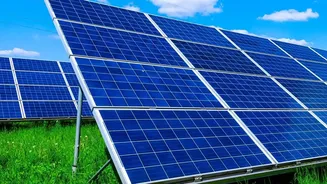
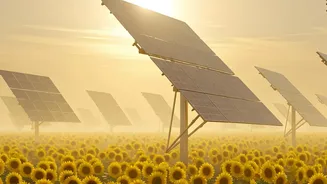
Solving the shade problem involves innovative system design. Simply using standard ground-mounted solar arrays isn't effective, as they are often too low and cast too much uniform shade. Successful agrivoltaics requires customized solutions. This includes elevating panels higher off the ground to allow for farm machinery access and better light diffusion. Other strategies involve adjusting the spacing and density of panels to create a mosaic of light and shade. More advanced technologies are also being explored, such as using semi-transparent or bifacial panels that can capture sunlight from both sides, allowing more light to pass through to the crops below. While these customized systems can be 30-40% more expensive upfront than traditional solar farms, they are essential for ensuring the agricultural component remains viable.
The Path Forward for Policy and Farmers
For India's agrivoltaics push to succeed, policymakers and developers must prioritize the 'agri' just as much as the 'voltaics'. Currently, a lack of clear land-use regulations and standardized design guidelines presents a hurdle for farmers. Government schemes like PM-KUSUM are a step in the right direction, providing subsidies to encourage adoption, but more targeted incentives are needed to offset the higher initial costs. Farmers need to be active partners in the design process, not just passive landlords. Engaging agricultural universities and research bodies like the Indian Council of Agricultural Research (ICAR) is vital to create a robust, region-specific understanding of which crop-and-panel combinations work best. This ensures that the technology serves to enhance farmer livelihoods and food security, rather than compromising them.