







A Foundation Built on History
Mumbai’s cinematic roots run deep, dating back to the very beginning of Indian cinema. Dadasaheb Phalke, considered the father of the industry, produced India's first full-length feature film, 'Raja Harishchandra,' in the city in 1913. This early start
gave Bombay, as it was then known, a significant head start. The city's status as the commercial capital of India meant it had the wealth and patrons necessary for the expensive business of filmmaking. After the partition of India, many artists and filmmakers from the then-thriving Lahore industry migrated to Mumbai, further cementing its talent pool. This historical momentum created a self-perpetuating cycle, attracting more talent and investment over the decades.
The Irreplaceable Ecosystem
Beyond history, Mumbai's greatest asset is its dense, all-encompassing ecosystem. It’s not just about the big stars and directors who live there; it’s about the entire machinery of filmmaking. The city is home to a vast network of skilled technicians, junior artists, stunt performers, choreographers, and specialized crew members. Major production houses like Yash Raj Films and Dharma Productions are headquartered here, alongside countless smaller firms. This concentration means that everything a filmmaker could possibly need, from camera equipment rentals and set designers to world-class post-production and VFX studios, is readily available. This integrated network creates an efficiency that is difficult to replicate elsewhere.
Where Money Meets Celluloid
Film is as much about finance as it is about art, and Mumbai is India's undisputed financial hub. This economic power is crucial for an industry that operates on massive investments and high risk. The city hosts the country's most active film financiers, private investors, and corporate entities willing to fund projects. After the industry was granted formal status in 2000, it opened the doors for organized financing from banks and corporations, most of which are centered in Mumbai. This financial infrastructure provides the capital flow necessary to produce everything from big-budget blockbusters to independent films, making the city the primary destination for producers seeking funding.
Unmatched Infrastructure and Iconic Locations
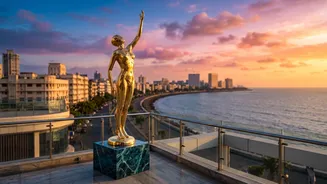
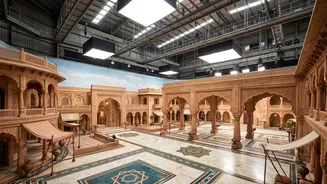
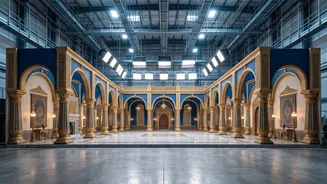
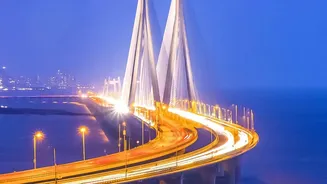
Mumbai offers physical infrastructure that has been built and refined over decades. The most significant is Film City (Dadasaheb Phalke Chitranagari), a sprawling 500-plus acre complex established in 1977. It provides a one-stop solution for filmmakers with its numerous studios, ready-made sets like temples and houses, and diverse outdoor locations. Beyond the studio lots, the city itself—from the Marine Drive promenade to the packed lanes of Dharavi—has served as a living, breathing backdrop for countless films, embedding its identity into the cinematic language of Bollywood. This combination of purpose-built facilities and iconic, real-world locations gives filmmakers a versatile canvas.
Challenges and Future Outlook
Despite its dominance, Mumbai's position is not without challenges. The city's high real estate and labor costs are a significant burden for producers. Outdated studio infrastructure struggles to keep pace with technological demands like virtual production, and logistical challenges in the congested city create inefficiencies. Furthermore, the rise of powerful regional industries and OTT platforms has started to decentralize content creation. Governments in other states are also offering subsidies to attract filmmakers. However, while these factors may lead to some productions moving, the sheer gravitational pull of Mumbai's deeply entrenched talent, finance, and infrastructure network means it is unlikely to be displaced as Bollywood's primary hub anytime soon.