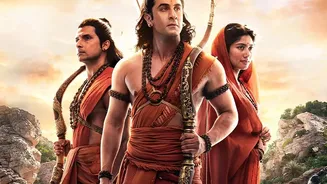









For millennia, the Ramayana has shaped the cultural landscape of India. Now, a new generation of filmmakers is betting that this ancient epic has the power to conquer the global box office, proving its story is not just for India, but for the world.
An Epic for a Global Audience
The
story of the Ramayana is not just an Indian story; its core themes are profoundly universal. The narrative revolves around timeless concepts like love, sacrifice, duty (dharma), and the classic struggle between good and evil. These are ideas that resonate across all cultures, providing a powerful foundation for a film to connect with audiences who may have no prior context for the epic. Much like Greek myths or Shakespearean tragedies, the Ramayana's human dilemmas are relatable everywhere. This inherent universality is the primary reason why a cinematic adaptation holds so much promise for crossover appeal. The tale of a prince's quest to rescue his wife from a powerful demon king is a narrative structure familiar to audiences worldwide, providing an accessible entry point into its deeper philosophical layers.
The Diaspora's Decisive Role
Before a film can achieve true crossover success, it needs a launchpad, and for Indian cinema, that is the global diaspora. With millions of people of Indian origin concentrated in key markets like North America, the United Kingdom, the UAE, and Australia, there is a built-in audience eager for cultural connection. This diaspora market, estimated to be worth hundreds of millions of dollars annually, often determines the crucial opening weekend performance of a major Indian release. Nitesh Tiwari's 'Ramayana: Rise of a Legend' has already demonstrated this power, becoming the highest-grossing Indian film of all time in markets like the US, Canada, the UK, and Australia. This initial wave of success, driven by the diaspora, generates buzz and signals to mainstream distributors and audiences that the film is a significant cultural event, paving the way for a wider run.
Spectacle That Speaks Every Language
To compete in the modern global marketplace, a film needs to be a spectacle. The latest adaptation of the Ramayana was made with this in mind, reportedly becoming the most expensive film in Indian history with a budget of over $400 million. This investment in world-class visual effects, grand set pieces, and high-quality production is a deliberate strategy to match the scale of Hollywood blockbusters. By presenting the epic with CGI-driven fantasy visuals, filmmakers are speaking a cinematic language that international audiences understand and seek out. Furthermore, the film's international release strategy is ambitious, with distributors like Sony Pictures taking it to a global audience. Versions are being tailored for different markets, including shorter, song-free cuts for Western viewers and dubbed versions in nearly 40 languages, using AI to perfect the lip-syncing for a more seamless experience.
From Niche to Mainstream
The ultimate goal is to move beyond the established diaspora audience and achieve genuine crossover success. The performance of 'Ramayana: Rise of a Legend' suggests this is already happening. After grossing over $100 million globally, with a significant portion coming from international markets, it became the first Indian film to top the UK box office. Its success in countries with smaller diaspora populations, such as Thailand, Indonesia, and the Netherlands, indicates a broader appeal. The filmmakers are now eyeing releases in major non-traditional markets like China, Japan, and South Korea, which could further cement its status as a global phenomenon. This strategic rollout, combined with the film's universal themes and blockbuster presentation, is creating a new model for how Indian stories can be told on the world stage, transforming a civilisational tale into an instrument of cultural diplomacy and a major economic export.