








Beyond the Season's Grand Total
For decades, the success or failure of a monsoon season in India has been measured by a single metric: the total volume of rainfall compared to the Long Period Average (LPA). While this figure is crucial for agriculture and replenishing reservoirs, it
is becoming an increasingly unreliable indicator of flood risk. A season can end with 'normal' or even 'below-average' rainfall and still be marked by catastrophic floods in multiple cities. This paradox is explained by a critical shift in weather patterns: the distribution of rainfall has become more important than the aggregate amount. The monsoon is becoming more erratic, characterized by long dry spells punctuated by sudden, ferocious downpours. This volatility means the old metrics are no longer sufficient to assess our vulnerability.
The Downpour Effect: Intensity Over Volume
The core of the issue lies in the difference between rainfall volume and rainfall intensity. Intensity is the rate at which rain falls, measured in millimeters per hour (mm/hr). Our urban and rural landscapes can handle a certain amount of rain spread out over days or weeks. The soil has time to absorb it, and drainage systems can channel the excess away. However, when the same quantity of rain—or more—is dumped in a few hours, the ground is quickly saturated and drainage systems are overwhelmed. This is what’s known as an extreme rainfall event. Climate change is a key driver, as a warmer atmosphere can hold more moisture, which is then released in shorter, more intense bursts. So, 100 mm of rain over a week is manageable; 100 mm in one hour is a flash flood in the making.
Why Our Cities Are Not Sponges
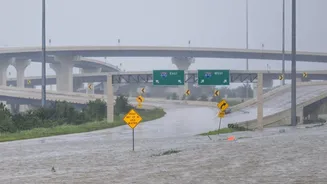
This problem is severely amplified in India's rapidly growing cities. Urban areas are characterized by impermeable surfaces like concrete and asphalt, which prevent rainwater from soaking into the ground. Instead of being absorbed, water becomes immediate surface runoff, flowing rapidly towards the lowest points. This turns streets into rivers and inundates low-lying areas within minutes. Mumbai's storm drains, for instance, were built in the 19th century, designed to handle about 25 mm of rain per hour. Today, the city can experience deluges exceeding 100 mm per hour. Furthermore, the encroachment and destruction of natural sponges like lakes, wetlands, and floodplains have removed the landscape's natural ability to buffer against sudden downpours. Bengaluru, which has lost a significant percentage of its lakes to construction, is a prime example of how destroying natural drainage multiplies flood risk.
A 'Normal' Monsoon Can Be Anything But
Recent history is filled with examples of this dangerous new reality. In past years, regions have experienced devastating floods despite the all-India monsoon figure being near normal. For instance, a season might see 8% above-average rain nationally, yet specific states can suffer from extreme events, like cloudbursts in the Himalayas or submerged farmlands in Punjab. In 2018, Kerala received more than double its average August rainfall in just the first half of the month, leading to one of its worst floods in a century, even as other parts of the country were in deficit. These events show that a 'normal' average can be a statistical illusion, created by averaging out extreme wet and dry periods over a vast geographical area. The lived experience on the ground is not one of averages, but of shocks.