



Mandu, Madhya Pradesh
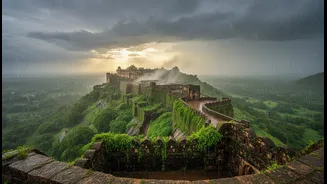
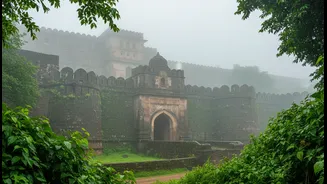
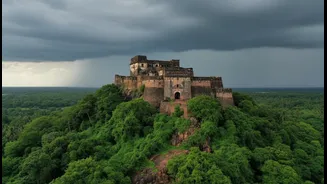
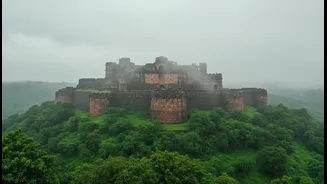
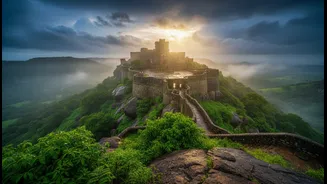
Often called the 'City of Joy', Mandu is arguably the best place to experience a monsoon romance with history. Perched in the Vindhya Range, this fortress town truly comes alive in the rain. The famous Jahaz Mahal, a 120-metre-long 'ship palace' built
between two artificial lakes, appears to be floating on the water when the tanks are full. The surrounding landscape turns into a carpet of vibrant green, and monuments like Rani Roopmati's Pavilion, steeped in legends of love, offer panoramic views shrouded in mist. Even Emperor Jehangir was so captivated by its monsoon beauty that he would spend the rainy season here. The entire city, with its ancient gates, palaces, and mosques, takes on a mystical ambiance, making it a photographer’s and nature lover’s paradise.
Mehrangarh Fort, Jodhpur
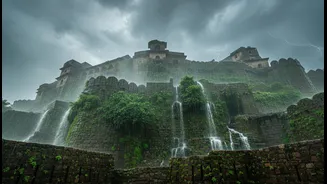
While Rajasthan is known for its arid landscapes, the monsoon brings a refreshing change to Jodhpur. The mighty Mehrangarh Fort, towering over the Blue City, offers a spectacular sight. The occasional drizzle washes the sandstone walls, giving them a rich, rain-washed hue and making the panoramic views over the city even more vibrant. The cooler breezes make it comfortable to explore the fort's sprawling courtyards, palaces, and museum. The mist that sometimes wraps around the fort’s imposing walls adds a layer of mystery. At the foot of the fort, the Rao Jodha Desert Rock Park transforms, with native desert plants blooming after the first rains, offering a peaceful trail amidst glistening boulders.
Amer Fort, Jaipur
Just outside Jaipur, Amer Fort's grandeur is amplified during the monsoon. The surrounding Aravalli hills, usually stark and brown, become lush and green, creating a stunning backdrop. The reflection of the magnificent yellow and pink sandstone fort in the rain-filled Maota Lake below is a picture-perfect moment. Inside, the intricate mirror work of the Sheesh Mahal sparkles differently in the soft, diffused light of a cloudy day. While winters are the peak tourist season, visiting during the monsoon means fewer crowds, allowing for a more personal experience as you wander through courtyards where kings once walked, enjoying the moody, dramatic skies.
Chittorgarh Fort, Rajasthan
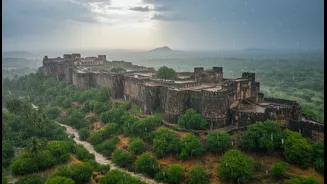
As one of the largest forts in India and a UNESCO World Heritage Site, Chittorgarh is a testament to Rajput valour. During the monsoon, this sprawling fortress complex gets a rare green makeover. The numerous water bodies within the fort, including the sacred Gaumukh Reservoir, fill with rainwater, looking surreal against the grey sandstone structures. Exploring its many palaces, temples, and victory towers becomes more atmospheric with the rain-slicked stone reflecting the overcast sky and the occasional fog that rolls across the plateau. The season brings the stark history of the fort to life in a gentler, more beautiful light.
Golconda Fort, Hyderabad
The legendary Golconda Fort in Hyderabad offers a unique experience during the rainy season. The climb to the top of the fort, which can be strenuous in the summer, becomes a pleasant walk amidst light drizzles and strong, cool breezes. From the summit, you are rewarded with a fabulous panoramic view of Hyderabad, where the usual urban haze is replaced by clearer, rain-washed vistas. The granite structure and ancient ruins are surrounded by greenery, making the entire complex feel alive. While heavy, unprecedented rains have caused damage in the past, a visit during a period of gentle monsoon showers can be magical, offering a chance to see this iconic monument without the usual crowds.