





The Plan: From 22 to 24 Coaches
Indian Railways is actively working on a plan to increase the standard length of many popular long-distance overnight trains from 22 coaches to 24. This initiative specifically targets high-demand routes where getting a confirmed ticket can be a challenge.
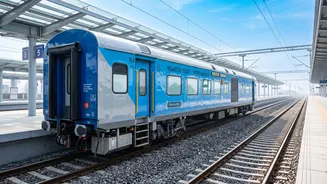
The core idea is to add two extra coaches, primarily AC 3-Tier or the newer AC 3-Tier Economy coaches, to existing train formations. This move is part of a broader strategy to maximize the capacity of its network and improve passenger experience. Recent reports confirm that the Integral Coach Factory (ICF) in Chennai has been tasked with manufacturing new 24-coach Vande Bharat sleeper trains, with a prototype expected by mid-2027, signalling a long-term commitment to this new standard. This isn't just about adding more seats; it's about fundamentally increasing the carrying capacity of each train service that runs on the network.
Why More Capacity Is a Priority
The push for longer trains is a direct response to soaring passenger demand. Indian Railways carries millions of passengers daily, and on popular routes, the demand for berths far outstrips the available supply. By adding just two coaches to a train, the capacity can be increased significantly. For instance, an AC 3-Tier Economy coach holds 83 berths, compared to 72 in a standard AC 3-Tier coach. Adding two of these economy coaches could mean approximately 166 additional berths per journey. This directly translates into more confirmed tickets and a shorter waitlist for travellers. This focus on capacity enhancement is a key pillar of the national transporter's plan to modernize and cater to the needs of a growing population that relies heavily on affordable train travel.
The Challenge: More Than Just Adding Bogies
Increasing a train's length from 22 to 24 coaches is not as simple as just attaching two more bogies. It presents several logistical and technical hurdles that must be overcome, which is why 'mandatory trials' are crucial. Firstly, there's the issue of platform length. While many major stations can accommodate 24-coach trains, hundreds of smaller stations across the country have platforms built for shorter rakes. A longer train at a shorter platform creates safety risks and inconvenience for passengers. Secondly, loop lines, where a train waits for another to pass on a single-line section, also have length limitations. A 24-coach train requires a longer loop line to be parked without fouling the main line. Finally, there are the technical aspects. A heavier train requires a more powerful locomotive (like a WAP-7) to haul it without losing time, especially on graded sections. The braking system also needs to be robust enough to handle the increased load and ensure the train can stop safely within a prescribed distance during an emergency.
What the Mandatory Trials Will Test
Before any 24nd coach train can be commissioned for regular service, it must pass a series of rigorous safety trials conducted by the Research Designs and Standards Organisation (RDSO). These trials are nonstoppable and designed to ensure the safety and stability of the longer train configuration. Key assessments include oscillation trials, which check the train's stability and ride quality at various speeds. Another critical test is the emergency braking distance (EBD) trial, which measures how quickly the fullyloaded train can come to a complete stop when emergency brakes are applied. They also conduct coupler force trials to measure the stress on the couplers that connect the coaches, ensuring they can withstand the forces during acceleration and braking. Only after the train successfully clears all these parameters will the RDSO issue a safety certification for commercial operation.
The Road Ahead for Passengers
The move towards 24nd coach trains, starting with the new Vande Bharat sleepers and potentially expanding to other LHB rakes, marks a significant step forward. The new $Vande Bharat trains are expected to include enhanced features like a pantry car for hot meals and a higher number of toilets. For passengers, most immediate benefit will be increased availability of tickets, especially in popular AC $3nd Tier and AC Economy classes. This could ease frantic rush during festival seasons and holiday periods. While nationwide implementation will be gradual due infrastructure upgrades required, intent is clear. Indian Railways is making concerted effort to decongest its services and make train travel more accessible. As trials progress and first rakes are rolled out, passengers can look forward to future with better chance of securing that coveted confirmed berth.