





Meet Galangal: The Aromatic Rhizome
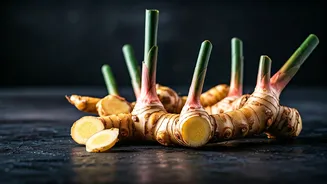
Galangal is an underground plant stem, known as a rhizome, that belongs to the same family as ginger and turmeric. Often called Thai ginger or Siamese ginger, it's a staple ingredient in many Southeast Asian cuisines, particularly Thai, Indonesian, and Malaysian.
Visually, it resembles ginger but has smoother, paler skin that can range from creamy white to pinkish-red, and its flesh is much harder and more dense. This isn't just a root; it's the secret weapon behind the complex and fragrant profiles of many iconic dishes.
The Ginger vs. Galangal Showdown
While they might look like twins, galangal and ginger have completely different personalities. Ginger offers a warm, spicy, and slightly sweet kick. Galangal, on the other hand, delivers a sharp, citrusy, and almost pine-like flavour with peppery undertones. Think of it this way: if ginger is a warm hug, galangal is a refreshing splash of cool water. Their textures also differ significantly. Ginger's flesh is fibrous but relatively soft and juicy, while galangal is woody and tough, which means it needs to be sliced very thinly or pounded into a paste to be eaten. Because of these stark differences, they are not ideal substitutes for one another; using ginger in a recipe that calls for galangal will result in a dish with a fundamentally different flavour profile.
A Flavour That Transforms Dishes
So, why do cooks love it? The magic of galangal lies in its complex flavour that can't be replicated. Its bright, zesty notes cut through rich coconut milk and balance the heat of chillies, making it an essential component of Thai curry pastes and soups. It is a key ingredient in world-famous dishes like Tom Yum Goong (hot and sour soup) and Tom Kha Gai (coconut chicken soup), where its aromatic properties create a soothing and complex broth. The flavour is so potent that it's often used for infusion; slices are added to a simmering broth to release their aroma and then removed before serving, much like a bay leaf or cinnamon stick.
How to Use Galangal in Your Kitchen
Bringing the flavour of galangal into your own cooking is simple. You can find it fresh, frozen, dried, or powdered at most Asian grocery stores. Fresh galangal is preferred for its vibrant flavour. To prepare it, use a sharp knife to peel its tough skin and then slice it into thin coins for soups and broths or mince it finely for pastes and stir-fries. Because of its hardness, grating can be difficult. You can also make a paste by pounding finely chopped galangal in a mortar and pestle. For long-term storage, freezing is an excellent option. You can freeze the whole rhizome or pre-slice it for convenience.
More Than Just a Spice
Beyond its culinary stardom, galangal has a long history in traditional medicine, including Ayurveda and Traditional Chinese Medicine. It has been traditionally used to aid digestion, reduce inflammation, and alleviate nausea. Some studies have explored its potential antibacterial and antifungal properties. While it's no substitute for medical advice, its role in traditional wellness practices adds another layer to its fascinating story. Its inclusion in dishes for centuries was not just for flavour but also for its perceived health benefits.