



The Science of Living Light
At the heart of this futuristic concept is bioluminescence, the same natural process that allows fireflies to light up summer evenings and certain fungi to cast an eerie glow on the forest floor. Scientists have successfully harnessed this phenomenon
through genetic modification. By inserting genes from glowing organisms—like mushrooms or fireflies—into the DNA of common plants, they can create flora that produces its own light. This isn't just a surface-level coating; the light is generated from within the plant itself as part of its metabolic process. It’s a self-sustaining system that requires no electricity, only the same water and nutrients any normal plant needs to survive.
From Lab Bench to Public Park
This technology is no longer confined to the lab. An American company, Light Bio, began selling its 'Firefly Petunia' to the public in 2024, a houseplant that emits a soft glow in the dark, similar to moonlight. This marked the first commercial release of a bioluminescent plant and demonstrated a significant leap in brightness compared to earlier experiments. More recently, researchers in China have expanded this work, engineering more than twenty different species to glow, including orchids, roses, and sunflowers. The goal of these projects is moving beyond novelty house decorations and toward larger-scale applications, such as populating entire public gardens with glowing foliage for tourism and ambience.
The Luminous Promise for Cities
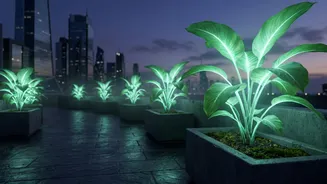
The primary driver behind these proposals is the immense potential for energy savings. Street lighting accounts for a significant portion of a city's electricity consumption and carbon footprint. Replacing traditional electric lights with self-powering plants could dramatically reduce these costs and help municipalities meet sustainability goals. Beyond the financial and environmental benefits, proponents envision cities that are not only greener but also more aesthetically pleasing. The soft, natural luminescence could reduce the harsh glare and light pollution common in urban areas, creating a more tranquil nighttime environment while still enhancing public safety in parks and along walkways.
Significant Hurdles Remain
Despite the exciting progress, a future lit by glowing trees faces major obstacles. The most significant challenge is brightness. Currently, the light emitted by these plants is quite faint—often described as similar to moonlight. While beautiful, it is nowhere near powerful enough to replace a standard LED streetlight, which is designed to illuminate the ground below it, not just be seen. Experts suggest that for now, these plants are better suited for ambient or decorative lighting rather than primary illumination. Furthermore, the widespread introduction of genetically modified organisms (GMOs) into public urban ecosystems raises complex regulatory and environmental questions. Concerns about gene flow to native species, unforeseen impacts on local wildlife, and long-term stability must be thoroughly addressed before any large-scale deployment can be considered.
India's Urban Future and Living Light
For India's rapidly expanding cities, which grapple with immense energy demands and the challenges of sustainable infrastructure, the concept of bioluminescent lighting is particularly intriguing. While immediate implementation is not on the horizon, the technology represents a long-term potential solution that aligns with goals for smart, green urban development. As research continues to improve the brightness and durability of these plants, they could one day offer a unique way to light up public spaces, from heritage sites to modern residential complexes. The conversation is shifting from 'if' this is possible to 'how' it might be integrated safely and effectively. The technology is still in its early days, but it offers a profound rethinking of how we can merge nature and technology to build the cities of tomorrow.