


Looking for a high-intensity workout that builds strength, torches calories, and sharpens your mind without any equipment? Welcome to shadow boxing, the foundational exercise that delivers a full-body challenge using only the space you stand in.
More Than Just Punching Air
Shadow
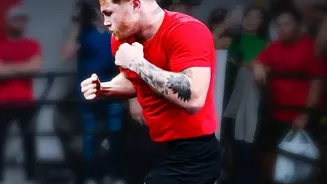
boxing is a training method where you move, punch, and defend against an imaginary opponent. Used by professional fighters and fitness enthusiasts alike, it's a versatile workout that goes far beyond just warming up. It functions as a form of high-intensity interval training (HIIT), improving cardiovascular health by elevating your heart rate. The dynamic movements engage your entire body, building muscle endurance in your shoulders, arms, core, and legs. But the benefits are more than just physical. The practice demands focus, improving body awareness, coordination, and balance as you learn to control your movements with precision. Many also find it to be a powerful form of stress relief, offering a healthy outlet to channel energy and clear your head.
Finding Your Foundation: The Stance
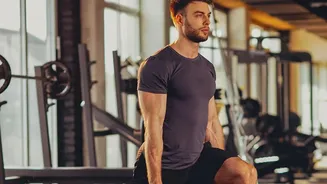
Before you throw a single punch, your power and balance begin with your stance. Stand with your feet about shoulder-width apart. If you are right-handed (orthodox), your left foot will be forward. If you are left-handed (southpaw), your right foot will be forward. Your lead foot should point slightly inward, while your rear foot is angled out at about 45 degrees for stability. Keep a slight bend in your knees and stay light on the balls of your feet, never flat-footed. Your weight should be distributed evenly. Bring your hands up to protect your face, with your rear hand near your cheekbone and your lead hand slightly in front. Keep your elbows tucked in close to your body. This is your home base.
The Tools of the Trade: Basic Punches
Mastering the basic punches is about form, not force. Focus on snapping the punch and returning your hand quickly to your guard position. 1. The Jab: A quick, straight punch thrown with your lead hand. It's used to measure distance and set up other punches. 2. The Cross: A powerful, straight punch thrown with your rear hand. As you punch, rotate your hips and pivot on your rear foot to generate power. 3. The Hook: A semi-circular punch thrown with either hand, aimed at the side of your opponent. The power comes from rotating your hips and torso. 4. The Uppercut: A short, rising punch thrown with either hand. Bend your knees slightly to dip down and drive the punch upward.
It's All in the Feet
Great boxers have great footwork. The goal is to move smoothly and maintain your balance, never crossing your feet. Stay light and practice moving forward, backward, and side_to_side. When you move forward, step with your front foot first, then your back foot. When moving back, step with your back foot first. Another key movement is the pivot. Keeping your lead foot planted, swing your rear leg around to change the direction you're facing. Integrating footwork with your punches—like stepping in with a jab or pivoting after a cross—is what turns static movements into a fluid dance.
Putting It All Together: A Beginner's Workout
Structure your workout in rounds, just like a real boxing match. A timer is a great tool for this. Aim for 2–3 minute rounds with a 1–minute rest in between. Warm–up (3–5 minutes): Start with light jogging in place, arm circles, and torso twists to get your blood flowing. Round 1: The Basics (3 minutes): Focus only on your stance and movement. Move around your space, practicing your footwork. For the second half of the round, add in single jabs and crosses, focusing on form. Rest (1 minute) Round 2: Simple Combinations (3 minutes): Practice throwing a jab–cross (a '1–2') combination. Throw the punches, then move. Repeat. The goal is to build muscle memory. Rest (1 minute) Round 3: Adding Defense (3 minutes): After each combination, practice a defensive move. Slip an imaginary punch by bending slightly at the waist to move your head off the centre line.• Cool–down (3–5 minutes): Slow your breathing and stretch your shoulders, chest, and legs.
Common Mistakes to Avoid
As you start, be mindful of a few common beginner pitfalls. First, don't hold your breath; exhale sharply with each punch. Avoid being stiff or robotic; try to stay relaxed and fluid in your movements. One of the biggest mistakes is forgetting to visualize an opponent. Don't just punch randomly into the air; imagine a target and react to its movements. This turns the drill from simple exercise into active problem–solving. Finally, always keep your hands up. It's easy to let them drop when you get tired, but building the habit of a high guard is crucial.