




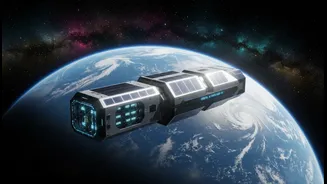


From Landlord to Tenant
For decades, NASA has owned and operated America's homes in space. The International Space Station (ISS), a triumph of global cooperation, has been the cornerstone of human presence in low-Earth orbit for over two decades. But with the station's operational
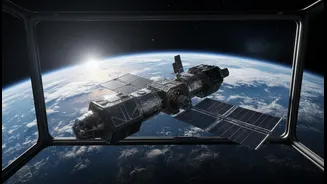
life concluding around 2030, NASA is orchestrating a fundamental shift in strategy. Instead of building a government-owned successor, the agency is fostering a competitive commercial market. Through its Commercial Low-Earth Orbit Destinations (CLD) program, NASA will act as a customer, purchasing services and time on privately owned and operated space stations. This model mirrors the success of its commercial cargo and crew programs, which relied on companies like SpaceX to ferry supplies and astronauts to the ISS, saving taxpayer money and stimulating a new sector of the economy. The goal is to ensure a continuous US presence in orbit without bearing the full cost of ownership.
The New Space Race Contenders
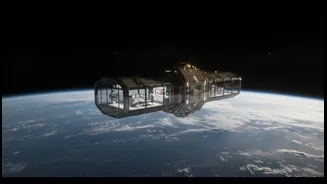
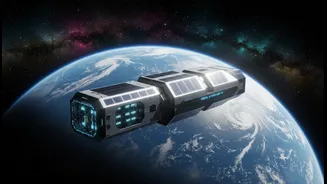
Several well-funded companies are vying to become the first commercial landlords in orbit. Axiom Space is a front-runner, already flying private astronaut missions to the ISS and building modules intended to first attach to the station before detaching to become a free-flying platform as early as 2028. Then there is Starlab, a joint venture from Voyager Space and Airbus, which plans to launch a single large station module on a SpaceX Starship. Blue Origin, in partnership with Sierra Space, is developing Orbital Reef, envisioned as a 'mixed-use business park' in space. And the company Vast is developing its Haven stations, with the first single-module station, Haven-1, aiming for a 2027 launch. Each company has received initial funding and technical support from NASA, with a larger, more competitive contracting phase now underway.
The Business of Orbit
What is the business case for a private space station? The most crucial customer, at least initially, is NASA itself. The agency needs a platform to continue its microgravity research, test technologies for missions to the Moon and Mars, and train its astronauts. Securing NASA as an anchor tenant is the key to closing the business case for these ventures. Beyond NASA, the potential markets are diverse. They include hosting astronauts from other nations, conducting proprietary research for pharmaceutical and materials science companies, in-space manufacturing of high-value products like fiber optics or 3D-printed organs, and even space tourism. Axiom Space, for example, already charges around $55 million for a private trip to the ISS, demonstrating a potential market.
A Billion-Dollar Gamble
This new chapter is not without significant risk. Building and operating a space station is an incredibly expensive and complex endeavor. Earlier in 2026, NASA itself questioned whether a purely commercial market was robust enough to sustain these stations, briefly considering a pivot to a government-owned 'core module' that companies could add to. However, after industry pushed back, insisting the private capital and business plans were solid, NASA has returned to its original plan of procuring services from fully commercial stations. The success of this entire strategy hinges on a delicate balance: Can these companies build their stations on time and on budget? And will the non-NASA markets for research, manufacturing, and tourism materialize quickly enough to ensure profitability? The government's role is to act as a stable, predictable first customer to bridge the gap until that broader market matures.