



The Problem with a 'Cup' of Anything
Baking, in particular, is a science that relies on precision. Unlike general cooking where you can often add ingredients to taste, baking requires specific chemical reactions between flour, sugar, fats, and leavening agents. The main issue with volumetric
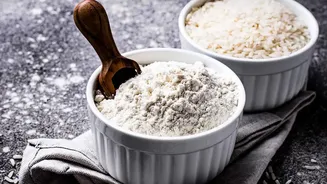
tools like cups is inconsistency, especially with dry ingredients. A cup of flour, for instance, can vary in weight by as much as 30% depending on how you fill the cup. If you scoop directly from the bag, the flour gets compacted, and you end up with much more than the recipe developer intended. If you lightly spoon it in, you'll get a lighter measure. This variability is a primary reason why baked goods can fail unexpectedly. Even environmental factors like humidity can cause ingredients to clump, further skewing your measurements.
Making Your Cups More Dependable
While professional bakers almost exclusively use weight for accuracy, you can make your standard cups and spoons far more reliable with the right technique. For dry ingredients like flour, the most dependable method is the 'fluff, spoon, and level' technique. First, use a spoon or whisk to fluff up the ingredient in its container to aerate it. Next, use a spoon to lightly transfer the ingredient into your measuring cup until it's mounded over the top. Finally, use the straight edge of a knife to level off the excess. This process prevents the ingredient from compacting and ensures you're getting a much more consistent amount each time you measure, bringing you closer to the results the recipe creator intended. For brown sugar, the opposite is true; most recipes assume you will pack it firmly into the cup unless stated otherwise.
Why Scaling Magnifies Small Errors
When you're making a single batch of cookies, a slight over-measurement of flour might not be a total disaster. However, when you double or triple a recipe, these small inaccuracies are magnified and can ruin the final product. A 10% overage in flour on a single batch becomes a significant excess when tripled. This can lead to dry cakes, tough cookies, and dense breads. The same principle applies to potent ingredients like baking soda, baking powder, and salt. An extra pinch in a single recipe might go unnoticed, but when that error is multiplied, it can result in a bitter or overly salty taste. Scaling by volume is especially tricky with odd fractions, whereas scaling by weight just involves simple multiplication.
The Ultimate Tool: The Digital Kitchen Scale
To truly make your recipes dependable, especially when scaling, the best investment you can make is a simple digital kitchen scale. Measuring by weight (grams or ounces) eliminates all the guesswork associated with volume. A gram is always a gram, regardless of whether the ingredient is packed, fluffy, or lumpy. Using a scale not only guarantees consistency but also simplifies the process and reduces cleanup. You can place your mixing bowl on the scale, tare it to zero, and add each ingredient directly without dirtying a sink full of cups and spoons. This method is faster, more accurate, and the secret weapon of every professional kitchen to ensure their products are identical every single time. It opens you up to a world of international recipes that list ingredients by weight, making you a more versatile and confident cook.