






Taming the Data Deluge
Climate science is built on data—immense, complex datasets from satellites, ocean sensors, and weather stations that are impossible for humans to analyze alone. Traditionally, monitoring environmental changes was a slow, labor-intensive process. Artificial
intelligence, specifically machine learning, excels at finding subtle patterns in these enormous information streams. By processing data from satellite imagery, atmospheric sensors, and historical records, AI can identify trends that might otherwise remain hidden, offering a deeper understanding of our planet's intricate systems. This allows scientists and policymakers to move from simply collecting data to using it for predictive, actionable insights.
Smarter, Faster Climate Models
One of AI's most significant contributions is in refining climate models. Traditional models are incredibly complex and require immense computing power, often taking a long time to run simulations. AI can act as an 'emulator,' learning the patterns of a complex climate model to make its own predictions much faster and more energy-efficiently. This speed allows researchers to run more scenarios and fine-tune predictions for temperature changes and precipitation patterns at both global and regional scales. In India, AI and deep learning are being used to improve rainfall prediction, which is crucial for agriculture and disaster management. This enhanced forecasting helps anticipate shifts and prepare communities more effectively.
Early Warnings for Extreme Weather
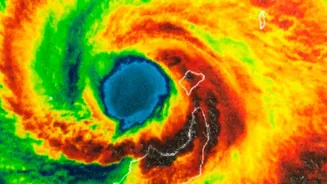
As climate change increases the frequency and intensity of extreme weather events, early warning systems become life-saving tools. In India, AI-powered systems are becoming essential for predicting natural disasters like floods, cyclones, and landslides. Machine learning algorithms analyze weather patterns, satellite data, and even seismic activity to forecast events with greater accuracy. For example, the India Meteorological Department (IMD) uses an AI-assisted technique to estimate cyclone intensity, and Google's AI-powered flood forecasting initiative provides real-time alerts across the country. These systems can offer warnings days in advance, giving authorities crucial time to issue alerts and organize evacuations, significantly reducing human and economic losses.
Eyes on the Environment
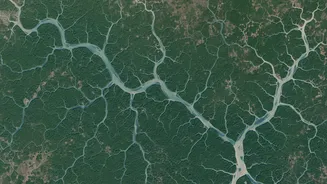
Beyond prediction, AI is a powerful tool for real-time environmental monitoring. AI algorithms can rapidly analyze satellite imagery to detect changes in land use, such as deforestation or urbanization, helping to guide conservation efforts. This technology is also being deployed to monitor air and water quality through networks of smart sensors. For instance, AI-powered drones and IoT sensors can collect data from remote or hazardous locations, providing a constant stream of information on pollution levels or illegal mining activities. Recently, AI has also proven effective in detecting methane emissions from space, a major contributor to global warming, allowing for faster mitigation efforts.
A Powerful Tool, Not a Magic Wand
While AI offers transformative potential, it's not a standalone solution. The effectiveness of any AI model depends on the quality and availability of data, and there are concerns about the significant energy consumption of large AI data centers. Experts also note that while AI can analyze data with incredible efficiency, it requires human expertise to interpret the results and understand the real-world context, especially in complex areas like environmental law. The goal is not to replace human scientists but to augment their capabilities, combining machine efficiency with human insight. This collaboration is key to building smarter, more resilient cities and developing sustainable environmental policies.