




Decoding the New Rules of Engagement
The government has significantly liberalised its FDI policy for the space industry, moving away from a restrictive, government-approval-only model. The updated framework creates a tiered system designed to attract investment across the entire value chain.
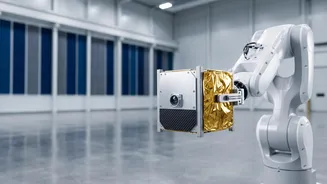
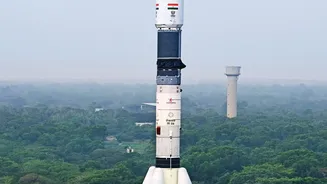
For manufacturing components, systems, and subsystems for satellites and ground infrastructure, the door is now wide open with 100% FDI permitted via the automatic route. This is a game-changer for building a robust domestic supply chain. For more complex activities like satellite manufacturing and operations, up to 74% FDI is allowed automatically, with further investment possible through government approval. In the most sensitive area, launch vehicles and spaceports, the automatic route is capped at 49%, reflecting a strategic desire to maintain domestic oversight while still welcoming foreign collaboration. This structured liberalisation aims to provide clarity and predictability, two things that were sorely lacking and often deterred investors.
Fuelling a Multi-Billion Dollar Ambition
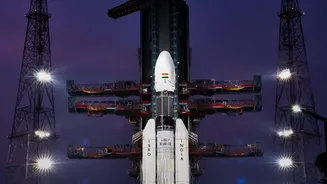
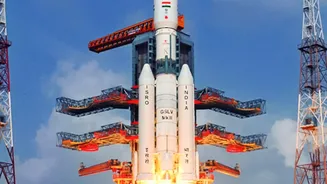
This policy shift isn't happening in a vacuum. It is a critical component of India's ambitious plan to significantly expand its footprint in the global space economy. Currently valued at around USD 8-9 billion, the government aims to grow the sector fivefold to USD 44 billion by 2033 and reach USD 100 billion by 2040. Achieving such exponential growth is impossible without massive capital infusion and access to cutting-edge technology, which is precisely what the new FDI policy is designed to attract. The reform aligns with the broader goals of the Indian Space Policy 2023, which reimagined the roles of key institutions. ISRO is now encouraged to focus on advanced research and deep space missions, while commercial activities are handed over to non-governmental entities. The Indian National Space Promotion and Authorisation Centre (IN-SPACe) was created to act as a single-window agency to facilitate and regulate private sector participation, streamlining a previously complex bureaucratic process.
What This Means For Indian Startups
For the more than 400 space startups now active in India, this is the moment they have been waiting for. The influx of foreign capital means more than just money; it brings access to 'patient capital' willing to fund long-gestation projects, which are common in the space industry. It also facilitates technology transfer, allowing Indian firms to leapfrog developmental stages and integrate the latest global innovations. Companies like Skyroot Aerospace, which developed India's first privately-built orbital rocket, and Pixxel, which is building a constellation of hyperspectral imaging satellites, are prime examples of the innovation ready to be scaled up. With greater foreign participation, we can expect more joint ventures, deeper integration into the global aerospace supply chain, and increased competition, which will ultimately foster a more resilient and dynamic domestic ecosystem. It also helps Indian Micro, Small & Medium Enterprises (MSMEs) transition from being local component suppliers to becoming global exporters of aerospace hardware.
The Path Ahead: Navigating Challenges
While the potential is enormous, the journey is not without its challenges. The influx of foreign capital will intensify the war for talent, particularly for skilled aerospace engineers and data scientists. Startups will need to navigate the regulatory landscape carefully, even with IN-SPACe acting as a facilitator. Ensuring that technology transfer benefits the domestic ecosystem without creating over-reliance on foreign partners is another critical balancing act. Furthermore, as the sector grows, issues like managing space debris and ensuring the responsible use of space-based technologies will become increasingly important. The success of this policy will not just be measured by the amount of FDI that flows in, but by how effectively it translates into indigenous manufacturing capabilities, high-skilled job creation, and a sustainable, self-sufficient space industry that can compete on the world stage. The policy is a launchpad, but the startups themselves must build the rocket.