

The Science of Yogic Flexibility
Many people think flexibility is just about stretching muscles, but yoga’s effectiveness comes from a more holistic approach. The practice combines active and passive stretching to gently lengthen muscle fibres. Just as importantly, it works on your nervous
system. Through conscious breathing and holding poses, yoga helps calm the stretch reflex, a natural response where muscles tighten to prevent overstretching. This teaches your nervous system to allow a deeper release. Furthermore, yoga hydrates and reorganizes the body's fascia, the web of connective tissue that surrounds your muscles and joints. Consistent practice improves the health of this tissue, allowing for smoother, more fluid movement throughout your entire body.
Cat-Cow Pose (Marjaryasana-Bitilasana)
This gentle, flowing sequence is the perfect starting point for waking up your spine. It's renowned for its ability to improve spinal flexibility and relieve tension in the back and neck. Start on your hands and knees in a 'tabletop' position, with wrists under shoulders and knees under hips. As you inhale, drop your belly, lift your chest and tailbone, and look forward into Cow Pose. As you exhale, press into your hands, round your spine toward the ceiling, and tuck your chin to your chest in Cat Pose. Linking these two movements with your breath creates a wave of motion that warms up the entire back body.
Downward-Facing Dog (Adho Mukha Svanasana)
Arguably one of yoga's most iconic poses, Downward-Facing Dog is a full-body stretch that especially targets the hamstrings, calves, and shoulders. From your hands and knees, tuck your toes and lift your hips up and back, forming an inverted 'V' shape with your body. Beginners should keep their knees generously bent to focus on lengthening the spine. You can 'pedal' your feet, bending one knee and then the other, to gently deepen the stretch in the back of each leg. Press firmly through your palms to take pressure off your wrists and feel the stretch through your entire posterior chain, from your hands to your heels.
Triangle Pose (Trikonasana)
Triangle Pose is a fantastic standing posture for improving flexibility in the hamstrings, hips, and spine, while also opening the chest and shoulders. Start by standing with your feet wide apart. Turn your right foot out 90 degrees and your left foot in slightly. Extend your arms parallel to the floor, then hinge at your right hip, reaching forward before bringing your right hand down to your shin, ankle, or a block. Extend your left arm toward the ceiling. This pose creates a deep lateral stretch along the side of your body and helps build both stability and openness.
Seated Forward Bend (Paschimottanasana)
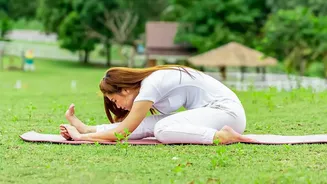
This pose provides a deep, grounding stretch for the entire back of the body, including the spine and hamstrings. Sit on the floor with your legs extended in front of you. You can sit on the edge of a folded blanket to help tilt your pelvis forward, which is especially helpful for tight hamstrings. Inhale to lengthen your spine, and as you exhale, hinge at your hips to fold forward. Avoid rounding your lower back; instead, think of leading with your chest. Rest your hands wherever they land comfortably—on your shins, ankles, or feet. Bend your knees as much as you need to make the stretch feel productive, not painful.
Supine Spinal Twist (Supta Matsyendrasana)
A perfect pose to wind down, this gentle reclining twist relieves tension in the spine, lower back, and hips. Lying on your back, draw your knees into your chest. Extend your arms out to the sides in a 'T' shape. As you exhale, gently drop both knees over to your right side. You can turn your head to look over your left shoulder to deepen the stretch. This pose helps improve spinal mobility with minimal effort and calms the nervous system, making it an excellent way to end your daily practice.