
The Hunt for Lunar Water
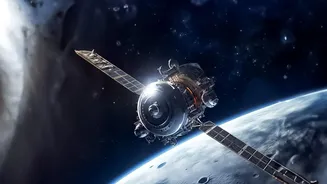
For decades, the presence of water on the Moon was more theory than fact. The game changed when various missions, including NASA's Lunar Crater Observation and Sensing Satellite (LCROSS) in 2009, confirmed the existence of water molecules, primarily as ice.
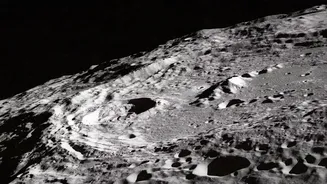
This discovery was monumental because water is one of the most valuable resources in space. It's not just for drinking; it's a source of breathable oxygen and, crucially, can be broken down into hydrogen and oxygen—the two primary components of rocket fuel. The challenge, however, has been pinpointing its exact location and concentration. Most of this precious ice is thought to be trapped in permanently shadowed regions (PSRs) near the lunar poles, areas that never see sunlight and where temperatures are colder than on Pluto.
New Maps Chart a Path Forward
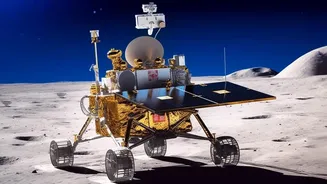
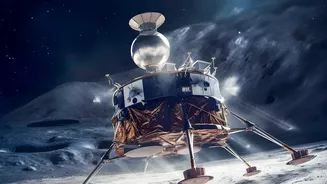
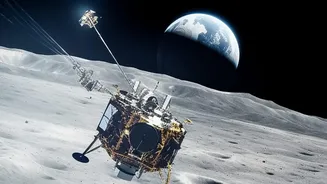
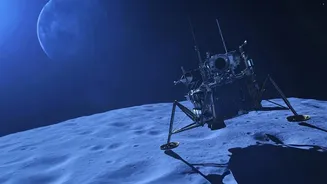
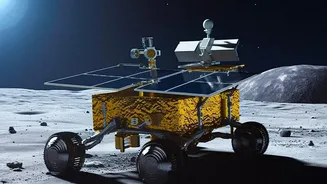
Recent advancements are transforming our understanding of these frozen reservoirs. Data from multiple international missions and advanced instruments are creating the most detailed maps of lunar water to date. For example, joint missions like the Lunar Polar Exploration (LUPEX) by Japan's JAXA and India's ISRO, featuring NASA's Neutron Spectrometer System, are designed to prospect for ice beneath the surface without even drilling. Other novel techniques involve using seismic waves from moonquakes or rover drills to detect how vibrations travel differently through icy soil compared to dry regolith. These new mapping methods are crucial because they move beyond simply knowing water is there; they help identify the most concentrated, accessible deposits, which is essential for planning any future mining operation. China's Chang'e-7 mission, planned for late 2026, will also contribute by sending a small hopping probe into a dark crater to analyze ice directly.
From Ice to Rocket Fuel
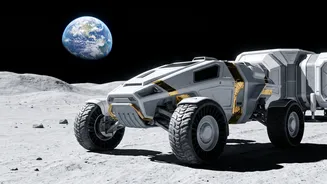
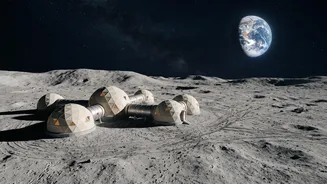
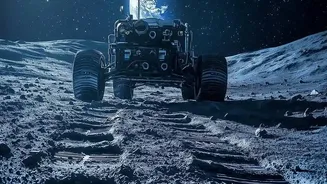
So, how do you turn a patch of frozen lunar dust into propellant for a Mars-bound spacecraft? The process is relatively straightforward in principle. First, the ice-rich soil, or regolith, must be mined. This could involve robotic excavators digging up the material and transporting it to a processing plant. Once there, the regolith is heated, causing the water ice to turn directly into vapor, which is then captured and condensed. The purified water then undergoes a process called electrolysis, where an electric current—likely generated by solar panels on a nearby sunlit ridge—splits the water molecules (H₂O) into hydrogen and oxygen. These two elements, when cooled into their liquid forms, are a potent and efficient rocket propellant. NASA is already testing technologies like the CryoFILL project to master the liquefaction and storage of these gases in the lunar environment.
The Dawn of a Lunar Economy
The ability to refuel in space would revolutionize space travel economics. Launching anything from Earth is incredibly expensive, largely due to the massive amount of fuel needed to escape our planet's strong gravity. By producing fuel on the Moon, which has only one-sixth of Earth's gravity, future missions could launch from Earth with lighter fuel loads, dedicating more mass to scientific instruments, cargo, or crew. This could dramatically lower the cost of missions to Mars and beyond, making the Moon a critical interplanetary logistics hub. According to some analyses, the emerging lunar economy, driven by industries like propellant production and resource utilization, could be worth hundreds of billions of dollars by 2050, fundamentally shifting the conversation from exploration to sustained economic activity.
Major Hurdles Remain
Despite the promise, significant challenges lie ahead. Mining in the extreme cold and darkness of a permanently shadowed crater is an immense engineering task. Equipment must be designed to operate in temperatures around -230°C and withstand abrasive lunar dust. Furthermore, while maps are improving, no one knows for certain how much water is readily available for commercial-scale extraction. There are also geopolitical questions. As nations and private companies race to the lunar south pole, establishing clear, internationally accepted rules for resource extraction will be crucial to prevent conflict and ensure the sustainable use of these shared resources. The path to a lunar refuelling station is not guaranteed, but these latest mapping efforts are a critical and exciting step in the right direction.