



A 'Below Normal' Forecast
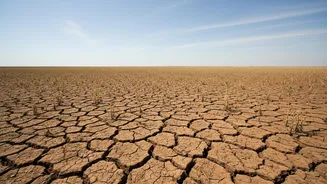
The India Meteorological Department (IMD) has forecast that rainfall during August and September—the second half of the crucial southwest monsoon season—is likely to be 'below normal'. Specifically, precipitation is expected to be less than 94% of the Long
Period Average (LPA). This follows a volatile pattern: a significant rainfall deficit in June was largely erased by a recovery in July, but the outlook for the rest of the season has revived concerns. This forecast is influenced by moderate El Niño conditions over the Pacific Ocean, which are expected to strengthen and historically correlate with drier monsoon conditions in India. While a low-pressure area in the Bay of Bengal is bringing heavy rain to eastern states in mid-August, the overall projection for the season remains subdued.
From Clouds to Kharif Crops
The monsoon's performance is directly tied to the success of India's Kharif (summer) crops, which are planted in June and July and harvested in autumn. These crops, including rice, pulses, soybeans, and coarse cereals, are heavily dependent on monsoon rains as nearly half of India's farmland lacks irrigation. As of mid-August 2026, the total area sown with Kharif crops was trailing last year's figures by about 2%. The sowing of rice, the main Kharif crop, was down by 3.65%, and other key crops like soybeans and some pulses also saw a decline in acreage. While a strong first week of August helped narrow some of the sowing gaps, the uneven distribution of rain and the below-normal forecast for the coming weeks pose a risk to crop growth and final yields.
The Direct Line to Your Kitchen
When crop yields suffer due to poor rainfall, the supply of essential food items to the market tightens. This imbalance between supply and demand is a primary driver of food inflation. Recent data for July 2026 showed that food inflation had already risen to 5.52%, ticking up from 5.32% in June. This increase was driven by price rises in items like ginger, garlic, and onions, which offset some relief from falling tomato prices. The Consumer Food Price Index (CFPI) makes up nearly 40% of the overall Consumer Price Index (CPI), meaning fluctuations in food prices have a significant impact on the headline inflation rate and household budgets.
The Bigger Economic Picture
The Reserve Bank of India (RBI) closely monitors the monsoon as a key variable for its inflation and growth forecasts. The central bank has already flagged a sub-par monsoon as a potential risk that could complicate the economic outlook. While overall retail inflation, at 4.45% in July, remains within the RBI's tolerance band of 2-6%, persistent pressure on food prices could become a concern. Economists note that if the rainfall deficit is concentrated in major agricultural zones, the impact on food prices will be more severe. However, some analysts believe the broader economic impact might be contained, pointing to healthy reservoir levels and large government food grain stocks, which act as a buffer against shortages.