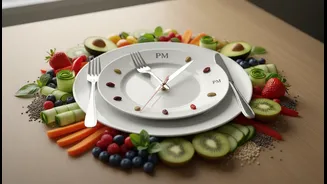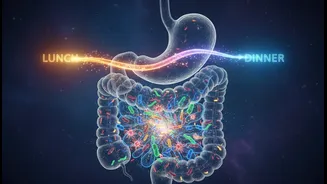







Welcome to Chrononutrition
The idea that meal timing affects health isn't just a new diet fad; it’s a burgeoning area of science called chrononutrition. This field studies the interaction between our eating schedules and our body's internal clocks, known as circadian rhythms. Virtually
every cell in your body has a clock that helps regulate physiological functions over a 24-hour cycle, from hormone release to digestion. These clocks are coordinated by a 'master clock' in the brain, which is primarily synced by light. However, peripheral clocks in our liver, muscles, and fat tissue are strongly influenced by when we eat. Eating in sync with these natural rhythms can lead to increased metabolic efficiency, while eating out of sync—like having large meals late at night—can cause disruption.
What the New Research Says
Recent studies are adding weight to the importance of meal timing. Research highlights that our bodies are primed to process food more efficiently earlier in the day. One June 2026 report noted that eating earlier can support better metabolic health, including glucose control and energy balance. The body's ability to manage blood sugar and burn fat is highest in the morning and early afternoon, when metabolism is more active. Conversely, eating late at night, when the body is preparing for sleep, has been linked to adverse effects. Controlled studies have found that late eating can result in higher overnight blood sugar, increased hunger the next day, and lower fat burning, even when the total calories consumed are identical to those eaten earlier. This misalignment between meal times and the body's clock is associated with an increased risk for weight gain, type 2 diabetes, and cardiovascular issues.
Eating With Your Body Clock
So, what does it mean to eat in harmony with your circadian rhythm? The core principle is to align your food intake with the periods when your body is most metabolically active—generally, during daylight hours. This approach often involves two main strategies: front-loading your calories and adopting a time-restricted eating (TRE) window. Front-loading means consuming a larger portion of your daily calories earlier in the day, such as with a substantial breakfast and lunch, followed by a lighter, earlier dinner. Studies suggest this pattern aligns better with our natural metabolic peaks. Time-restricted eating involves consuming all of your daily calories within a consistent window of 8 to 12 hours, followed by a fasting period overnight. This gives your digestive system a prolonged break and allows the body to focus on cellular repair processes.
Practical Tips for Better Meal Timing
Integrating these findings into your life doesn't require a radical overhaul. A key recommendation from dietitians is to finish your dinner at least two to three hours before you go to sleep. For someone who goes to bed at 10 p.m., this means finishing their last big meal by 7 p.m. The goal is to avoid going to bed on a full stomach, which can disrupt both sleep and metabolic processes. If your schedule makes an early dinner impossible, focus on consistency. Try to maintain a regular eating window each day, as this helps stabilize your circadian rhythms. And if you must eat late, opt for a smaller, lighter meal that's easier to digest. It’s also important to note that this field is still evolving, and individual needs vary. For example, a recent study from July 2026 highlighted that for new mothers, the best chrononutrition strategies were those that aligned with their existing, demanding routines.