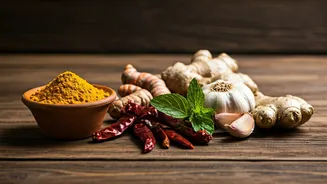









Turmeric (Haldi): The Golden Immunity Booster
This humble kitchen spice is a powerhouse of wellness. Turmeric contains curcumin, a compound celebrated for its potent anti-inflammatory and antioxidant properties. During the monsoon, when the risk of infections, colds, and flu is high, incorporating
turmeric into your diet can significantly strengthen your body's defences. A warm glass of 'haldi doodh' (turmeric milk) before bed is a traditional remedy that soothes the throat and promotes restful sleep. You can also be more generous with it in your daily cooking, adding it to dals, sabzis, and soups to give your meals a healthy, golden hue.
Ginger & Garlic: The Dynamic Duo
Ginger (adrak) and garlic (lehsun) are foundational to Indian cooking, and for good reason, especially during the rains. Ginger is a fantastic digestive aid, helping to settle the stomach and combat the sluggishness that often accompanies the damp weather. Its anti-inflammatory properties make it a go-to remedy for sore throats and respiratory issues; a cup of hot ginger tea is both comforting and medicinal. Garlic, on the other hand, is known for its strong antibacterial and antiviral capabilities. Including crushed raw garlic in chutneys or cooked garlic in your meals can help keep common infections at bay, making this duo an essential part of your monsoon diet.
Seasonal Fruits: Jamun and Pomegranate
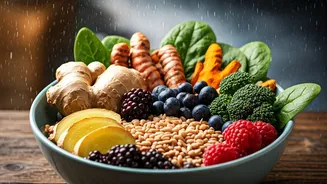
While it's wise to be cautious with raw fruits and vegetables during the monsoon, some seasonal heroes are worth seeking out. Jamun (Indian blackberry) is a low-calorie fruit packed with iron, potassium, and vitamins that help improve haemoglobin levels. It's also known to aid digestion and is particularly beneficial for those managing blood sugar. Pomegranate (anaar) is another excellent choice, loaded with antioxidants that help fight inflammation and boost immunity. These fruits have thick peels, which offer better protection from contamination compared to soft-skinned berries. Always wash them thoroughly before consumption.
Gourds: Light and Easy on the Stomach
The monsoon can be tough on the digestive system. Heavy, oily foods can feel particularly difficult to process. This is where gourds like bottle gourd (lauki), ridge gourd (turai), and bitter gourd (karela) shine. They are incredibly light, easy to digest, and rich in water and fibre, which helps prevent bloating and constipation. Bitter gourd, despite its taste, is especially valuable for its antimicrobial properties and its ability to cleanse the system. A simple lauki sabzi or a well-made karela stir-fry can be a nourishing, gut-friendly addition to your meals.
Corn (Bhutta): The Ultimate Monsoon Snack
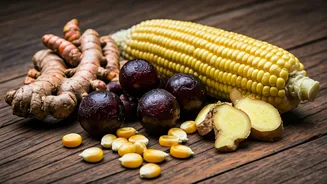
Is it even monsoon without the smell of roasted corn on the cob? Beyond being a nostalgic and delicious snack, 'bhutta' is also a healthy one. Corn is rich in fibre, which promotes good gut health, and contains antioxidants like lutein and zeaxanthin that are beneficial for eye health. When you choose a roasted or boiled bhutta over fried snacks like samosas or pakoras, you’re opting for a low-fat, nutrient-dense treat that provides sustained energy. Squeeze a little lime juice and a sprinkle of salt on it for a classic, flavourful, and healthy way to enjoy a rainy evening.
Herbal Teas & Soups: Warmth and Wellness
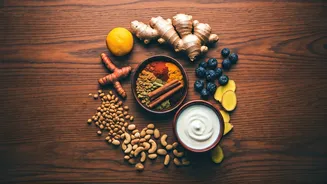
Nothing beats the comfort of a warm beverage or a hot bowl of soup on a grey, rainy day. These are not just comforting; they are also excellent vehicles for delivering health benefits. Herbal teas made with ingredients like tulsi (holy basil), ginger, cinnamon, and black pepper can help keep infections at bay and clear respiratory passages. Similarly, clear vegetable or lentil soups are hydrating, easy to digest, and can be packed with immunity-boosting ingredients like garlic, ginger, and black pepper. They provide essential nutrients without weighing you down, making them a perfect light meal for this season.