

The Right Destination for Your Quest
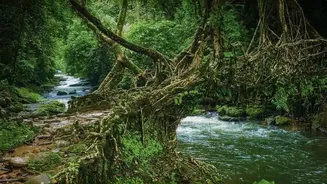
First, a crucial piece of travel wisdom: the world-famous living root bridges are the legacy of the Khasi and Jaintia tribes in Meghalaya, not Arunachal Pradesh. While Arunachal is a stunning destination for monasteries and mountain landscapes, your quest
for these bio-engineered marvels will lead you to the lush hills around Cherrapunji (Sohra) in Meghalaya. This guide is built to get you there. The good news for budget travellers is that, unlike Arunachal, Indian citizens do not need a special permit to enter Meghalaya, simplifying your plans significantly.
Getting There on a Budget
Your journey will most likely begin at Guwahati, Assam, which has the region's major airport and railway station. From Guwahati, the most budget-friendly way to reach Meghalaya's capital, Shillong, is by shared sumo (a type of SUV) or bus. These are readily available outside the Guwahati railway station and offer a scenic three-hour ride for a few hundred rupees. From Shillong, you'll take another shared taxi to Cherrapunji (Sohra), the main hub for accessing the root bridge treks. This leg of the journey takes another couple of hours and is equally affordable.
Homestays: Your Wallet-Friendly Home
The key to a budget trip in this region is embracing homestays. Cherrapunji and the smaller villages, particularly Nongriat (where the famous Double-Decker bridge is located), are dotted with simple, family-run homestays. For a fraction of a hotel's cost, you get a clean bed and, more importantly, a direct line to the local culture. Stays can cost as little as ₹500 to ₹1500 per night. Booking a stay in Nongriat village itself is highly recommended. It requires a significant trek to get there, but it allows you to experience the bridges in the quiet mornings and evenings, long after the day-trippers have left.
The Trek to the Double-Decker Bridge
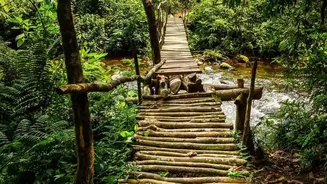
The main event is the trek to the Nongriat Double-Decker Root Bridge. The trek starts from the village of Tyrna, a short drive from Cherrapunji. Be prepared for a physical challenge: the path involves descending (and later ascending) over 3,000 concrete steps. It’s a demanding but incredibly rewarding journey through dense tropical forest, past smaller root bridges and crystal-clear natural pools you can swim in. The sight of the two-tiered bridge, a structure over a century old that was grown, not built, is truly unforgettable. Local communities charge a small entry fee (around ₹50) which helps maintain the trail.
A Realistic Daily Budget
Backpacking here can be remarkably light on the wallet. A basic homestay might cost around ₹800. Food is another area where you can save; eating simple, delicious Khasi meals at your homestay or in small local eateries will only set you back ₹400-600 for a full day's worth of food. Local transport via shared taxis is the most significant variable, but once you are in the trekking region, your feet are your primary mode of transport. A comfortable daily budget for a backpacker, excluding one-time travel costs to get to the region, could easily be between ₹1500 and ₹2000.
What to Pack and When to Go
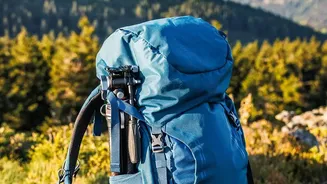
Pack light, but smart. A good pair of shoes with excellent grip is non-negotiable for the slippery steps. A raincoat is essential, as this is one of the wettest places on Earth. Quick-dry clothing is far more practical than cotton. A portable power bank is also a wise addition, as electricity in remote villages can be intermittent. The best time for trekking is from October to May, during the drier months when the paths are more manageable. The monsoon season (June to September) showcases the waterfalls in their full glory but makes the trek much more challenging.