







The New Digital Red Pen
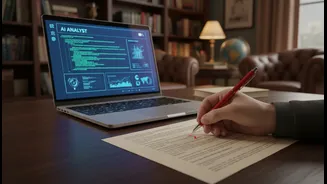
Forget simple spell-checkers. Today's students are leveraging sophisticated Open AI tools like ChatGPT as powerful editorial assistants. This process, often called 'auditing', goes far beyond correcting typos. Students are pasting their completed drafts
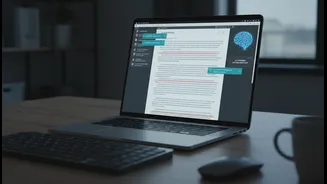
into these platforms to get instant feedback on grammar, clarity, sentence structure, and tone. For many, especially in a country with diverse linguistic backgrounds, this offers a way to improve the quality of their English writing and present their ideas more professionally. The AI can suggest alternative phrasings, point out awkward sentences, and help ensure the writing style is appropriately academic. It's less about generating content from scratch and more about refining what has already been written, acting as a final quality control step.
More Than a Grammar Check
The capabilities of these AI tools extend into the conceptual realm. Students report using them to brainstorm ideas, simplify complex topics, and even check the logical flow of their arguments. For example, a student struggling to structure a history essay can ask the AI to suggest a potential outline based on their draft. Another might ask it to explain a complex scientific concept in simpler terms to ensure they've understood it correctly before writing. Some advanced tools even offer features like OpenAI's 'Study Mode', which is designed to guide students through problems with hints and questions rather than simply providing answers. This interactive process can feel like having a personal tutor available at any hour to help deepen understanding.
The Student's Perspective
Why are students embracing this trend? The motivations are complex. For many, it's about gaining confidence and managing a heavy academic workload. The pressure to perform is immense, and these tools offer a way to polish their work to a higher standard, potentially leading to better grades. Research and surveys of students in India show they perceive significant benefits in efficiency and learning support. Instead of waiting days for feedback from a busy professor, they can get instant, line-by-line critiques. This allows them to learn from their mistakes in real-time and iterate on their writing. The goal for many is not to find a shortcut to avoid work, but to submit the best possible version of their own ideas.
Navigating an Ethical Grey Area
The rise of AI auditing inevitably brings up questions of academic integrity. When does helpful editing cross the line into cheating? This is the central dilemma facing both students and educators. Relying too heavily on AI to rephrase sentences can mask a student's own voice and hinder the development of their writing skills. Furthermore, there is the risk of AI tools providing incorrect information or 'hallucinating' facts, which the student is ultimately responsible for. Universities in India are grappling with this challenge. While many have not yet published formal AI policies, the consensus is that while AI can be used as an assistant, the substantive intellectual work must remain the student's own. Disclosure is often key; many institutions now encourage or require students to state how they've used AI tools.
The Educator's Response
Educators are moving from a position of outright banning to developing frameworks for responsible use. The focus is shifting from 'if' students use AI to 'how' they use it. The National Education Policy (NEP 2020) already encourages digital learning, and this trend is a natural extension of that. Some universities are integrating AI literacy into their curriculum, teaching students how to use these tools ethically and effectively as a supplement to, not a replacement for, critical thinking. The conversation is no longer just about catching plagiarism with detection software, which can be unreliable, but about fostering an environment where AI is seen as a tool for enhancing learning, much like a calculator in a math class. The challenge is to ensure that while students use AI to refine their work, they don't outsource the thinking process itself.