


Why Humidity Changes the Watering Game
Plants drink water through their roots and 'exhale' moisture through tiny pores in their leaves called stomata. This process is called transpiration. It’s how they stay cool and pull nutrients up from the soil. However, when the air is already saturated
with moisture (high humidity), transpiration slows down significantly. Think of it like a towel that's already damp—it can't absorb much more water. Because plants are losing less water to the atmosphere, they don't need to draw as much from the soil, meaning your regular watering schedule might be far too generous.
The Hidden Dangers of Overwatering
Overwatering is one of the most common ways people kill their houseplants, and humid weather makes it even easier to do. When soil stays constantly soggy, it cuts off the oxygen supply to the roots, essentially suffocating them. This leads to root rot, a condition where roots turn brown, mushy, and can no longer absorb water or nutrients. Ironically, a plant suffering from root rot often looks wilted, which can trick you into watering it even more. Excess moisture also creates a perfect breeding ground for fungal diseases like powdery mildew and pests such as fungus gnats.
Forget the Schedule, Use Your Fingers
The golden rule of watering, especially in humid conditions, is to check the soil first. A rigid weekly schedule doesn't account for changes in temperature or humidity. The most reliable tool is your finger. Push it about two inches into the soil. If it feels dry at that depth, it's time to water. If you feel any moisture, hold off for another day or two and check again. For larger pots, a wooden skewer or chopstick works well; if it comes out clean and dry, the plant is thirsty. This simple habit is the best way to prevent the dreaded root rot.
Know the Signs: Thirsty vs. Drowning
It can be tricky to tell if a wilting plant needs more water or is suffering from too much. An underwatered plant often has dry, crispy leaf edges and the soil will be visibly pulling away from the sides of the pot. An overwatered plant, however, may have yellowing lower leaves and soft, mushy stems. Its wilted leaves will feel limp and soft, not crispy. You might also notice mold on the soil surface or a sour, rotten smell coming from the pot, which are clear signs of excess moisture.
Adjusting for Different Plant Types
A flexible routine means treating each plant as an individual. Not all plants respond to humidity in the same way. Succulents and cacti, for instance, are adapted to dry conditions and are extremely susceptible to rot in humid, wet soil; they will need significantly less water. On the other hand, tropical plants like ferns and calatheas may enjoy the high humidity but still need consistently moist (not waterlogged) soil to thrive. Pay closer attention to all your plants during humid spells, and don't be afraid to let some dry out more than you normally would.
More Than Just Water: Other Humid Weather Tips
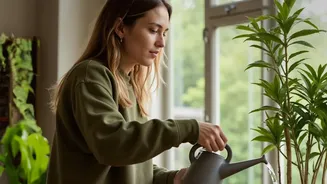
Beyond watering, good air circulation is crucial during humid periods. Stagnant, moist air can encourage fungal growth on leaves and stems. If you have a collection of indoor plants, consider running a small fan to keep the air moving. When you do water, aim for the morning. This gives the plant all day to absorb what it needs and allows any excess moisture on the leaves and soil surface to evaporate before nightfall, reducing the risk of disease. Also, always empty the saucer under your pot after watering to ensure the roots are never left sitting in a puddle.