

A Cosmic Deep Freeze
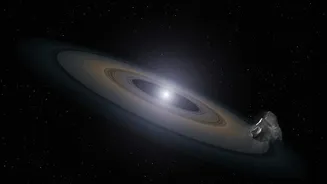
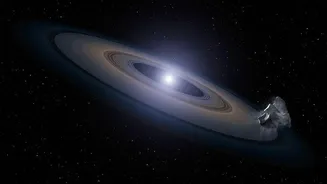
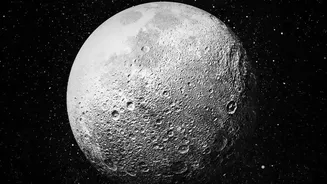
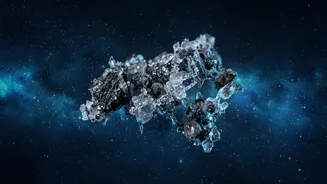
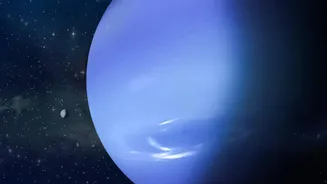
Beyond the orbit of Neptune lies a vast, frigid, donut-shaped region of space known as the Kuiper Belt. It’s a realm of icy, rocky bodies—remnants from the solar system's formation around 4.6 billion years ago. Think of it as a cosmic deep freeze, preserving
the building blocks of planets in their primordial state. This region is home to dwarf planets like Pluto, along with millions of smaller icy objects. Scientists have long believed that this belt is a treasure trove of information, a place where the materials that failed to form a planet could tell us about the conditions of the early solar system. The gravitational pull of Neptune stirred this region up so much that these icy objects were never able to clump together to form a full-sized planet.
A Lonely Voyager's Findings
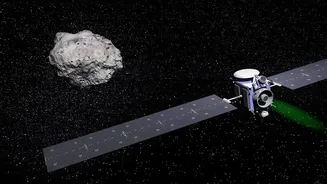
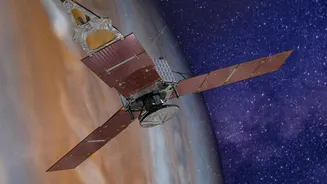
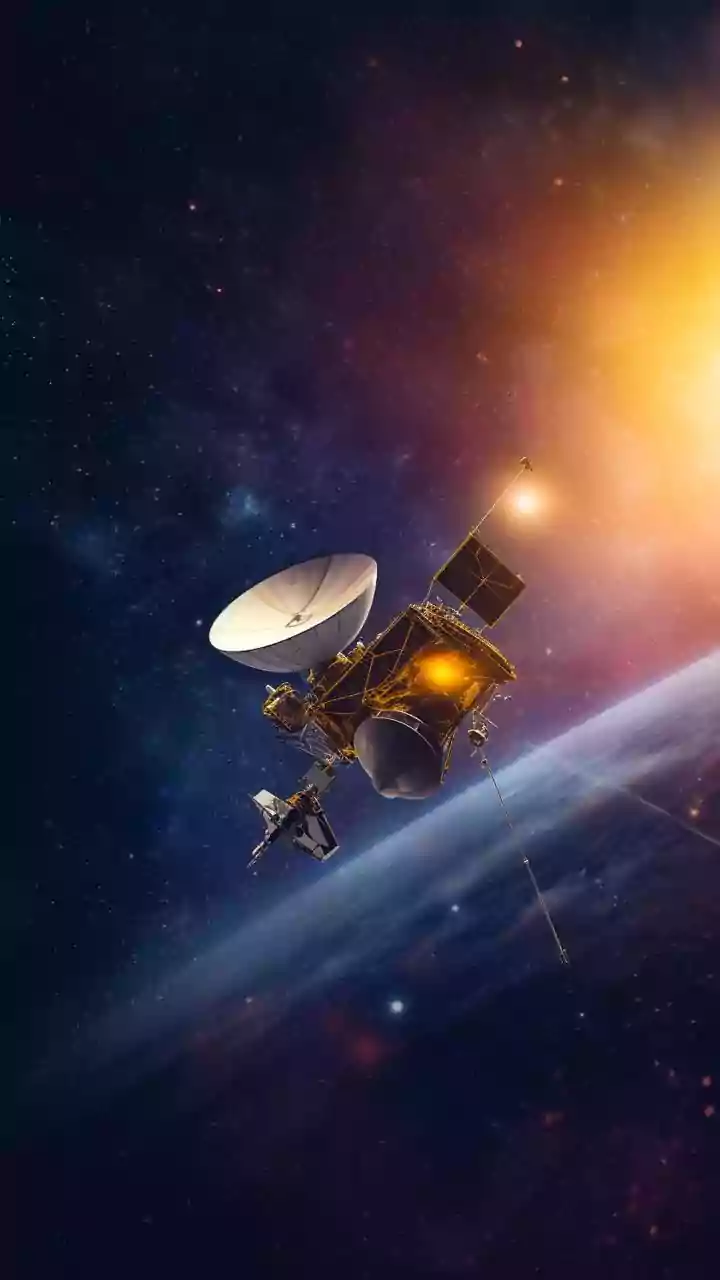
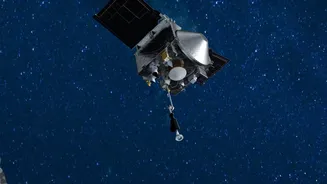
Our intrepid explorer in this distant frontier is NASA's New Horizons spacecraft. Launched in 2006, it famously flew past Pluto in 2015 and continued its journey into the Kuiper Belt, exploring the object Arrokoth in 2019. Along for the ride is a special instrument called the Venetia Burney Student Dust Counter (SDC), designed and built by students at the University of Colorado Boulder. Its job is simple but crucial: to count the microscopic dust particles it encounters. As New Horizons sped through the Kuiper Belt, travelling from 45 to 55 times the distance between the Earth and the Sun, the SDC returned a surprising result: it detected far more dust than scientific models had predicted.
Echoes of Ancient Collisions
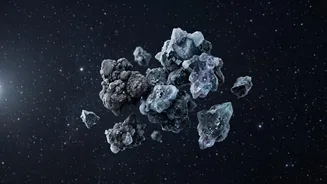
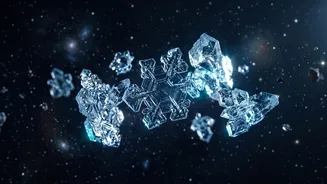
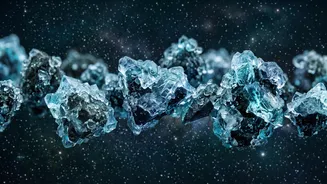
So, where is all this extra dust coming from? The prevailing theory is that it’s the result of ongoing activity in the Kuiper Belt. The tiny, frozen remnants are created by collisions between larger Kuiper Belt Objects (KBOs). These objects, ranging from small rocks to dwarf planets, occasionally crash into each other, grinding down into smaller fragments and fine dust. This process is further amplified by microscopic dust particles from outside our solar system that pepper the surfaces of KBOs, kicking up even more material. The higher-than-expected dust count suggests this process is more active than previously thought, hinting that the Kuiper Belt might be a much larger and more dynamic place than our models accounted for.
A Blueprint for Planet Formation
This discovery is more than just a cosmic dust-up; it provides a living laboratory for understanding how planets form. The process of accretion—where small particles collide and stick together to form larger bodies—is how Earth and the other planets were born. The excess dust detected by New Horizons is evidence of a similar, albeit smaller-scale, process still happening today. By studying the rate of collisions and dust production in the Kuiper Belt, scientists can refine their models of the chaotic and violent environment of the young, inner solar system. It provides a physical reference point for the conditions that allowed planetesimals to grow into the planets we know today. The Kuiper Belt isn't just a relic; it's an active model of our own origins.
An Extended Neighbourhood
The findings from the Student Dust Counter contribute to a growing body of evidence that the Kuiper Belt extends much farther than once believed. Original estimates placed its outer edge around 50 astronomical units (AU) from the Sun, but recent discoveries of distant KBOs, combined with this new dust data, suggest it could stretch out to 80 AU or even beyond. There may even be a second, more distant belt we have yet to properly identify. This has profound implications for our understanding of the solar system's scale and structure. As New Horizons continues its journey into the void, it will keep listening for the faint whispers of dust, each particle a tiny messenger from our system’s deep past.