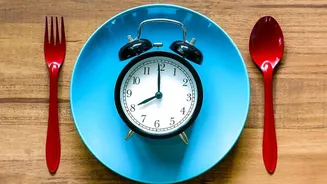







Understanding Your Internal Clock
At the heart of this concept is your circadian rhythm, a 24-hour internal clock that governs countless bodily functions, from hormone release to body temperature. This biological pacemaker, located in your brain, primarily responds to light and darkness,
telling your body when to be alert and when to wind down for rest. But it's not just about sleep and wakefulness. Nearly every tissue and organ in your body, including your digestive system, has its own peripheral clock. These clocks work best when they are synchronised with the main one, creating a harmonious rhythm that optimises everything from energy usage to cellular repair. When your lifestyle, particularly your eating habits, clashes with this natural rhythm, it can create a state of 'metabolic jetlag', throwing your system out of sync.
Why Meal Timing Matters for Metabolism
Your body is primed to digest and metabolise food most efficiently during the day when you are active. As evening approaches and your brain begins preparing for sleep by releasing melatonin, your metabolic processes naturally start to slow down. Eating a large, late dinner forces your digestive system to work overtime when it’s supposed to be winding down. Studies suggest that consuming meals late at night, when melatonin levels are rising, can impair your body's ability to manage blood sugar. This misalignment means the calories you consume are less likely to be used for energy and more likely to be stored as fat. Over time, this habit has been linked to an increased risk of weight gain and metabolic issues.
Maximising Fat Oxidation While You Rest
One of the most compelling benefits of an earlier dinner is its effect on fat oxidation—your body's process of burning fat for energy. Research indicates that eating your last meal several hours before bed allows your insulin and blood sugar levels to return to baseline before you sleep. This creates a longer overnight fasting window. When your body isn't busy processing a recent meal, it can more readily switch to its fat stores for fuel. One study found that eating dinner at 6 p.m. instead of 10 p.m. significantly altered fat metabolism, even when the meals were identical in calories. By aligning your meal with your body's daytime metabolic peak, you give it ample time to process the food and enter a fat-burning state overnight.
The Connection to a Good Night's Sleep
Eating late can directly sabotage your sleep quality. Going to bed with a full stomach can lead to physical discomfort like indigestion, acid reflux, and bloating, making it harder to fall and stay asleep. Furthermore, the act of digestion is an active process that can raise your body temperature and heart rate at a time when they should be decreasing to promote sleep. An earlier dinner allows your body to complete the bulk of digestion before you lie down, creating a smoother transition into a restful state. By avoiding late meals, you prevent a clash between your digestive system and the sleep-inducing hormone melatonin, allowing both processes to function optimally.
Crafting Your Circadian-Aligned Dinner
Adopting this lifestyle doesn't require a radical diet overhaul; it's more about timing and composition. Aim to eat your last substantial meal at least three to four hours before your intended bedtime. For many, this means having dinner around 6 or 7 p.m. This allows your body to digest properly and your blood sugar to stabilise. If you must eat later due to your schedule, try to make the meal smaller and lighter. Focus on lean protein and vegetables, which have less of an impact on blood sugar than heavy carbohydrates and fats. Simple swaps, like moving your largest meal to lunchtime and having a lighter dinner, can make a significant difference in aligning your eating patterns with your body's natural rhythm.