




A New Eye on the Ancient Universe
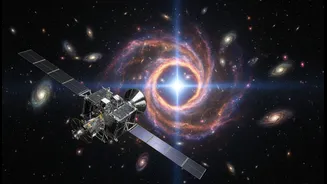
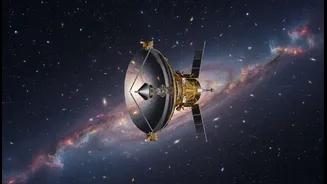
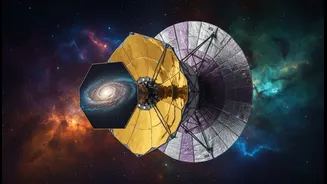
Launched in 2023, the Euclid space telescope is on a mission to map the deep cosmos and unravel the mysteries of dark matter and dark energy. But in the process, it has proven to be an unparalleled tool for hunting some of the most sought-after objects
in astronomy: quasars. Its wide-field view, combined with high resolution and sensitivity in both visible and near-infrared light, allows it to scan vast swathes of the sky efficiently. This makes it perfectly suited to find the faint, reddened light of objects that are billions of light-years away, giving us a glimpse of the universe in its infancy. Recent announcements from the Euclid consortium have confirmed just how revolutionary this new capability is.
Cosmic Lighthouses in the Dark
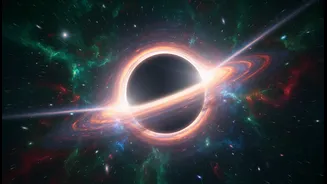
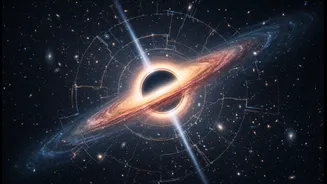
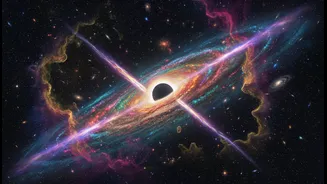
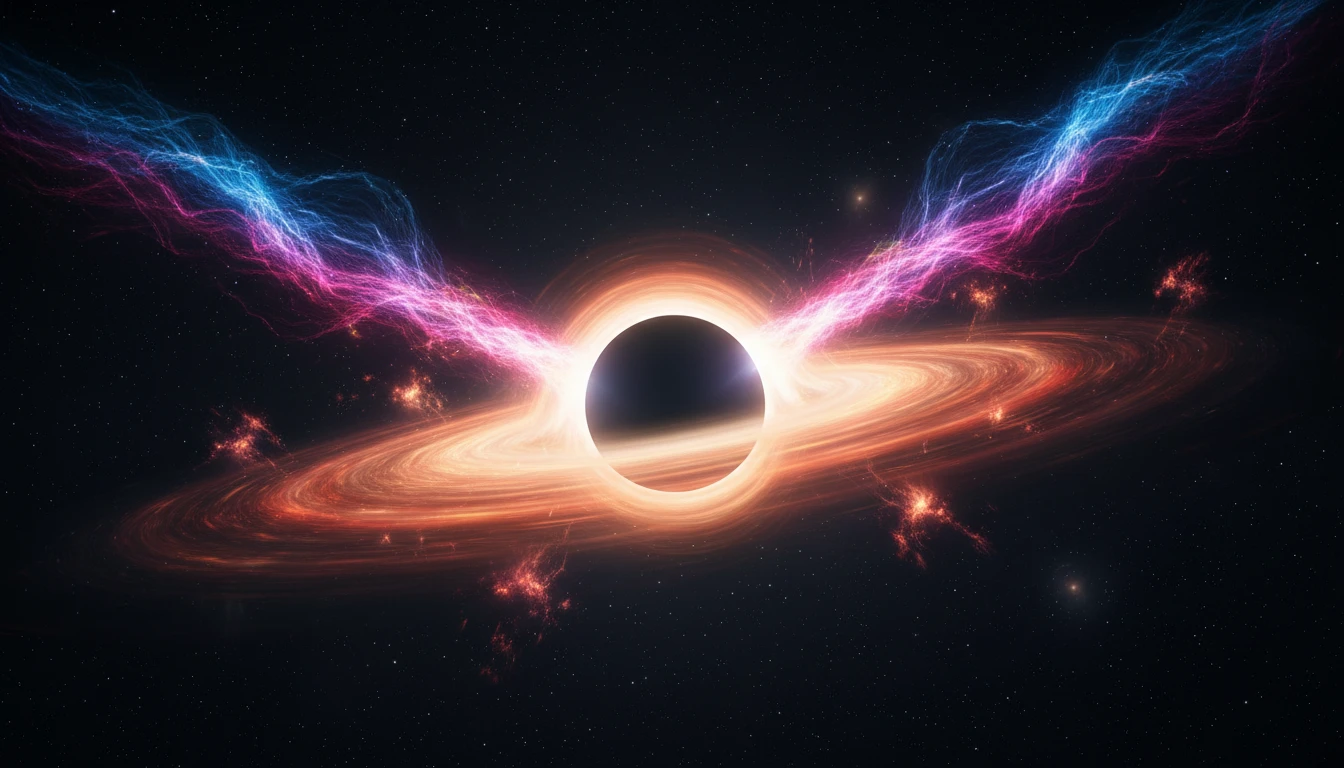
So, what exactly is a quasar? The name is short for "quasi-stellar radio source," a label from the 1950s when they appeared as star-like dots of light emitting strong radio waves. We now know they are not stars at all. A quasar is an extremely luminous core of a young galaxy, powered by a supermassive black hole at its center. As this cosmic titan gorges on surrounding gas and dust, the material forms a superheated accretion disk that can shine thousands of times brighter than an entire galaxy like our own Milky Way. Because they are so bright, they act as cosmic lighthouses, allowing astronomers to see them from across the universe and study the era when the first stars and galaxies were forming.
A Record-Breaking Haul
In a recent series of findings, astronomers using Euclid announced the discovery of 31 new quasars from the very early universe. This single discovery has more than doubled the number of quasars known to exist from this ancient epoch, a time when the universe was less than 800 million years old. Among the new finds are the two most distant quasars ever observed, with their light having travelled for over 13 billion years to reach us. We see them as they were when the cosmos was just 670 million years old, a mere 5% of its current age. What took astronomers over a decade to find previously, Euclid managed to surpass in just its first year and a half of observations.
Why More is Better
Finding more quasars isn't just about breaking records. It's about building a complete picture. Previously, scientists could only spot the brightest, most exceptional quasars from this era—the outliers. This made it difficult to know if their properties were typical. Euclid's sensitivity allows it to find the fainter, more 'ordinary' quasars that represent the bulk of the population. This provides a true census of these objects for the first time, allowing researchers to test theories of how supermassive black holes grow so large so quickly, one of the biggest puzzles in modern astrophysics. Having a larger, more representative sample helps refine our understanding of everything from galaxy formation to the fundamental laws of cosmology.
The Dawn of a New Era
These initial discoveries are just a taste of what's to come. The 31 new quasars were found using data from only a fraction of Euclid's planned six-year survey. Scientists are confident that as the telescope continues to scan the sky, it will uncover hundreds, if not thousands, more of these ancient beacons. Each new discovery provides another data point, another piece of the puzzle of cosmic evolution. They will help us trace the period known as the 'Epoch of Reionization,' when the light from the first stars and galaxies burned through the neutral gas that filled the universe after the Big Bang. The growing sample of remote quasars is a testament to a new era of discovery, one that promises to answer fundamental questions about where our universe came from.