







Master Your Treads and Tyres
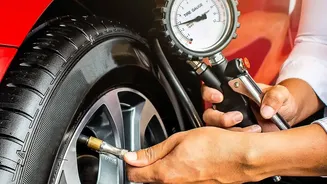
Your tyres are the only point of contact between your car and the slick, unpredictable roads of a hill station in the rain. Before you even think of starting your journey, this is your number one priority. Check the tread depth; anything below 3mm is risky
for wet conditions, as it significantly increases the chance of aquaplaning. A simple coin test can give you a rough idea. Ensure your tyre pressure is at the manufacturer's recommended level, as both under-inflated and over-inflated tyres can reduce grip. Don't forget the spare tyre—check its condition and pressure as well. Discovering a flat spare in the middle of a remote, rainy ghat section is a nightmare you can easily avoid.
Prioritise Your Braking System
On steep inclines and declines, your brakes are your lifeline. Wet conditions can nearly double your car's stopping distance. Before your trip, get a mechanic to inspect your brake pads, discs, and brake fluid. If you've been hearing any squealing or grinding noises, or if the brake pedal feels spongy, get it addressed immediately. Driving through waterlogged patches can also reduce brake efficiency temporarily. After passing through water, gently tap your brakes a few times to dry them out and ensure they are responsive. Good brakes provide the confidence you need to navigate hairpin bends safely.
Maximise All-Round Visibility
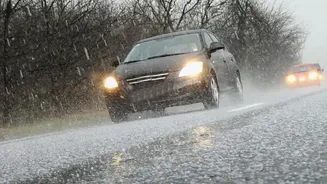
Heavy rain, fog, and spray from other vehicles can reduce visibility to near zero in the hills. Your wipers, lights, and defogger are your primary tools to combat this. Inspect your wiper blades for any signs of hardening or cracking; if they leave streaks, it's time for a replacement. Top up your windshield washer fluid, as muddy spray is common. Test all your lights: headlights (high and low beams), tail lights, brake lights, and especially your fog lamps. Fog lamps are mounted low and cut through mist better than headlights, making them crucial for seeing the road surface right in front of you. Also, ensure your air conditioner and rear defogger are working correctly to prevent the windshield from fogging up from the inside.
Check the Battery and Electricals
The damp and cold environment of a rainy hill station puts extra stress on your car's battery. You'll be using your lights, wipers, and defogger constantly, which increases the electrical load. An old or weak battery is more likely to fail in such conditions, leaving you stranded. Before you leave, have your battery's health checked. Ensure the terminals are clean and free of corrosion. A quick inspection of the engine bay wiring for any exposed or cracked wires can also prevent short circuits caused by moisture.
Assemble a Monsoon Emergency Kit
Even with a perfectly prepared car, things can go wrong. A well-stocked emergency kit is your backup plan. This is more than just a standard first-aid kit. For a monsoon hill trip, your kit should include a powerful torch with extra batteries, a tow rope, jumper cables, and a puncture repair kit. Also pack essentials like a microfibre cloth to wipe foggy interiors, a waterproof sheet or mat, an umbrella, and extra drinking water and non-perishable snacks like granola bars and nuts. Having these items on hand can turn a potential disaster into a minor inconvenience.
A Note on Driving Technique
Finally, preparing your car is only half the battle; adapting your driving style is the other. On wet, winding roads, everything should be gentle. Avoid sudden acceleration, hard braking, and sharp steering movements. Maintain a much larger following distance than you would on dry roads. When going downhill, use a lower gear to let engine braking assist you and avoid overusing your brakes. Remember that on narrow roads, the vehicle going uphill generally has the right-of-way. A cautious and prepared driver in a well-maintained car is the safest combination for the hills.