

As Navratri approaches, the desire to create a sacred, beautiful space for worship grows. Even the smallest corner can be transformed into a divine haven. You don't need a large area, just a little creativity with some essential festive elements.
Start with a Vibrant Backdrop
The simplest
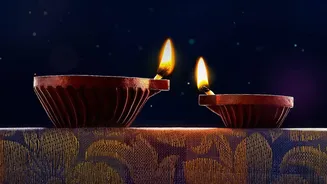
way to define and elevate your puja corner is by creating a striking backdrop. You don’t need to paint a wall; just repurpose a beautiful piece of fabric. A colourful silk or cotton saree, a bright bandhani dupatta, or any traditional textile can be hung behind the altar to instantly add a sense of occasion. This not only adds colour and texture but also visually separates the sacred space from the rest of the room, giving it focus and importance. Choose auspicious colours like red, yellow, or orange to infuse the area with warmth and positive energy. Layering multiple dupattas of different colours can also create a rich and vibrant effect.
The Fragrant Power of Flowers
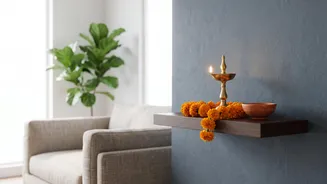
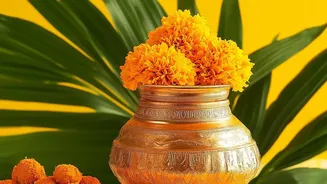
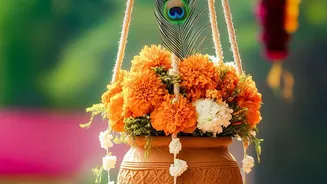
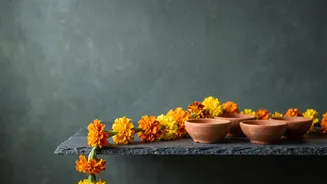
Flowers are central to any Hindu ritual, symbolising purity and devotion. For Navratri, marigolds are a classic choice due to their vibrant yellow and orange hues and their ability to stay fresh for days. Create thick garlands to frame your idols or the backdrop. If space is tight on the shelf or altar, consider floating flower petals in a small brass bowl, known as an urli, placed on the floor below. You can mix marigolds with fragrant jasmine or roses for a multi-sensory experience. Even a simple, fresh floral arrangement changed daily can keep the corner looking and feeling vibrant throughout the nine days.
Let There Be Light with Diyas
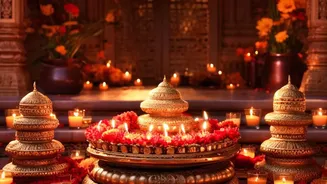
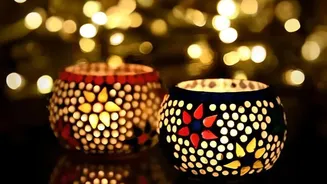
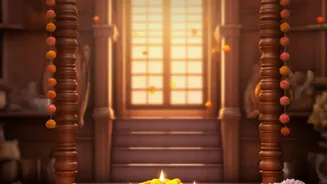
Lighting plays a crucial role in creating a spiritual ambience, symbolising the victory of light over darkness. Traditional clay diyas are humble yet powerful. Arrange them in neat rows on the altar or at the base of your setup. For a compact space, focus on symmetry; two beautiful brass lamps flanking the idol can be more impactful than several scattered diyas. To add more dimension, you can use floating diyas in a bowl of water or combine traditional oil lamps with the soft twinkle of fairy lights woven through the backdrop or garlands for a modern twist.
Incorporate Traditional Elements
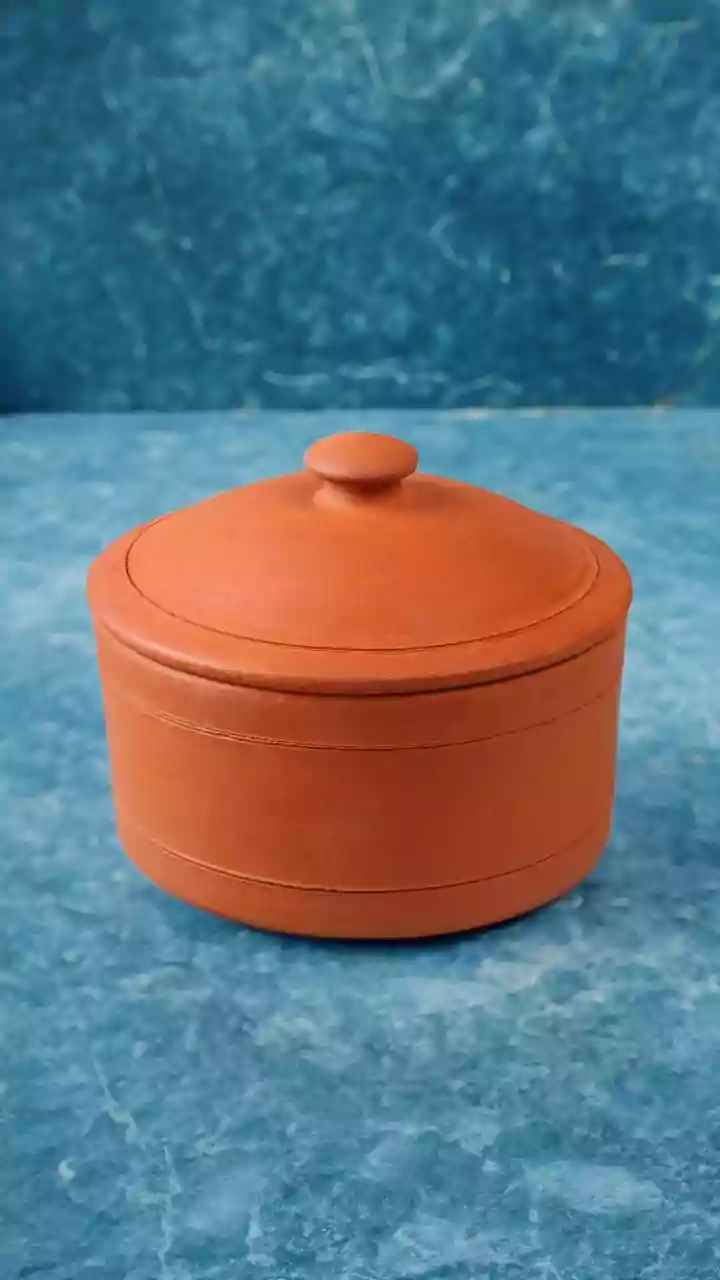
Small traditional items can add layers of authenticity and charm. A small decorative pot, or ghata, is a central part of Navratri rituals and can fit even on a small saucer. Placing your idol on a small raised seat, or chowki, gives it prominence. Other items like a small brass bell, a decorative puja thali to hold incense and other essentials, and a toran of mango leaves hung above the niche all contribute to a complete and sacred look without taking up too much room.
Create a Festive Rangoli
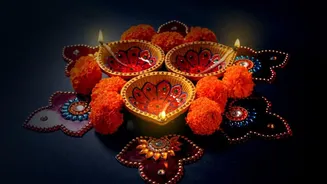
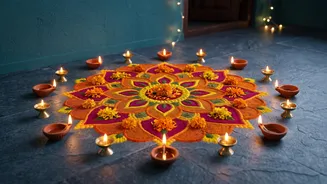
A rangoli at the entrance of your puja corner is a beautiful way to welcome positive energy. It doesn't have to be large and elaborate. A small, neat design at the foot of your mandir can be incredibly effective. You can use coloured powders, rice flour, or for a quicker and more fragrant option, flower petals. Stencils are readily available if you want a perfectly symmetric design. Incorporating a few diyas within the rangoli pattern adds to its brilliance, especially during evening prayers.
Think Vertically
When floor and shelf space is limited, the best way to decorate is to go up. Use the wall space behind your altar creatively. Hang small bells, decorative paper lanterns, or strings of beads. You can create vertical garlands of flowers and leaves that draw the eye upward. Tiered stands are also an excellent solution for compact corners, allowing you to place diyas, small idols, and offerings on multiple levels without creating clutter on a single surface. This use of height makes the space feel grander and more organised.