





The Promise Born in a Lab
The idea that houseplants are nature's air purifiers largely stems from a landmark 1989 NASA study. Tasked with finding ways to clean the air in sealed environments like space stations, researchers found that the leaves, roots, and soil of common houseplants could
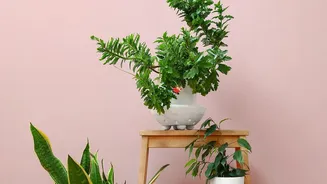
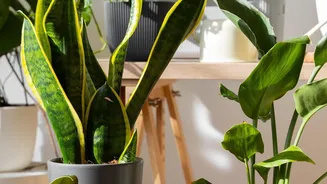
indeed remove harmful volatile organic compounds (VOCs) like benzene and formaldehyde from a sealed chamber. This exciting discovery was widely circulated and, over time, became a central tenet of wellness and home decor. The advice seemed simple and elegant: add a few snake plants or a peace lily to your living room and breathe easier. It’s a compelling narrative that has sold millions of plants worldwide.
A Breath of Fresh Research
However, a comprehensive review of these studies has brought this popular wisdom back down to Earth. Research led by Michael Waring, an environmental engineer at Drexel University, re-examined 30 years of data and came to a starkly different conclusion. While plants do absorb VOCs, the effect is incredibly slow and vastly overestimated in the context of a real home or office. The new analysis was published in the Journal of Exposure Science & Environmental Epidemiology. The core finding is that the rate at which plants clean the air is insignificant when compared to the normal air exchange happening in a building.
The Problem of Scale
The key issue is the difference between a small, sealed lab chamber and a large, dynamic living space. The original NASA experiments were conducted in closed containers, often one cubic meter or smaller, where a single plant's effect could be easily measured over many hours or days. Our homes, on the other hand, are much larger and are constantly exchanging air with the outdoors, a process known as ventilation. This natural or mechanical ventilation dilutes and removes pollutants far more effectively and quickly than a few potted plants ever could. The impact of the plants becomes, in the words of the researchers, statistically irrelevant in a real-world scenario.
An Indoor Jungle for a Single Breath
To put it in perspective, the Drexel University researchers calculated what it would take for plants to make a meaningful difference. Using a standard metric called the Clean Air Delivery Rate (CADR), they determined you would need an almost impossible number of plants to compete with a building's ventilation system. The estimates suggest placing anywhere from 10 to 1,000 plants per square meter of floor space. For an average 1,500-square-foot home, this could mean needing over 680 plants to achieve the air-cleaning effects seen in the lab studies. Turning your home into a dense jungle seems to be the only way to get a measurable air-purifying benefit from plants alone.
What Really Clears the Air?
If your ficus isn't scrubbing the air, what is? The most effective strategy, according to air quality experts, is straightforward: ventilation. Opening windows to let fresh air circulate is one of the best ways to reduce indoor pollutant concentrations. Using exhaust fans in kitchens and bathrooms, which vent to the outside, is also crucial. For those concerned about outdoor pollution or allergens, a mechanical air purifier with a HEPA filter is a far more powerful and reliable solution for removing airborne particles. The first step is always to reduce pollution at its source, such as by choosing low-VOC paints and furnishings and avoiding strong chemical cleaners.
Don't Throw Out Your Plants
This news might seem disappointing, but it's no reason to abandon your leafy friends. While they may not be hardworking air filters, the benefits of having plants indoors are still immense. Numerous studies have shown that being around plants can reduce stress, lower blood pressure, improve mood, and even boost concentration and productivity. They add beauty and a vital connection to nature in our indoor environments. The psychological benefits are well-documented and, for many, are more than enough reason to keep nurturing their indoor garden. They may not be purifying the air, but they are certainly enriching our lives.