



Our Constant Companion: The Moon
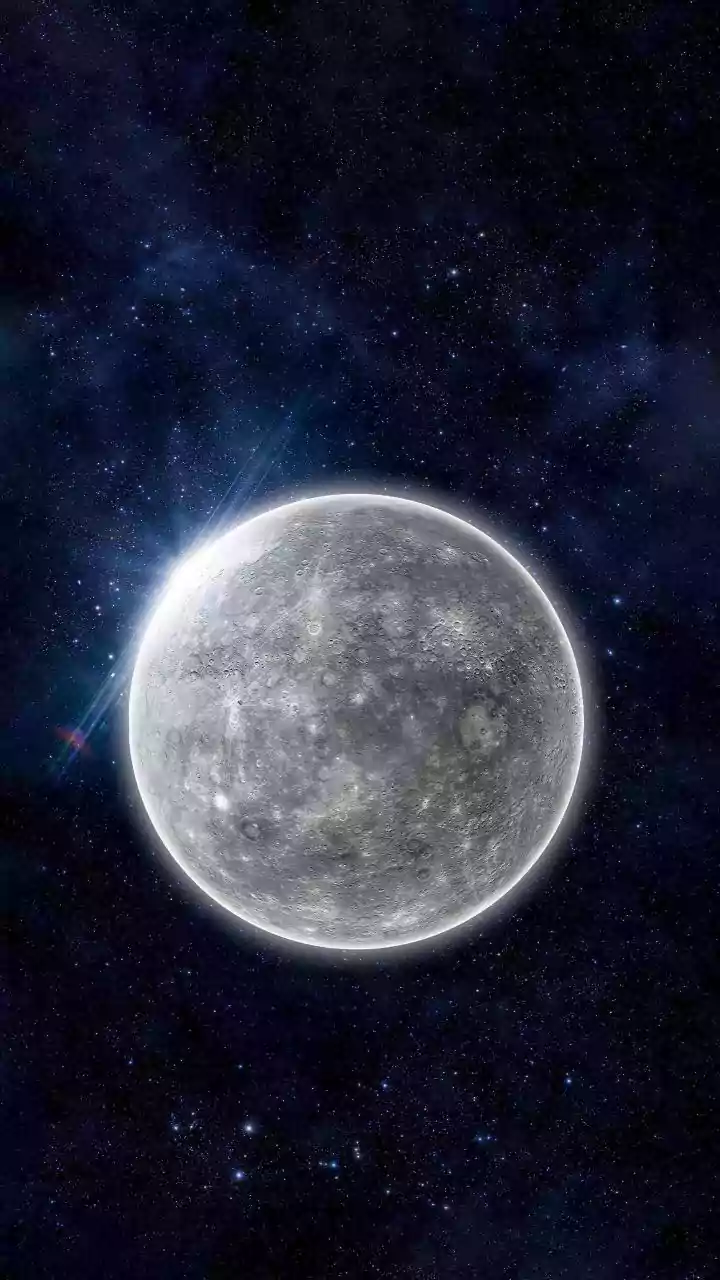
The most obvious and rewarding object for any beginner is our own Moon. You don't need any equipment to appreciate its changing phases. But even a basic pair of binoculars can transform it from a flat disc into a three-dimensional world of craters, mountains,
and vast, dark plains known as 'maria'. The best time to observe is not during a full moon, when the direct sunlight washes out details, but during its crescent or half phases. Along the terminator—the line separating the lunar day and night—shadows are long, throwing craters and valleys into stunning relief.
The Wandering Stars: The Five Bright Planets
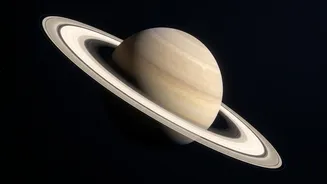
Ancient observers noticed that while the stars remained in fixed patterns, five bright lights moved against this backdrop. These are the 'wanderers', or planets, and they are surprisingly easy to spot. Venus is the most brilliant, appearing as a dazzling white light in the east before sunrise or in the west after sunset. Jupiter is also exceptionally bright, while Mars is distinguished by its distinct reddish-orange hue. Saturn itself is visible as a bright, yellowish point of light. The key to telling a planet from a star is the twinkle; stars flicker because their light is distorted by our atmosphere, while the closer planets shine with a steady, unwavering glow.
Distant Suns: Bright Stars and Constellations
Learning constellations is the classic way to navigate the night sky. Patterns like Orion the Hunter, with his distinct three-star belt, or the 'W' shape of Cassiopeia are great starting points. From there, you can find some of the brightest stars. Sirius, the 'Dog Star', is the brightest star in our night sky and is known for its intense sparkle. Others like the orange-hued Arcturus, the bluish Vega, and the golden Capella are all easily visible and have their own unique character. Using a star chart or a smartphone app (with a red-light filter to preserve your night vision) can help you learn their names and locations.
Faint Fuzzies: A Glimpse of Galaxies and Nebulae
Believe it or not, you can see objects far beyond our solar system without a telescope. On a clear, dark night away from city lights, you might spot the Andromeda Galaxy (M31). It appears as a faint, elongated smudge of light, but what you're seeing is a collection of a trillion stars, over 2.5 million light-years away—the most distant object visible to the human eye. Binoculars will make its oval shape much clearer. In the constellation Orion, below the famous belt, lies the Orion Nebula (M42), a stellar nursery where new stars are being born. To the naked eye, it looks like a fuzzy star, but binoculars reveal its ghostly, cloud-like nature.
Man-Made Wonders: The ISS and Satellites
Not everything you see moving across the sky is natural. The International Space Station (ISS) is one of the brightest objects in the sky and is easily visible. It looks like a very bright, fast-moving star gliding silently across the heavens, taking just a few minutes to cross from one horizon to the other. It doesn't blink like an airplane. The best viewing times are typically around dawn or dusk, when the ground is dark but the station, orbiting 400 kilometres up, is still catching the sun's rays. Websites and apps from NASA, like Spot the Station, can tell you exactly when and where to look from your location.