






The Problem Hiding in Plain Sight
Microplastics are tiny plastic particles, less than five millimetres long, that have infiltrated nearly every corner of our environment. From the deepest oceans to the highest mountains, and most troublingly, into our food and water supply. These fragments
come from the breakdown of larger plastic items, synthetic fibres from clothing, and microbeads from cosmetics. Once in the environment, they are nearly impossible to clean up. Studies have shown these particles are now commonly found in tap water and bottled water across the globe. The long-term health risks of ingesting microplastics are still being studied, but experts are concerned about potential links to inflammation, hormonal disruption, and other serious health issues.
An Unlikely Hero: Rice Husk Biochar
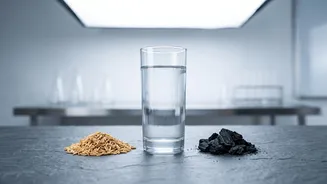
In the search for a solution, researchers are turning to agricultural waste. Specifically, they are using rice husks, the tough outer shells of rice grains that are typically discarded or burned after milling. India, as one of the world's largest rice producers, generates millions of tonnes of this waste annually. By heating these husks in a low-oxygen environment through a process called pyrolysis, scientists create a highly porous, carbon-rich material known as biochar. This isn't just burnt waste; it's a carefully engineered substance with an incredibly large internal surface area, creating a sponge-like structure perfect for trapping contaminants.
How It Works: A Microscopic Net
The power of rice husk biochar lies in its structure and surface chemistry. The pyrolysis process creates a network of microscopic pores and channels within the carbon. When contaminated water passes through this biochar filter, microplastic particles become physically trapped in this intricate web. But it's not just a physical filter. The surface of the biochar can also be modified to enhance its effectiveness. For example, some researchers are adding other materials to the biochar to create a positive charge, which helps it attract and bind to the negatively charged surfaces of many plastic particles through a process called adsorption. Recent breakthroughs by Indian student researchers have also combined rice husk biochar with natural polymers from okra and fenugreek, creating a dual-action system that first clumps microplastics together and then filters them out.
A Truly Sustainable Solution
What makes this breakthrough so compelling is its circular economy approach. It takes a widespread agricultural waste product, which can be an environmental burden itself, and transforms it into a high-value material for solving a critical public health problem. Recent tests have shown these filters can be highly effective. A project developed at IIT Delhi, for instance, demonstrated a substantial reduction in microplastics. Other research on biochar from various agricultural wastes has shown it can remove over 97% of micro- and nanoplastics in laboratory settings. Furthermore, the production of biochar is more energy-efficient than creating conventional activated carbon filters, and some of these new filters can even be cleaned and reused multiple times, reducing waste even further.
The Road from Lab to Your Tap
While the results are extremely promising, the technology is still in the developmental stage. Most tests have been conducted in controlled laboratory environments. The next crucial steps involve scaling up production and conducting real-world trials to test the filters' effectiveness and durability in various water conditions, from municipal tap water to rural water sources. Innovators like the Noida-based twin sisters behind the 'Aqua Sattva' project are already thinking about commercialisation, designing their system as affordable sachets and cartridges that can fit into everyday water containers, costing as little as 100 rupees for a pack of ten. This focus on affordability and accessibility will be key to bringing this technology to households across India and beyond.