



The Robotic Advantage: Endurance and Economy
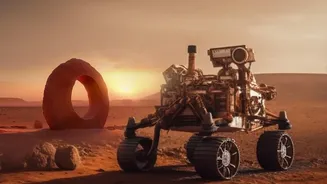
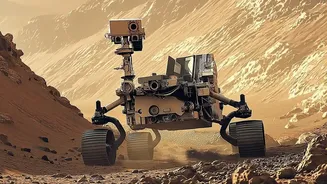
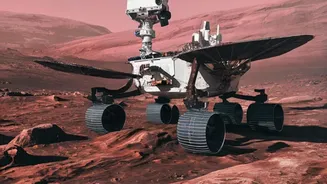
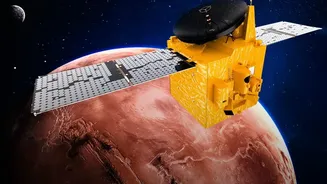
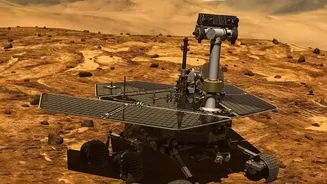
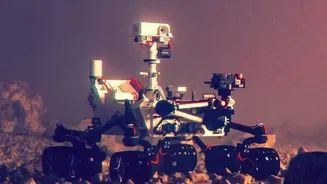
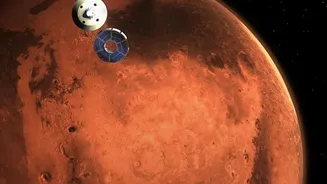
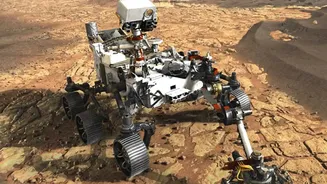
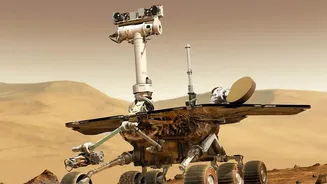
For decades, robotic explorers have been our eyes, ears, and hands on Mars. Rovers like Perseverance and orbiters have mapped the planet, analyzed its atmosphere, and confirmed the presence of water ice. These machines are our indispensable scouts, capable
of operating for years in a hostile environment that would be instantly lethal to an unprotected human. Their key advantages are endurance and economy. A rover doesn't need air, water, or food, and it can tolerate extreme radiation and temperature swings. The cost of a robotic mission, while still in the billions, is a fraction of what a human mission is projected to cost, largely because it doesn't require the immense mass and complexity of life-support systems or a return ticket.
The Human Factor: Adaptability and Discovery
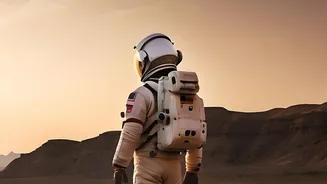
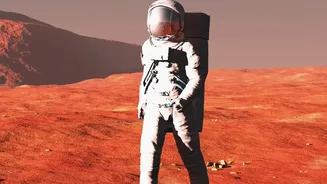
If robots are so effective, why send people at all? The answer lies in adaptability and intuition. While a rover is limited to its programming and carefully planned commands, a human geologist can make on-the-spot decisions, traverse difficult terrain, and perform complex tasks that are far beyond robotic capabilities. A human can do in a week what a rover might take a year to accomplish. Scientists argue that definitively finding evidence of past microbial life on Mars will likely require humans on the ground, breaking open rocks and using their expertise to identify promising samples in a way no robot currently can. The goal of sending humans isn't just to plant a flag; it's to accelerate the pace of discovery in a way only on-site intelligence can.
The Air We'll Make: Oxygen and Atmosphere
For humans, the first and most basic need is breathable air. A Mars-bound spacecraft and a surface habitat must have a perfectly reliable Environmental Control and Life Support System (ECLSS). This system not only provides oxygen but also removes the carbon dioxide (CO2) exhaled by the crew, scrubs other contaminants from the air, and maintains stable pressure. Shipping all the necessary oxygen from Earth is impossibly heavy. The solution is to make it on-site, a concept known as In-Situ Resource Utilization (ISRU). NASA's MOXIE experiment on the Perseverance rover has already successfully demonstrated that it can generate oxygen from Mars' thin, CO2-rich atmosphere. Future human missions will depend on scaling this technology up to support a crew for years.
Water, Water Everywhere: Sourcing and Recycling
Water is just as critical as air, needed for drinking, hygiene, growing food, and even being split into hydrogen and oxygen to create rocket propellant for the return journey. Like oxygen, carrying enough water for a multi-year mission is not feasible. An ECLSS for a long-duration mission must be a closed-loop system, capable of recycling nearly all wastewater, including urine and condensation. The systems on the International Space Station (ISS) already achieve high rates of water recovery, but Mars missions will require even greater reliability, as there is no option for a quick resupply from Earth. Additionally, astronauts will need to extract frozen water discovered beneath the Martian soil, processing it to supplement their recycled supply.
The Radiation Problem: A Constant Threat
Beyond the basic needs of air and water lies a more insidious danger: radiation. Unlike Earth, Mars has no global magnetic field and a very thin atmosphere to shield it from deep-space galactic cosmic rays and violent solar particle events. The journey to Mars and life on its surface will expose astronauts to significant radiation doses, increasing their lifetime health risks. Designing adequate shielding is a major hurdle. Adding heavy materials is prohibitively expensive to launch, so engineers are exploring innovative solutions, including using the mission's own water supply as a shield or developing advanced materials. For robotic missions, this is a manageable issue of hardening electronics; for humans, it's a fundamental threat to their health.
The Unseen Challenge: Psychological Survival
A life support system for humans extends beyond the purely physical. A crew of astronauts will be confined in a small space for up to three years, millions of miles from home, with a communication delay of up to 24 minutes each way. Research from space station missions and Earth-based analog studies shows that such prolonged isolation can lead to irritability, depression, sleep disorders, and interpersonal conflict. These psychological stressors can degrade cognitive performance, which is dangerous in a high-stakes environment where the crew must function autonomously. Selecting a compatible crew, providing meaningful work, and developing support strategies are just as critical to mission success as any engineering system.