





Skyroot Aerospace: Building India's Private Rockets
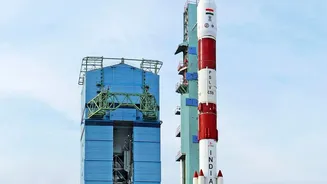
Hyderabad-based Skyroot Aerospace is at the forefront of India’s private launch industry. Founded by former ISRO scientists, the company made history by launching Vikram-S, the nation's first privately developed rocket, in November 2022. Their flagship
vehicle, the Vikram-1, is an orbital rocket designed specifically for the small satellite market. Key to their innovation is the use of an all-carbon composite structure, which makes the rocket lighter and more efficient. They also develop their own engines, including solid-propellant motors and 3D-printed liquid engines, demonstrating a full-stack approach to building launch vehicles from the ground up. This focus on modular design and advanced manufacturing aims to make space access more affordable and frequent.
Agnikul Cosmos: 3D-Printing the Future of Propulsion
Chennai's Agnikul Cosmos is revolutionizing rocket engine manufacturing through additive manufacturing, or 3D printing. The startup has developed what it claims is the world's largest single-piece 3D-printed rocket engine, made from a high-performance superalloy called Inconel. This single-piece design eliminates the need for complex welding and assembly of hundreds of components, drastically reducing manufacturing time and potential points of failure. Their 'Agnite' engine can be printed in a matter of days. The company is also pioneering the use of electric pump-fed engines, which are simpler and more reliable than traditional turbopumps, further enhancing the efficiency and reusability of their launch systems. This technology is central to their customizable launch vehicle, Agnibaan, which is designed for small satellite launches.
Pixxel: A Health Monitor for Planet Earth
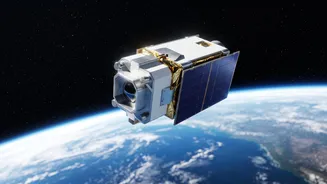
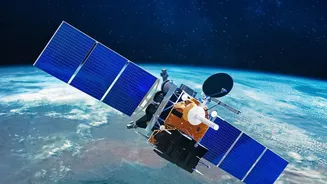
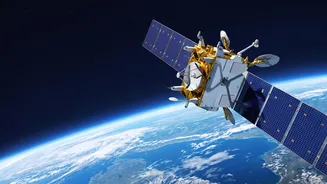
Pixxel is building what it calls a 'health monitor for the planet' with its constellation of advanced satellites. Unlike conventional satellites that capture images in a few broad bands of light, Pixxel’s satellites are hyperspectral. This means they capture data across hundreds of specific wavelengths, providing far more detailed information that is invisible to the naked eye. This technology has powerful applications across various sectors, including agriculture, where it can detect crop diseases before they become visible; environmental monitoring to track pollution and deforestation; and in the energy sector to spot gas leaks. The company plans to have a constellation of more than two dozen satellites in orbit, providing daily global coverage and turning raw satellite data into actionable insights for businesses and governments.
Bellatrix Aerospace: Efficient In-Space Propulsion
Getting to space is one thing; moving around once you're there is another. Bengaluru-based Bellatrix Aerospace specialises in in-space propulsion systems that help satellites manoeuvre. They are developing a range of thrusters, including India's first private Hall-effect thruster, an electric propulsion system that is highly efficient for station-keeping and orbital adjustments. Bellatrix is also innovating with 'green' propellants, developing a proprietary non-toxic fuel that is safer to handle than traditional hazardous fuels like hydrazine. Another futuristic project is an air-breathing electric propulsion system designed for satellites in very low Earth orbit, which would use sparse atmospheric molecules as propellant, potentially enabling satellites to stay in orbit for longer without carrying heavy fuel reserves.
Dhruva Space: Full-Stack Satellite Solutions
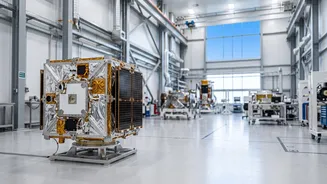
Founded in 2012, Dhruva Space is one of the older players in India’s private space scene, offering end-to-end solutions for building and launching satellites. The Hyderabad-based company provides a 'satellite-as-a-service' model, handling everything from satellite bus manufacturing and payload integration to launch and ground station services. A key piece of their technology is their line of satellite deployers (DSOD), which are space-qualified, non-pyrotechnic systems used to release CubeSats and other small satellites into orbit from a launch vehicle. By offering full-stack engineering, from the satellite platform itself to the software that controls it on the ground, Dhruva Space simplifies the process for companies and organizations looking to deploy assets in space.