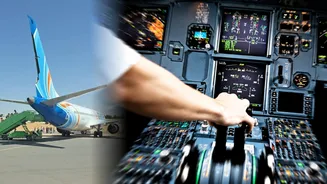









What Happened on the Flydubai Flight?
On September 30, 2026, a Flydubai flight from Dubai to Tel Aviv was forced to make an emergency diversion to Tabuk, Saudi Arabia. The diversion was prompted by a violent altercation in the cockpit, in which one pilot allegedly attacked the other. The aircraft
descended dramatically, losing over 16,000 feet in just a couple of minutes before the situation was brought under control, partly through the intervention of passengers and off-duty crew. The plane transmitted emergency signals, including one indicating unlawful interference, which led to it being granted an emergency landing. While Israeli authorities are investigating the incident as a potential terror attack, the event underscores the importance of the multiple layers of safety designed to handle unforeseen cockpit crises.
The First Rule: One Pilot Can Fly the Plane
Commercial airliners are designed to be flown by a single pilot if necessary. While two pilots work as a team, sharing duties as 'pilot flying' and 'pilot monitoring,' both are fully qualified to operate the aircraft alone. In the event of an incapacitation—whether from a sudden medical issue like a heart attack or, in this rare case, an assault—the remaining pilot is trained to take full command. The first step is to clearly state, "I have control," ensuring authority is established. The immediate priority is always to maintain stable flight, disengage the autopilot if it's behaving erratically due to the struggle, and ensure the aircraft is at a safe altitude.
Declaring an Emergency and Getting Help
Once in control of the aircraft, the pilot's next step is to communicate the crisis. They will contact Air Traffic Control (ATC) and declare an emergency. This is typically done by using the squawk code 7700, a general emergency signal, or 7500 for a hijacking or unlawful interference, as was reportedly done in the Flydubai case. Declaring an emergency instantly gives the flight priority over all other air traffic. ATC controllers become a crucial part of the team, clearing airspace, providing radar vectors for navigation, and helping the pilot identify the nearest suitable airport for an emergency landing. The pilots also communicate with their airline's operations center for additional support.
Choosing a Diversion Airport
The decision of where to land is not made lightly and rests solely with the captain or the pilot in command. Several factors are weighed in real-time. The primary consideration is the nature of the emergency; for a medical crisis, this means finding an airport with adequate medical facilities on the ground. Other critical factors include the airport's runway length, the current weather conditions, and the aircraft's fuel status. ATC provides the pilot with options, and together they determine the safest and quickest resolution. In the Flydubai incident, Tabuk in Saudi Arabia was the closest suitable airport to handle the emergency landing.
The Role of the Cabin Crew
While the drama unfolds in the cockpit, the cabin crew have their own set of critical procedures. Their first duty is to secure the cockpit. If a pilot is incapacitated, crew members may be called upon to help move the pilot from the controls and secure them in their seat. Their other primary role is to maintain calm in the passenger cabin and prepare it for a potential emergency landing. They are trained to provide first aid and use onboard medical kits, including defibrillators, and will often ask if there are any medical professionals among the passengers to assist. Their calm professionalism is key to ensuring passenger safety during a stressful and uncertain event.