




The Problem with 'Regular' Breakfasts
Let's be honest about our go-to morning meals. Whether it's fluffy idlis and dosas made from polished white rice, buttered white toast, or even a quick bowl of poha, many popular choices have something in common: they are high in simple carbohydrates.
While delicious, they can cause a rapid spike in blood sugar levels, followed by a crash. This is the reason you often feel a mid-morning slump, reaching for another cup of chai or a snack just a couple of hours after eating. These breakfasts provide a quick burst of energy, but it's not the sustained fuel your body and brain need to tackle the day.
Enter Ragi: The Nutritional Powerhouse
Ragi, or finger millet, is not a new-age health fad. It’s an ancient grain that has been a staple in parts of India, particularly in the south, for centuries. What makes it stand out is its incredible nutritional profile. Unlike refined rice or wheat, ragi is a complex carbohydrate that is packed with dietary fibre. It's also a fantastic source of plant-based protein and is loaded with essential minerals. Most impressively, ragi is one of the richest natural sources of calcium, containing significantly more than most other cereals. It’s also rich in iron, which is crucial for preventing anaemia, a common concern in India.
The Blood Sugar Advantage
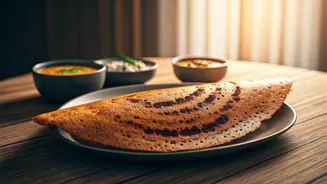
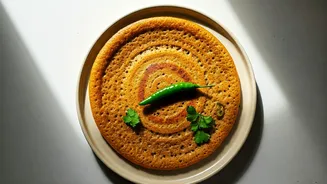
Here's where ragi dosa truly shines. Thanks to its high fibre content and complex carbs, ragi has a low Glycemic Index (GI). This means it releases sugar into the bloodstream slowly and steadily. For you, this translates to sustained energy levels without the dramatic peaks and troughs. You'll feel alert and productive through the morning, not sleepy and unfocused. This quality makes ragi an excellent choice for everyone, but especially for individuals managing their weight or those with diabetes or pre-diabetes, who need to be mindful of blood sugar control.
Fuller for Longer: The Fibre Factor
If you find yourself hungry long before lunchtime, your breakfast is likely lacking fibre. The dietary fibre in ragi adds bulk to your meal and slows down digestion. This process helps you feel full and satisfied for a much longer period. A couple of ragi dosas can keep you satiated until your next meal, reducing the temptation to indulge in unhealthy mid-morning snacks. This powerful effect on satiety is a key reason why incorporating ragi into your diet can be a simple but effective strategy for weight management.
Making the Switch is Easy
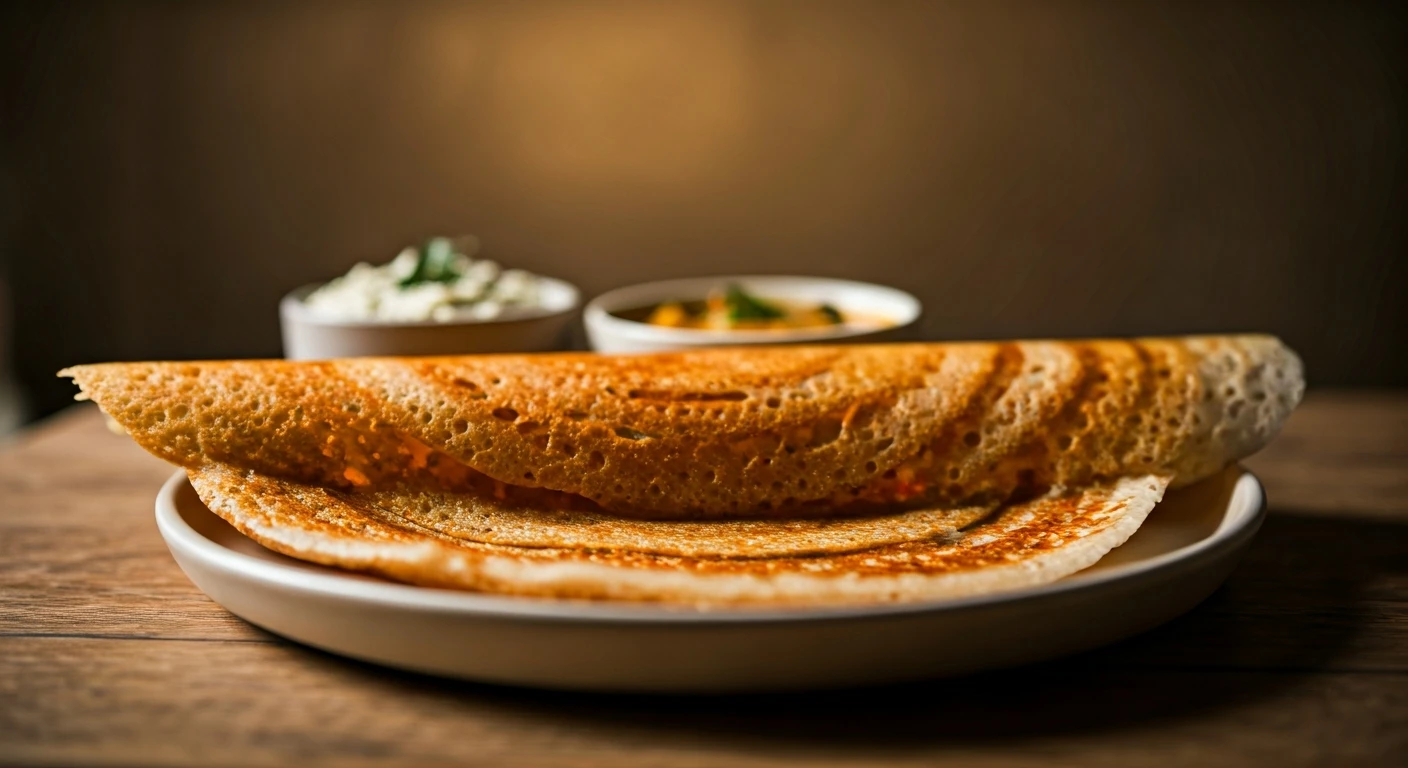
Switching to ragi dosa doesn't mean spending hours in the kitchen. Instant ragi dosa mixes are widely available, or you can make your own by simply adding ragi flour to your regular dosa batter to boost its nutritional value. You can start with a 50:50 ratio of ragi to rice flour and adjust to your taste. Serve it with the usual suspects—sambar and coconut chutney—and you have a meal that is both delicious and phenomenally healthy. The earthy, nutty flavour of ragi adds a unique dimension that many people grow to love. And it’s not just for dosas; ragi can be used to make idlis, rotis, porridge, and even healthy cookies and cakes.