




The Soul of Simplicity
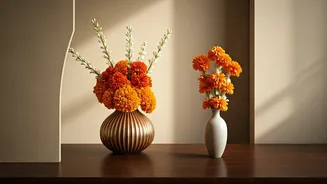
Minimalist floral design is the art of saying more with less. It moves away from dense, overflowing bouquets and instead celebrates the individual beauty of each bloom, stem, and leaf. The core philosophy is built on principles like using negative space
to give elements room to breathe, focusing on clean lines, and employing a restrained colour palette. This style isn't about emptiness but intentionality. Every component has a purpose, creating a sense of calm and highlighting the natural form and texture of the flowers themselves. It’s a quiet, considered approach that brings a peaceful, grounded feeling to any space.
Why Go Native?
Choosing native flowers for your arrangements is a powerful act of sustainability and connection. Indian flowers like marigold, jasmine, and hibiscus are perfectly adapted to our climate, meaning they require fewer resources to grow and often last longer in a vase. Using local and seasonal blooms drastically reduces the carbon footprint associated with transporting flowers from afar. Beyond the ecological benefits, incorporating native flora is a way to celebrate our own natural heritage. These are the flowers of our festivals, myths, and memories—from the marigolds (genda) of Diwali to the jasmine (mogra) woven into garlands—making each arrangement culturally resonant and deeply personal.
Stars Of The Native Garden
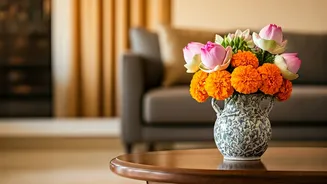
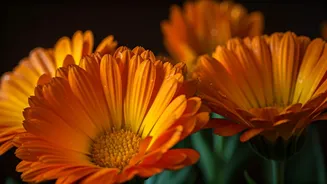
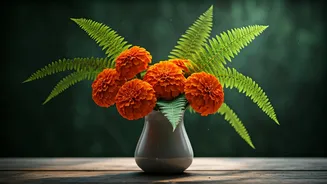
Many of India's most beloved flowers are perfect for minimalist displays. The humble Marigold (Genda) offers vibrant colour and a sturdy form that can be used as a single focal point or in small clusters. Its long vase life makes it a practical and cost-effective choice. The delicate, fragrant Jasmine (Mogra or Chameli) is not just for garlands; a few trailing vines in a simple vessel can fill a room with scent and visual grace. A single, bold Hibiscus (Gudhal) bloom, with its large petals and striking colour, can be a powerful statement piece when placed in a shallow bowl of water. Even the fiery flowers of Palash (Flame of the Forest) tree, when available, can create a dramatic, sculptural look with just a single branch.
Core Principles Of Arrangement
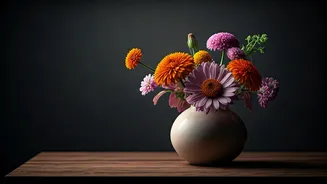
Creating your own minimalist arrangement is easier than you think. Start by embracing asymmetry; a relaxed, unbalanced look often feels more natural and modern. Let a few stems droop over one side of the vase while others reach upwards. Pay attention to negative space, ensuring you don't overcrowd the container. This allows each flower's unique shape to be appreciated. Focus on line and form by choosing stems with interesting curves or textures. Finally, if you're using multiple flowers, keep the colour palette simple. A monochromatic scheme or two complementary colours creates harmony and prevents the arrangement from looking too busy.
Choosing The Perfect Vessel
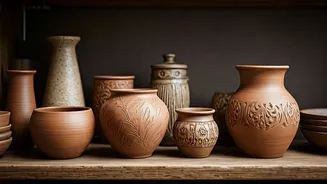
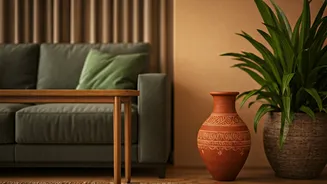
The container is a key element of the minimalist aesthetic; it should complement the flowers, not overpower them. Simple, elegant forms are best. Look for vessels with clean lines and neutral colours. Traditional Indian materials work beautifully here. A simple earthen pot (matka) can provide a rustic, grounded base for bright marigolds. A single branch of Parijat (night-flowering jasmine) looks exquisite in a slender, tall glass jar. Small brass or copper pots, often found in Indian households, can add a touch of warmth and heritage to an arrangement of white jasmine or tuberose. The goal is to create a unified composition where the vase and flowers are in perfect harmony.