


The Nightly Sweep
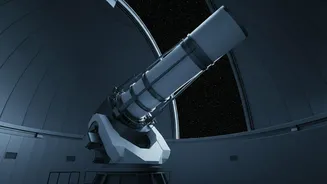
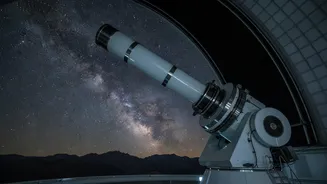
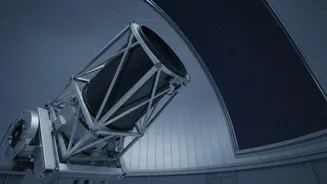
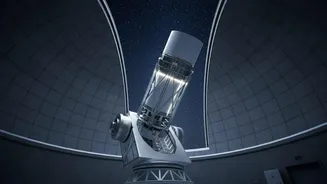
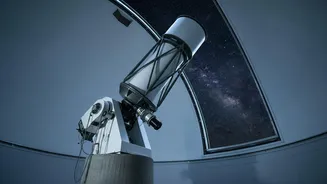
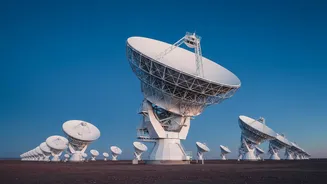
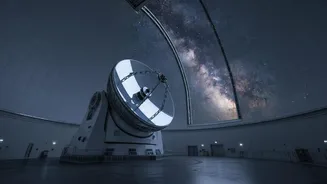
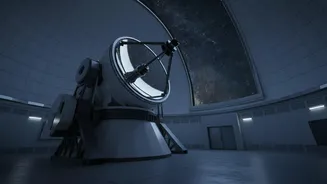
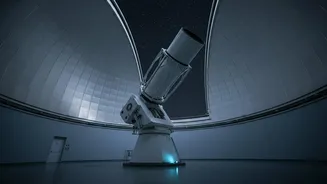
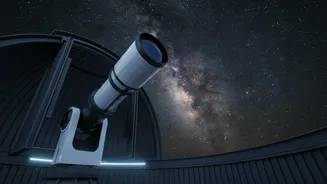
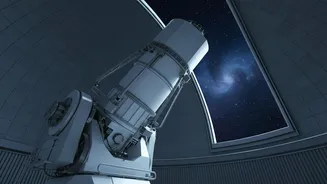
The first line of defense is a global network of survey telescopes that act as our planetary sentinels. Projects like the Catalina Sky Survey (CSS) in Arizona and the Pan-STARRS telescopes in Hawaii are powerhouses of asteroid detection. These are not
your typical backyard telescopes. They are highly automated systems with wide-field cameras designed to photograph huge swathes of the sky every clear night. Their primary mission is to find near-Earth objects (NEOs), which are asteroids and comets whose orbits bring them into Earth's neighborhood. NASA's Planetary Defense Coordination Office (PDCO) helps fund and coordinate many of these efforts, with a goal of finding at least 90 percent of NEOs that are 140 meters or larger—big enough to cause significant regional damage.
A Celestial Game of Spot the Difference
The core technique for finding an asteroid is surprisingly simple in concept, yet powerful in execution. A survey telescope takes a series of four or five pictures of the same patch of sky, with each image taken about 10 to 30 minutes apart. Software then rapidly compares these images. Against the backdrop of distant stars and galaxies, which remain fixed, an asteroid or comet will appear as a single point of light that has moved from one frame to the next. This movement is the tell-tale sign that the object is relatively close and orbiting the Sun. Any detected moving object is flagged as a candidate, triggering the next crucial step in the planetary defense chain.
From Candidate to Confirmed Object
A new detection is just the beginning. The preliminary data on the moving object is immediately sent to the Minor Planet Center (MPC), an international clearinghouse for all small-body observations. The MPC makes this information public, allowing astronomers around the world—both professional and amateur—to perform crucial follow-up observations. These additional sightings from different locations are vital. They help refine the object's path and confirm it's a new discovery, not a previously known asteroid. Once enough data is collected, the MPC can calculate an initial orbit, officially cataloging the new near-Earth object.
Calculating the Risk
Once an orbit is established, the real number-crunching begins. This is where organizations like NASA's Center for Near-Earth Object Studies (CNEOS) come in. Using the data from the MPC, CNEOS computes a high-precision orbit for the object and projects its path decades into the future to see if it will ever intersect with Earth's orbit. Automated systems like Sentry continuously monitor the database, assessing the impact risk for all known hazardous asteroids as new observations come in. An object is generally considered a 'potentially hazardous asteroid' if it's larger than about 140 meters and its orbit comes within 7.5 million kilometers of Earth's. Thankfully, there are currently no known significant threats for the next hundred years.
The Next Generation of Asteroid Hunters
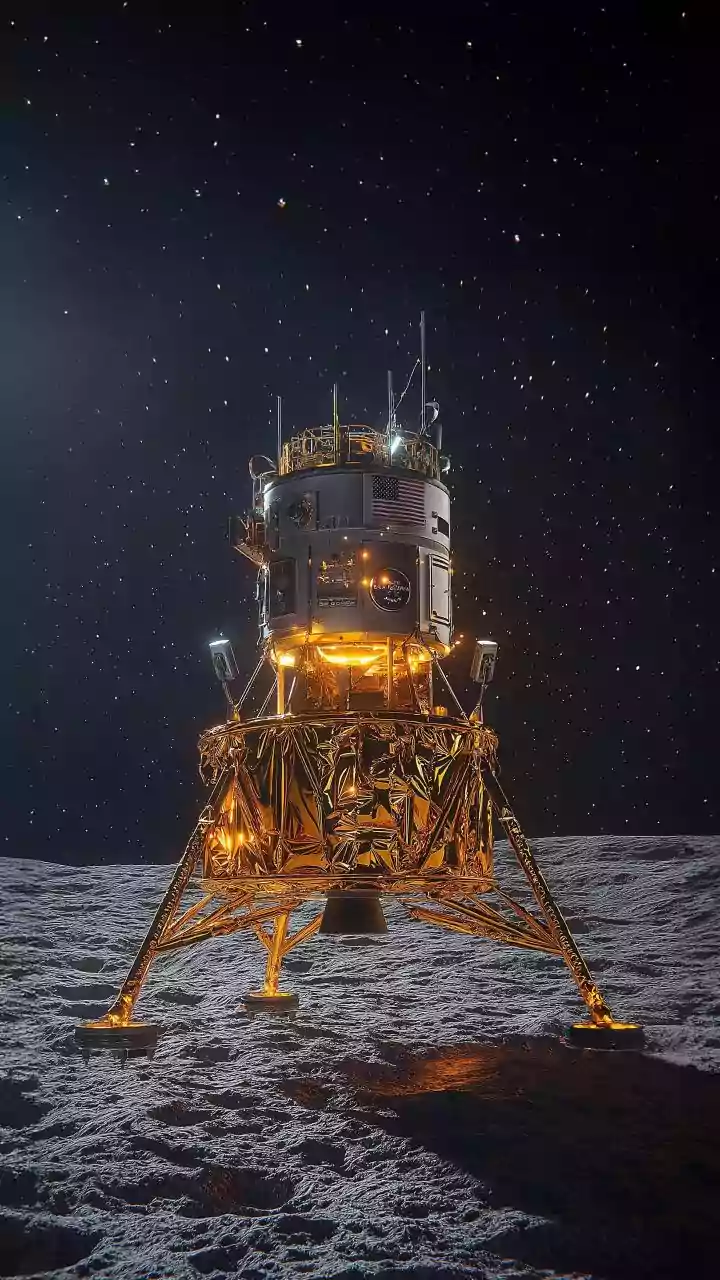
While ground-based telescopes are incredibly successful, they have limitations. They can't operate during the day, are hampered by bad weather, and struggle to spot asteroids coming from the direction of the Sun. To address this blind spot, NASA is developing the NEO Surveyor, an infrared space telescope specifically designed to hunt for hazardous objects. Scheduled to launch no earlier than 2027, NEO Surveyor will be positioned about 1.5 million kilometers from Earth, where it can scan the solar system more effectively. Instead of looking for reflected sunlight, it will detect the heat asteroids emit, making it adept at finding even very dark objects that are difficult for ground-based telescopes to see. This mission represents a critical evolution in our ability to provide advance warning and protect our planet.