





Redefining 'Just Right'
For decades, the search for extraterrestrial life has been a search for a second Earth. We look for planets in the 'Goldilocks Zone', where conditions are just right for liquid water. But some scientists, like Dirk Schulze-Makuch of Washington State University,
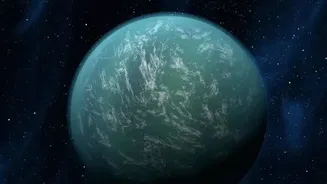
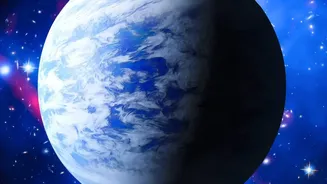
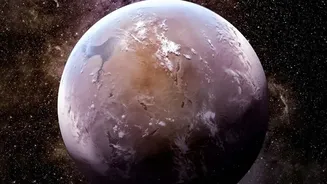
are questioning this Earth-centric approach. They argue that our planet might be habitable, but not optimally so. The theory of superhabitability, introduced by René Heller and John Armstrong in 2014, proposes that other worlds could have characteristics that make them even more hospitable to a greater quantity and diversity of life than Earth. This shifts the goal from finding an Earth twin to identifying planets with even more favourable conditions for complex life to emerge and thrive.
The Ideal Star System
The journey to a superhabitable world starts with its sun. Our Sun is a G-type star with a lifespan of about 10 billion years. While life arose here, it took nearly 4 billion years for complex organisms to appear. More massive stars burn out too quickly, but a slightly less massive, cooler star called a K-type dwarf (or 'orange dwarf') offers a significant advantage: time. K-dwarfs can remain stable for 15 to 45 billion years, giving life a much longer, more stable window to evolve. These 'Goldilocks stars' are also three times more common than Sun-like stars in our galaxy, making them prime targets in the search for life-friendly planets. A planet orbiting a K-dwarf would be older than Earth, allowing for more time for biodiversity to flourish.
A Bigger, Better Planetary Home
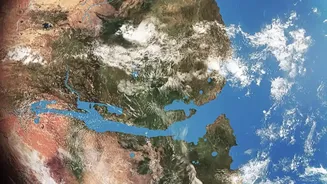
Size and mass are also critical factors. A planet about 1.5 times Earth's mass and 10% larger in radius could be more habitable. Its stronger gravity would help it retain a denser atmosphere, providing better shielding from harmful cosmic radiation. More mass also means a hotter interior for longer, which would power plate tectonics and generate a protective magnetic field for billions of years—processes vital for recycling nutrients and regulating climate. Furthermore, a slightly warmer and wetter planet than Earth could be a biological paradise. Instead of vast, life-poor deserts and ice caps, a world with an average surface temperature about 5°C higher than ours and with water more evenly distributed could support sprawling, hyper-diverse rainforest-like biomes.
The Search for Super-Earths
So, where are these potentially superior worlds? Based on the criteria for superhabitability, a 2020 study led by Schulze-Makuch identified 24 top candidates from the list of over 4,500 known exoplanets. None of these are perfect matches, but they represent promising targets for future observation with powerful instruments like the James Webb Space Telescope. Notable contenders mentioned in habitability studies over the years include planets like Kepler-62f and Kepler-186f. While they orbit their stars at distances that might make them cooler than ideal, studies suggest they likely have stable axial tilts similar to Earth's, which is crucial for regular seasons and stable climates. These planets, all located hundreds of light-years away, serve as tantalizing reminders of what might be out there.