



A Crisis of Timing
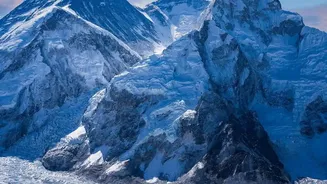
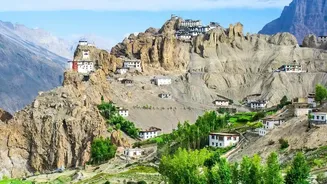
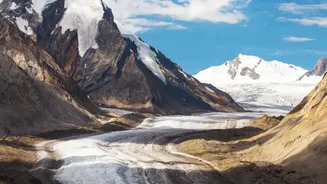
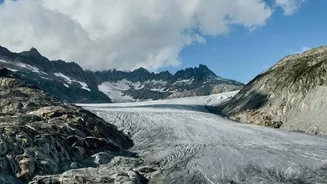
Ladakh is a land shaped by glaciers. For centuries, its agriculture, which sustains roughly 80% of the population, has depended on the steady meltwater from these frozen rivers to irrigate crops like barley, wheat, and peas. However, rising global temperatures
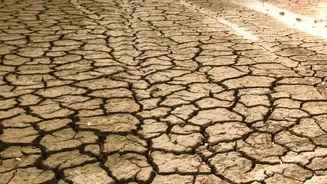
are disrupting this ancient rhythm. Glaciers are receding at an alarming rate, and winter snowfall has become increasingly erratic. The core of the problem is timing. Unseasonably warm weather causes natural glaciers, now found at higher altitudes, to release their water too early or too late, often missing the crucial spring sowing season from April to May. This leaves farmers with dry fields when they need water most, threatening food security and livelihoods across the region.
An Idea Frozen in Time
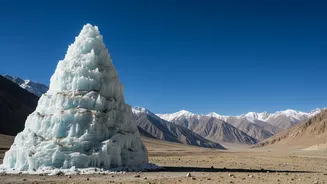
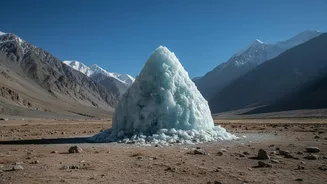
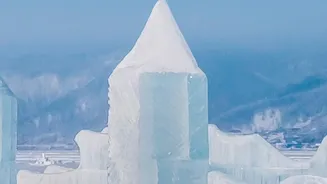
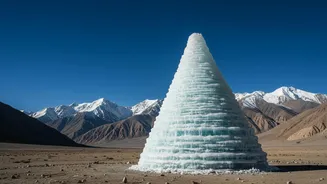
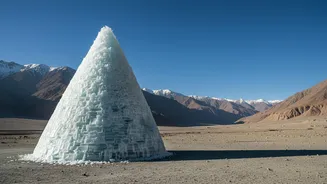
The solution came from observing a simple natural phenomenon. Ladakhi engineer and innovator Sonam Wangchuk noticed that ice persisted well into the late spring under a bridge, shielded from direct sunlight. This sparked an idea: what if you could 'store' winter water in a way that it would last until the critical planting season? The traditional approach of creating flat, artificial glaciers required very high altitudes and shade. Wangchuk's innovation was to freeze water vertically. He devised a method to create giant, cone-shaped ice structures that resemble traditional Buddhist monuments, earning them the name 'ice stupas'. The conical shape is ingenious because it minimizes the surface area exposed to the sun, allowing the ice to melt much more slowly.
The Simple Science of an Ice Stupa
The engineering behind an ice stupa is remarkably simple and elegant, requiring no electricity or heavy machinery. A network of underground pipes channels water from upstream glacial streams during the winter months, when this water would otherwise flow away unused. Gravity does all the work, creating pressure as the water flows to a lower altitude. This water is then sprayed out of a vertical pipe into the freezing sub-zero winter air. As it falls, it freezes almost instantly, gradually forming a massive cone of ice around a skeletal structure of branches. These stupas can tower up to 30-50 metres high and store millions of litres of water that would have been lost.
From Ice to Irrigation
As temperatures begin to rise in the spring, the ice stupa starts to melt. But because of its conical shape, the melting process is gradual and prolonged. The first prototype, built in 2013, lasted until mid-May, well into the period when farmers needed it most. This slow-release meltwater is captured and fed into an irrigation system, providing a steady and reliable water source for newly planted fields. The impact has been transformative. In areas with ice stupas, barren desert land has been turned into productive fields for crops like poplar and willow trees. The first major project saw villagers plant over 5,000 saplings, all watered by the melt from a single stupa.
A Symbol of Hope and Resilience
The ice stupa project, led by Wangchuk's NGO SECMOL, has become more than just an agricultural solution. It is a powerful symbol of community-led climate adaptation. The construction of these stupas often involves the entire village, fostering a sense of collective ownership and resilience. The initiative has even spurred eco-tourism and inspired annual competitions to see which village can build the biggest stupa. What started as a local experiment in Ladakh has now been replicated in other parts of the Himalayas and even in the Swiss Alps, proving that local, low-cost innovations can offer powerful solutions to global problems. They stand as monuments of hope, demonstrating how human ingenuity can help communities adapt to the challenges of a changing world.