







The Concrete Jungle’s Rising Fever
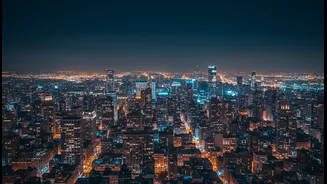
Our cities are becoming giant heat traps, a phenomenon scientists call the Urban Heat Island (UHI) effect. This occurs because the materials that define our urban landscapes—concrete, asphalt, and dark roofing—absorb and retain the sun's heat far more
than natural landscapes do. While rural areas with forests and water bodies stay cooler, our cities, stripped of this natural cooling infrastructure, bake during the day and fail to cool down at night. Studies across numerous Indian cities, including Delhi, Mumbai, Kolkata, and Chennai, show this effect is intensifying. A multi-city assessment of nine major populated centres in India found a steady decadal increase in nighttime heat, with some cities becoming several degrees warmer than their surrounding rural areas. This isn't just an uncomfortable inconvenience; it's a dangerous distortion of our local climate driven by the very materials we use to build our world.
What City-Wide Studies Reveal
Recent assessments paint a stark picture. Multi-city studies confirm that urban areas are warming significantly faster than nearby rural regions, in some cases by as much as 60%. The dark, impermeable surfaces of roads and parking lots, which can cover over a third of a typical city, can reach scorching temperatures in the summer, heating the air around them. This added heat has severe consequences. It exacerbates the public health risks associated with heatwaves, which are already becoming more frequent and intense. The impacts include a higher risk of heat exhaustion, heat stroke, and cardiovascular and respiratory problems, with vulnerable populations like the elderly, children, and outdoor workers facing the greatest danger. Economically, the UHI effect strains energy grids as demand for air conditioning skyrockets, leading to higher costs and increased greenhouse gas emissions, creating a vicious cycle.
From Grey to Green and White
The good news is that the solutions are known, tested, and increasingly being implemented. The core idea is to replace heat-absorbing surfaces with ones that cool. This involves a suite of interventions sometimes called 'cool' or 'passive' strategies because they don't require energy. One of the most effective and low-cost solutions is creating 'cool roofs' by painting surfaces with highly reflective, light-coloured paint. This simple change can reduce roof temperatures significantly. Beyond roofs, expanding green infrastructure is critical. This means planting more trees to create shade canopy, building green roofs and vertical gardens, and preserving or creating parks and water bodies. Studies show that increasing tree canopy cover beyond a certain threshold can dramatically lower local temperatures. Even the concrete itself can be part of the solution, with new permeable pavements that allow water to filter through and cool the ground via evaporation.
The Urgency of Now in Indian Cities
The call for 'immediate' interventions is not hyperbole. In India, where hundreds of millions will move to cities in the coming decades, the problem is acute. Studies have linked thousands of deaths annually to heatwaves in India, a threat magnified by the UHI effect. Recognizing this, several state and city governments are taking action. Telangana became the first state to launch a mandatory Cool Roof Policy in 2023, with ambitious targets for installation. Cities like Ahmedabad have pioneered Heat Action Plans, while Chennai and Bengaluru are integrating passive cooling designs and green infrastructure into urban planning. These initiatives are crucial first steps. The scientific consensus is clear: without a rapid and widespread push to redesign our urban spaces, our cities will become increasingly unlivable and dangerous heat traps.