
Not Your Average Garden Soil
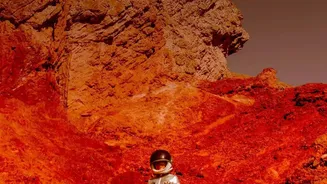
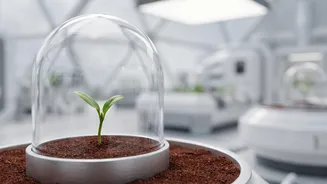
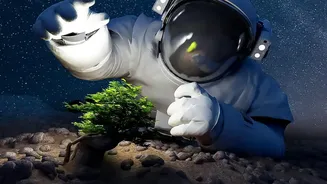
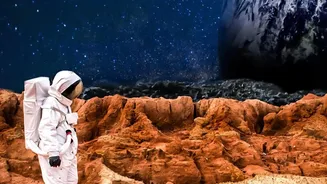
You can’t just plant seeds in the ground on Mars. The Martian surface is covered in what’s called regolith, which is essentially fine, lifeless dust and crushed rock. Unlike Earth's rich soil, it contains no organic matter, no living microbes, and no nutrients
to speak of. Worse, it's laced with toxic compounds called perchlorates. These salts, found at concentrations that would be poisonous to both plants and humans, are one of the biggest hurdles. Any attempt at Martian agriculture must first solve this fundamental soil problem.
Faking It to Make It
Since we don't have actual Martian soil to experiment with, scientists have created the next best thing: Mars soil simulants. Using data from rovers and orbiters, researchers have recreated the chemical and physical properties of Martian regolith, often using volcanic ash from places like Hawaii. These simulants allow scientists to test which plants might survive and what is needed to make the regolith viable. Experiments have shown that washing the simulant can help remove the toxic perchlorates. Other studies are exploring using specific bacteria that can break down these harmful salts, effectively detoxifying the soil while releasing oxygen as a handy byproduct.
The Soilless Solution
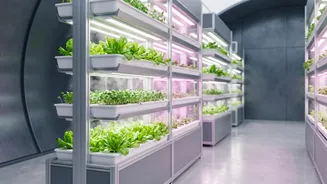
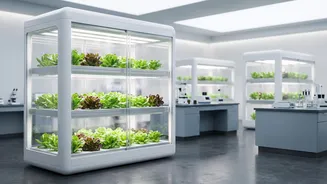
What if the best way to use Martian soil is to not use it at all? Many scientists believe the most viable path forward is soilless agriculture, such as hydroponics and aeroponics. Hydroponics involves growing plants in a nutrient-rich water solution, completely bypassing the need for soil. Aeroponics goes a step further, suspending plant roots in the air and misting them with nutrients. These methods are incredibly efficient with water, which will be a precious resource on Mars. NASA is actively testing both techniques on the International Space Station (ISS) to perfect them for long-duration space missions, proving their feasibility in microgravity.
The First Martian Menu
So, what could future Martian colonists expect to eat? Researchers are focusing on hardy, fast-growing, and nutritious crops. Lettuce, radishes, and other leafy greens have been successfully grown on the ISS and in simulant experiments. Tomatoes, peas, and carrots are also strong contenders due to their nutritional value. One surprising candidate is the potato, which, despite the struggles depicted in fiction, can grow well in a modified, less compacted version of the simulant. The key is finding a variety of crops that can provide a balanced diet and psychological comfort for astronauts far from home.
Innovating for Two Worlds
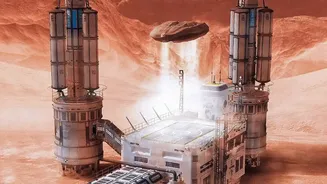
Beyond the soil, Martian farming requires solving for intense radiation, extreme cold, and a thin atmosphere. This means future Martian farms will be highly controlled, enclosed environments, likely greenhouses pressurized with an Earth-like atmosphere. The fascinating part is that these technological solutions have direct applications back on Earth. The development of closed-loop water recycling systems, ultra-efficient LED lighting, and advanced crop-growing techniques can help us create more sustainable agriculture in harsh environments on our own planet. The quest to farm on Mars is pushing the boundaries of science in ways that could help feed humanity, no matter which planet we call home.