

The Power of Ingredient Overlap
Ingredient overlap is a simple but powerful strategy: planning your week’s meals so that key ingredients are used in multiple, distinct dishes. Instead of buying a specific herb for one recipe and watching the rest of it go bad, you plan two or three
meals that can use it. This isn’t about eating the same meal for three days. It’s about buying a whole chicken and planning for a roast one night, then using the leftover meat for a curry or sandwiches the next. This approach turns your grocery run into a connected system, ensuring that what you buy gets used, which is better for your wallet and the environment. The average family can save a significant amount of money each year just by reducing the food they throw away.
Identify Your Versatile Staples
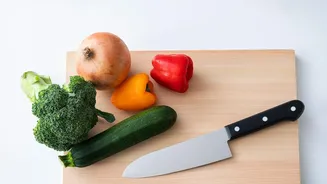
The foundation of this method lies in identifying your household’s workhorse ingredients. These are the versatile staples that can anchor several different meals. For many Indian kitchens, this list includes potatoes, onions, tomatoes, lentils (dal), rice, and proteins like paneer or chicken. Onions and tomatoes form the base of countless gravies and masalas. Potatoes can be roasted, mashed, fried, or added to curries. A block of paneer can be cubed for a matar paneer, pan-fried for a dry appetiser, or crumbled into a bhurji. Before you shop, take stock of these core items. Building your meal plan around them ensures you are cooking with ingredients that are not only familiar but also flexible enough to be transformed.
Master a Few Cooking Methods
The secret to making one ingredient feel new every time is to change how you cook it. Understanding different cooking techniques is more valuable than having dozens of complex recipes. A potato, for example, has a completely different taste and texture when it is boiled for a masala dosa filling versus when it is roasted with herbs until crispy. The same can be said for vegetables like cauliflower or carrots. Grilling or roasting brings out their sweetness, while steaming keeps them tender and light. Sautéing in a pan with spices gives a quick, flavourful result, whereas slow-stewing the same ingredients creates a deep, rich curry. By mastering just a few methods—like roasting, stir-frying, and stewing—you unlock the ability to create true variety from the same set of groceries.
A Sample Plan in Action
Let’s see how this works in practice. Imagine you buy a large batch of chicken, a bag of potatoes, and a head of cauliflower. Night one could be a simple roasted chicken with roasted potatoes and cauliflower. For night two, the leftover chicken can be shredded and cooked with onions and spices for flavourful kati rolls. The remaining cauliflower could be used to make Aloo Gobi, a classic dry curry with the leftover potatoes. Another example: cook a large pot of lentils (dal). The first night, you have a classic Dal Tadka with rice. The next day, the leftover dal can be thickened and used as a filling for parathas. This 'cook once, eat twice' approach, with a creative twist, is the essence of smart ingredient overlap.
Don't Forget Spices and Herbs
While the main ingredients and cooking methods provide the structure, spices and herbs provide the personality. They are the ultimate tool for transformation. A simple chicken breast can be marinated in a tandoori spice blend for one meal and then cooked with a completely different set of South Indian spices for another. The same goes for vegetables. A sprinkle of chaat masala can liven up roasted potatoes, while a different blend of garam masala, turmeric, and coriander powder will make them fit perfectly into a curry. A well-stocked spice box is essential, as it allows you to change a dish’s entire flavour profile with minimal effort, ensuring that even if you’re using the same base protein or vegetable, your taste buds will never be bored.