

Why Venus? Earth's Runaway Twin
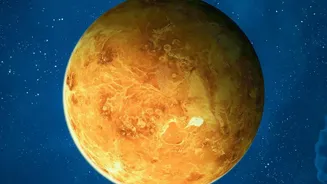
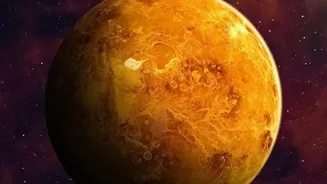
Venus is a planet of profound mystery. It’s nearly the same size, mass, and density as Earth, and was formed from the same materials in the same cosmic neighborhood. Yet, it is the most hostile planet in our solar system. With surface temperatures hot
enough to melt lead and an atmosphere 90 times denser than Earth's, it serves as a cautionary tale. Scientists believe Venus experienced a runaway greenhouse effect, transforming it into the inferno it is today. Studying why our planetary twin took such a drastically different evolutionary path is crucial. By understanding the processes that shaped Venus, we can gain invaluable insights into Earth's own climate, its future, and the factors that make a planet habitable. This makes Venus a top priority for planetary scientists worldwide and a compelling next destination for India's ambitious space program.
The Mission to Map an Atmosphere
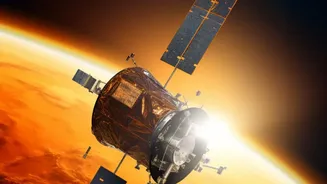
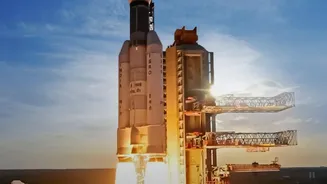
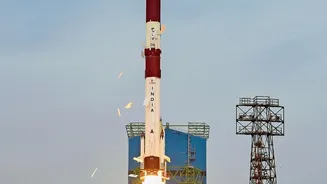
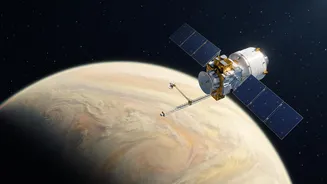
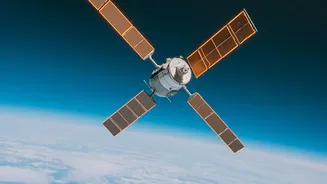
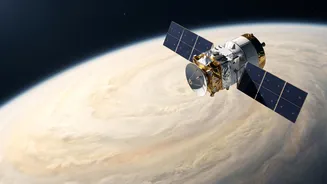
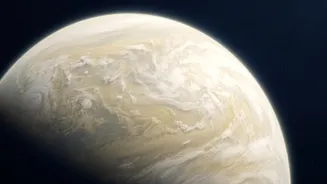
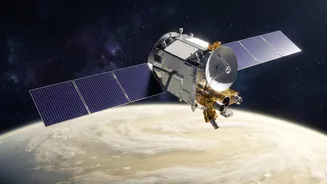
The Indian Space Research Organisation's (ISRO) Venus Orbiter Mission, unofficially known as Shukrayaan, has a primary and ambitious objective: to investigate Venus’s atmosphere in unprecedented detail. The planet is shrouded in a thick, continuous blanket of sulfuric acid clouds that moves at incredible speeds, a phenomenon known as super-rotation. These clouds make direct observation of the surface and lower atmosphere nearly impossible with conventional telescopes. Shukrayaan is designed to overcome this challenge. The mission aims to study the structure, composition, and dynamics of this complex atmosphere, from its upper layers down to the levels hidden below the clouds. The mission received formal approval from the Union Cabinet on September 18, 2024, and is tentatively scheduled for launch on March 29, 2028, aboard an LVM-3 rocket.
A Toolkit for Peering Through the Veil
To map what lies beneath the clouds, Shukrayaan will be equipped with a suite of sophisticated instruments, weighing around 100 kg in total. A key technology for atmospheric study is spectroscopy. Instruments like the Venus Infrared Atmospheric Gases Linker (VIRAL), developed in collaboration with Russia and France, will analyze the infrared light that manages to escape from below the clouds. This light acts like a fingerprint, carrying the chemical signatures of the gases it has passed through. By capturing this light in specific 'windows' of the infrared spectrum, scientists can identify molecules like carbon monoxide, water vapor, and sulfur dioxide in the lower atmosphere. Other instruments, like the Venus Thermal Camera (VTC), will map thermal emissions to understand atmospheric dynamics.
Beyond the Atmosphere: Mapping the Surface
While studying the atmosphere is a core goal, Shukrayaan will also give us our best look yet at the Venusian surface. Since visible light can't penetrate the clouds, the orbiter will use radar. The S-Band Synthetic Aperture Radar (SAR) will pierce through the thick haze, mapping the surface in high resolution, day or night, regardless of cloud cover. This will allow scientists to search for signs of active volcanism and lava flows, providing clues about the planet's geological evolution. The mission is also slated to carry a ground-penetrating radar, which would be the first time an orbiter has attempted to study the shallow subsurface of Venus, offering a look at rock layers and stratigraphy.
An Indian Mission with Global Partners
Shukrayaan is a testament to India's growing stature in space exploration, and it's an endeavor strengthened by international cooperation. The mission is planned to carry 19 scientific payloads in total. While 16 of these are indigenously developed, the mission includes key collaborative instruments. Besides the French-Russian VIRAL instrument, Sweden is collaborating on the Venusian Neutrals Analyser (VNA) to study how the solar wind interacts with the atmosphere. Germany is also a partner on an instrument designed to study the planet's ionosphere. This collaborative approach follows the successful model of Chandrayaan-1 and pools global expertise to tackle the immense challenges of exploring our inhospitable sister planet.