




Can artificial intelligence cure cancer, Alzheimer's, and heart disease within the next ten years? Dario Amodei, CEO of leading AI lab Anthropic, thinks so. This bold prediction has sparked both excitement and skepticism across science and tech.
The Bold Prediction from a Tech Leader
Dario
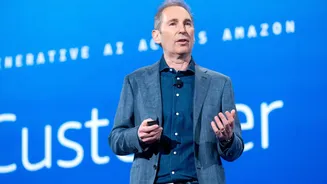
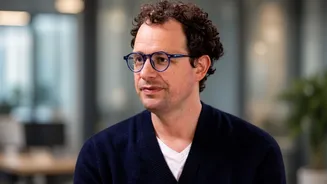
Amodei, the chief executive of Anthropic, a major competitor to OpenAI, recently made a headline-grabbing claim: diseases like cancer could become 'relics of the past' in less than a decade, thanks to AI. This statement was part of a presentation outlining the company's vision, which includes not just building powerful AI models like Claude, but also applying them to solve humanity's biggest problems. Amodei suggests that AI could accelerate biological research so dramatically that it could compress what would normally take 50 to 100 years of medical progress into just five or ten. This isn't a one-off comment; he has consistently argued that AI is on an exponential trend that will soon allow it to make significant scientific discoveries, moving from solving high-school math problems in 2023 to potentially solving major open problems in biology by the late 2020s. For Amodei, whose father passed away from Hepatitis C just before a cure became widely available, the mission is personal.
How AI Could Revolutionise a Cure
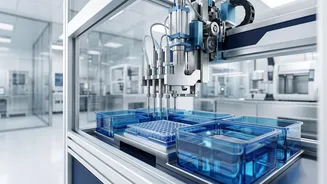
The core of the argument lies in AI's ability to process and find patterns in massive datasets far beyond human capability. In cancer research, this translates to several key areas. Firstly, drug discovery. AI models can analyse millions of protein structures to identify new therapeutic targets, a process demonstrated by systems like Google DeepMind's AlphaFold. Anthropic itself is already collaborating with biotech firms like Bristol Myers Squibb and Generate Biomedicines to speed up the development of new medicines. For example, in one project, its AI helped redesign a part of a CAR T-cell therapy, making it more effective at killing tumour cells in lab tests. Secondly, AI can personalize medicine by analysing a patient's unique genetic makeup and tumour characteristics to predict the most effective treatment, moving beyond a one-size-fits-all approach. Finally, AI can dramatically improve diagnostics by detecting signs of cancer in medical images, like CT scans, that are imperceptible to the human eye.
A Dose of Medical Reality
While the technological promise is immense, many in the medical and biotech communities are skeptical about the ten-year timeline. They point out that biology is profoundly complex and unpredictable. Identifying a promising drug candidate with AI is only the very first step. That molecule must then undergo years of rigorous and expensive clinical trials to prove it is both safe and effective in humans. This regulatory process is a major bottleneck that AI cannot simply bypass. As Karl Lauterbach, Germany's former health minister, stated, 'Curing cancer, Alzheimer's and mental illnesses can definitely benefit from AI. But that is impossible in just 10 years'. Critics also note that Amodei’s claims were made in an IPO roadshow video, suggesting they may have been intended to generate hype for investors.
The Real-World Hurdles
Beyond the clinical trial bottleneck, there are other significant challenges. Cancer is not a single disease but hundreds of different diseases, each with its own complex biology. A breakthrough for one type may not apply to others. Furthermore, developing effective AI models requires vast amounts of high-quality, diverse data. Biased data can lead to AI tools that are less effective for certain populations, potentially worsening health disparities. There is also the 'last mile' problem: even if a miraculous cure is developed, it must be manufactured, distributed, and made accessible and affordable to patients globally, a logistical and economic challenge that technology alone cannot solve. Experts argue that AI is a powerful tool that can assist and accelerate human researchers, but it is not a magic wand that can singlehandedly conquer disease.