





Not Your Grandmother's Kaju Katli
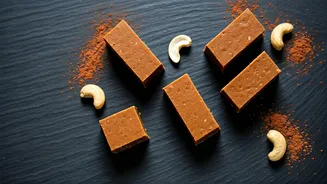
At first glance, it looks familiar. The diamond shape, the dense texture—it’s easy to mistake vegan cashew fudge for its famous cousin, kaju katli. But the similarities often end there. While traditional kaju katli relies on milk and ghee for its rich,
melt-in-the-mouth quality, this new wave of cashew fudge is entirely plant-based. Innovators are swapping dairy for ingredients like coconut milk, almond milk, or simply leveraging the natural creaminess of cashews themselves. The result is a sweet that caters not just to vegans, but to anyone seeking an alternative to dairy, be it for health, ethical, or environmental reasons. This isn't just about removing ingredients; it's a fundamental re-imagination of what an Indian sweet can be, often with a focus on less sugar and cleaner, more natural flavours.
The Rise of Conscious Indulgence
The growing popularity of vegan cashew fudge is no accident. It’s part of a much larger shift in Indian consumer habits. Health and wellness are increasingly influencing purchasing decisions, with a growing demand for healthier, less processed foods. Veganism, once a niche concept, is entering the mainstream. In January 2026 alone, over 300,000 people in India participated in Veganuary, signalling a significant cultural shift. This trend is driven by a confluence of factors: rising awareness of lactose intolerance, concerns over animal welfare, and the environmental impact of the dairy industry. For many, especially millennials and Gen Z, choosing vegan options is an extension of their values. These consumers aren't just buying a sweet; they're buying into a lifestyle of mindful consumption.
From Niche to Mainstream
What started in home kitchens and small, online-only stores is now a burgeoning market. The Indian vegan food market was valued at over USD 1.4 billion in 2024 and is projected to grow significantly. Mithai, a cornerstone of Indian food culture, is a natural area for this innovation. New-age mithai brands are gaining traction by blending tradition with modern sensibilities, using premium ingredients, contemporary packaging, and strong online storytelling. They are rebranding mithai from a purely festive treat to a year-round indulgence. While traditional halwais still dominate the unorganised sector, the organised, packaged sweets market is growing rapidly, with a CAGR of over 15% projected for the coming years. Vegan options are a key part of this growth, with some brands offering refined sugar-free and organic versions to appeal to an even wider audience.
A Modern Twist on Tradition
The success of vegan cashew fudge doesn't signal the end of traditional mithai. Instead, it represents an evolution. Many new-age brands are not just creating vegan versions but are also experimenting with fusion flavours, incorporating everything from coffee and salted caramel to rose and matcha. This approach honours the heritage of Indian sweets while making them relevant to a new generation's palate. The core purpose of mithai—to celebrate, to share joy, to mark special occasions—remains unchanged. By offering a plant-based alternative, these brands are ensuring that more people can participate in these sweet traditions, regardless of their dietary choices. It’s a classic case of innovation expanding a category rather than destroying it.
Challenges on the Road Ahead
Despite the momentum, the journey for vegan mithai isn't without its hurdles. The unorganised market for traditional sweets is enormous, built on generations of trust and nostalgia. Cost is another significant factor; cashews are an expensive raw material, which can make the final product pricier than its dairy-based counterparts. For many new brands, scaling up production while maintaining quality and freshness is a major logistical challenge. The biggest challenge, however, may be cultural. India is a country deeply connected to dairy, where ghee and milk are not just ingredients but are imbued with cultural and even religious significance. Convincing a mass audience to embrace a dairy-free sweet will require sustained effort, education, and above all, a product that is undeniably delicious.